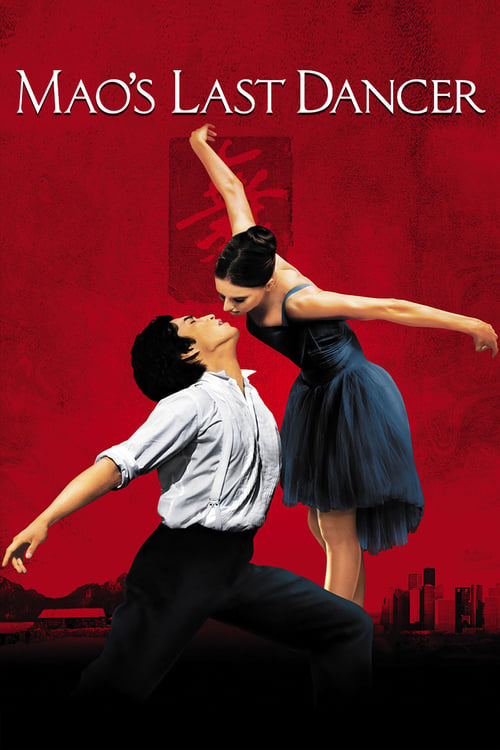
Mao’s Last Dancer
At the age of 11, Li was plucked from a poor Chinese village by Madame Mao's cultural delegates and taken to Beijing to study ballet. In 1979, during a cultural exchange to Texas, he falls in love with an American woman. Two years later, he managed to defect and went on to perform as a principal dancer for the Houston Ballet and as a principal artist with the Australian Ballet.
The film underperformed commercially against its respectable budget of $25.0M, earning $23.9M globally (-4% loss).
7 wins & 20 nominations


Plot Structure
Story beats plotted across runtime


Narrative Arc
Emotional journey through the story's key moments
Story Circle
Blueprint 15-beat structure
Arcplot Score Breakdown
Weighted: Precision (70%) + Arc (15%) + Theme (15%)
Mao’s Last Dancer (2009) showcases carefully calibrated story structure, characteristic of Bruce Beresford's storytelling approach. This structural analysis examines how the film's 15-point plot structure maps to proven narrative frameworks across 1 hour and 57 minutes. With an Arcplot score of 7.1, the film balances conventional beats with creative variation.
Characters
Cast & narrative archetypes

Li Cunxin
Ben Stevenson
Elizabeth Mackey
Teacher Gao
Li Cunxin (Young)
Mary McKendry
Li's Mother
Main Cast & Characters
Li Cunxin
Played by Chi Cao
A Chinese ballet dancer selected from poverty to train in Beijing, later defecting to America
Ben Stevenson
Played by Bruce Greenwood
The artistic director of Houston Ballet who becomes Li's mentor and father figure in America
Elizabeth Mackey
Played by Amanda Schull
An American dancer who falls in love with Li and becomes his first wife
Teacher Gao
Played by Wang Shuangbao
Li's strict but caring teacher at the Beijing Dance Academy who shapes his technique
Li Cunxin (Young)
Played by Huang Wen Bin
Li as a young boy selected from his village to attend the Beijing Dance Academy
Mary McKendry
Played by Birmingham Royal Ballet Dancer
Li's second wife, an Australian dancer who becomes his life partner
Li's Mother
Played by Joan Chen
Li's devoted peasant mother who sacrifices for her son's education
Structural Analysis
The Status Quo at 1 minutes (1% through the runtime) establishes Young Li Cunxin practices ballet in rural China during the Cultural Revolution, his village life simple and poor but filled with family love and revolutionary ideology.. Structural examination shows that this early placement immediately immerses viewers in the story world.
The inciting incident occurs at 14 minutes when Madame Mao's cultural delegates select Li from his village to attend the Beijing Dance Academy, separating him from his family and transforming his destiny.. At 12% through the film, this Disruption aligns precisely with traditional story structure. This beat shifts the emotional landscape, launching the protagonist into the central conflict.
The First Threshold at 29 minutes marks the transition into Act II, occurring at 25% of the runtime. This illustrates the protagonist's commitment to Adult Li accepts Ben Stevenson's invitation to visit Houston Ballet for a cultural exchange program, choosing to leave China and enter the Western world., moving from reaction to action.
At 58 minutes, the Midpoint arrives at 50% of the runtime—precisely centered, creating perfect narrative symmetry. Of particular interest, this crucial beat Li decides to defect and stay in America, requesting political asylum. False victory—he gains freedom but the stakes immediately escalate as Chinese officials arrive to force his return., fundamentally raising what's at risk. The emotional intensity shifts, dividing the narrative into clear before-and-after phases.
The Collapse moment at 87 minutes (75% through) represents the emotional nadir. Here, Li learns his father has died in China without seeing him again. The whiff of death is literal—he has sacrificed family connection for freedom and can never reconcile with his father., illustrates the protagonist at their lowest point. This beat's placement in the final quarter sets up the climactic reversal.
The Second Threshold at 93 minutes initiates the final act resolution at 80% of the runtime. Li receives a letter from his mother forgiving him and expressing pride in his achievements. He realizes he can honor both his Chinese roots and American freedom—he doesn't have to choose one identity., demonstrating the transformation achieved throughout the journey.
Emotional Journey
Mao’s Last Dancer's emotional architecture traces a deliberate progression across 15 carefully calibrated beats.
Narrative Framework
This structural analysis employs a 15-point narrative structure framework that maps key story moments. By mapping Mao’s Last Dancer against these established plot points, we can identify how Bruce Beresford utilizes or subverts traditional narrative conventions. The plot point approach reveals not only adherence to structural principles but also creative choices that distinguish Mao’s Last Dancer within the drama genre.
Bruce Beresford's Structural Approach
Among the 6 Bruce Beresford films analyzed on Arcplot, the average structural score is 7.3, reflecting strong command of classical structure. Mao’s Last Dancer takes a more unconventional approach compared to the director's typical style. For comparative analysis, explore the complete Bruce Beresford filmography.
Comparative Analysis
Additional drama films include After Thomas, South Pacific and Dirty Dancing: Havana Nights. For more Bruce Beresford analyses, see Driving Miss Daisy, Double Jeopardy and Black Robe.
Plot Points by Act
Act I
SetupStatus Quo
Young Li Cunxin practices ballet in rural China during the Cultural Revolution, his village life simple and poor but filled with family love and revolutionary ideology.
Theme
Teacher Xiao tells young Li, "If you work hard and serve the people, you can go anywhere." Theme: freedom through dedication vs. choosing one's own path.
Worldbuilding
Establishment of Li's peasant family life, Madame Mao's selection process, the rigorous Beijing Dance Academy training, and the ideological indoctrination of young dancers in Communist China.
Disruption
Madame Mao's cultural delegates select Li from his village to attend the Beijing Dance Academy, separating him from his family and transforming his destiny.
Resistance
Li struggles with homesickness and ballet training, debates whether he can succeed, receives guidance from Teacher Xiao, and gradually discovers his natural talent for dance despite initial resistance.
Act II
ConfrontationFirst Threshold
Adult Li accepts Ben Stevenson's invitation to visit Houston Ballet for a cultural exchange program, choosing to leave China and enter the Western world.
Mirror World
Li meets Elizabeth Mackey, an American dancer and aspiring lawyer, who represents individual freedom, personal choice, and life beyond state control—the thematic opposite of his upbringing.
Premise
Li experiences American freedom and abundance, explores Houston, develops his relationship with Elizabeth, dances with artistic freedom, and discovers a world where individual choice supersedes collective duty.
Midpoint
Li decides to defect and stay in America, requesting political asylum. False victory—he gains freedom but the stakes immediately escalate as Chinese officials arrive to force his return.
Opposition
Chinese consulate pressures Li to return, his family faces persecution in China, the FBI and media become involved, Li is torn between personal freedom and family loyalty, and his marriage to Elizabeth becomes strategic and strained.
Collapse
Li learns his father has died in China without seeing him again. The whiff of death is literal—he has sacrificed family connection for freedom and can never reconcile with his father.
Crisis
Li mourns his father and questions whether his choice was worth the cost, experiencing profound guilt and grief over the family he abandoned and can never return to.
Act III
ResolutionSecond Threshold
Li receives a letter from his mother forgiving him and expressing pride in his achievements. He realizes he can honor both his Chinese roots and American freedom—he doesn't have to choose one identity.
Synthesis
Li becomes principal dancer at Houston Ballet, eventually the Chinese government falls and he is able to return home, reunites with his mother and family, and bridges both worlds through his art.
Transformation
Li dances in China with his elderly mother watching from the audience, tears in her eyes. He has integrated both identities—Chinese and American, duty and freedom, collective and individual.