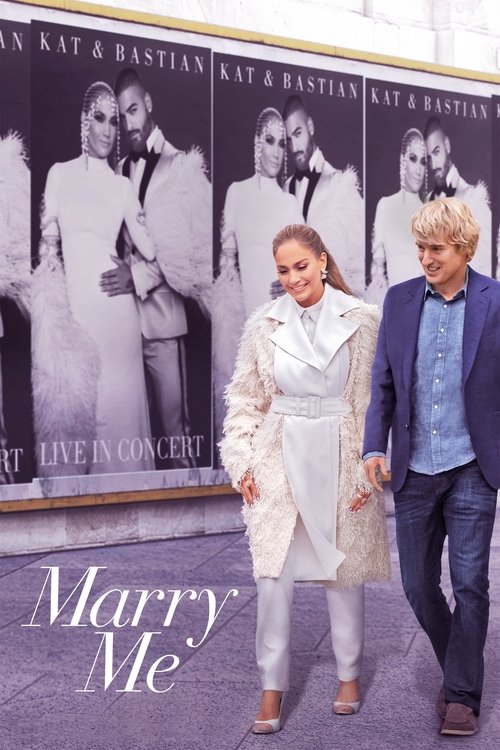
Marry Me
After finding out about her fiancé's cheating ways, a pop superstar impulsively marries a total stranger. They must soon decide if two people from such different worlds can find true love.
Working with a mid-range budget of $23.0M, the film achieved a respectable showing with $44.0M in global revenue (+91% profit margin).
2 wins & 4 nominations


Plot Structure
Story beats plotted across runtime


Narrative Arc
Emotional journey through the story's key moments
Story Circle
Blueprint 15-beat structure
Arcplot Score Breakdown
Weighted: Precision (70%) + Arc (15%) + Theme (15%)
Marry Me (2022) exhibits strategically placed dramatic framework, characteristic of Kat Coiro's storytelling approach. This structural analysis examines how the film's 15-point plot structure maps to proven narrative frameworks across 1 hour and 52 minutes. With an Arcplot score of 7.2, the film balances conventional beats with creative variation.
Characters
Cast & narrative archetypes

Kat Valdez
Charlie Gilbert
Bastian
Lou
Melissa
Parker Debbs
Main Cast & Characters
Kat Valdez
Played by Jennifer Lopez
A global pop superstar who impulsively marries a stranger from the audience when her public wedding falls apart.
Charlie Gilbert
Played by Owen Wilson
A divorced math teacher and single father who unexpectedly becomes Kat's husband after a spontaneous moment.
Bastian
Played by Maluma
Kat's celebrity fiancé and musical partner whose betrayal triggers the impromptu marriage to Charlie.
Lou
Played by Sarah Silverman
Charlie's best friend and colleague who encourages him to attend the concert where he meets Kat.
Melissa
Played by Michelle Buteau
Kat's manager and best friend who helps navigate the chaos of the unexpected marriage.
Parker Debbs
Played by Chloe Coleman
Charlie's teenage daughter who struggles with her father's new celebrity connection.
Structural Analysis
The Status Quo at 1 minutes (1% through the runtime) establishes Kat Valdez is a global pop superstar preparing for her biggest spectacle yet: a televised wedding ceremony to fellow musician Bastian at her Madison Square Garden concert. Her life is a carefully managed performance.. Notably, this early placement immediately immerses viewers in the story world.
The inciting incident occurs at 13 minutes when Moments before the on-stage wedding ceremony, Kat discovers via social media that Bastian has been cheating on her with her assistant. Her perfect public facade and planned future shatter in an instant as millions watch the live-streamed event.. At 11% through the film, this Disruption aligns precisely with traditional story structure. This beat shifts the emotional landscape, launching the protagonist into the central conflict.
The First Threshold at 26 minutes marks the transition into Act II, occurring at 23% of the runtime. This indicates the protagonist's commitment to In an impulsive act of defiance and desperation, Kat points to Charlie in the crowd and actually marries him on stage in front of 20,000 people and millions streaming online. She chooses chaos and authenticity over her scripted celebrity life., moving from reaction to action.
At 55 minutes, the Midpoint arrives at 50% of the runtime—precisely centered, creating perfect narrative symmetry. Significantly, this crucial beat Kat performs at Charlie's school event, bridging their two worlds successfully. They share an authentic moment and realize their feelings might be real. False victory: it seems like this unconventional arrangement might actually work, and they could have something genuine., fundamentally raising what's at risk. The emotional intensity shifts, dividing the narrative into clear before-and-after phases.
The Collapse moment at 84 minutes (75% through) represents the emotional nadir. Here, Charlie sees Kat kissing Bastian (a staged PR moment, but he doesn't know that) and feels betrayed and foolish. He realizes he doesn't belong in her world. He ends the relationship, and Kat loses the one genuine connection she'd found. The dream of authentic love dies., shows the protagonist at their lowest point. This beat's placement in the final quarter sets up the climactic reversal.
The Second Threshold at 89 minutes initiates the final act resolution at 79% of the runtime. Kat realizes that what she had with Charlie was real and worth fighting for, even if it means risking public humiliation again. Charlie understands that love requires taking risks and being vulnerable. Both choose authenticity over safety., demonstrating the transformation achieved throughout the journey.
Emotional Journey
Marry Me's emotional architecture traces a deliberate progression across 15 carefully calibrated beats.
Narrative Framework
This structural analysis employs proven narrative structure principles that track dramatic progression. By mapping Marry Me against these established plot points, we can identify how Kat Coiro utilizes or subverts traditional narrative conventions. The plot point approach reveals not only adherence to structural principles but also creative choices that distinguish Marry Me within the romance genre.
Comparative Analysis
Additional romance films include South Pacific, Dirty Dancing: Havana Nights and The Evening Star.
Plot Points by Act
Act I
SetupStatus Quo
Kat Valdez is a global pop superstar preparing for her biggest spectacle yet: a televised wedding ceremony to fellow musician Bastian at her Madison Square Garden concert. Her life is a carefully managed performance.
Theme
Charlie's colleague Parker tells him about taking chances and being open to new experiences. The theme of authenticity vs. performance is established when we see the contrast between Kat's manufactured public life and Charlie's genuine but small existence.
Worldbuilding
Parallel worlds are established: Kat's glamorous, high-pressure celebrity universe filled with handlers, press, and millions of fans, versus Charlie's humble life as a divorced math teacher and single dad in Queens. Charlie reluctantly agrees to attend Kat's concert with his daughter Lou and colleague Parker.
Disruption
Moments before the on-stage wedding ceremony, Kat discovers via social media that Bastian has been cheating on her with her assistant. Her perfect public facade and planned future shatter in an instant as millions watch the live-streamed event.
Resistance
Kat debates what to do in real-time on stage. Her manager Collin and team scramble. The world watches, waiting to see if she'll fall apart publicly. Charlie holds up a "Marry Me" sign (meant for the song), and Kat processes the viral humiliation she's experiencing.
Act II
ConfrontationFirst Threshold
In an impulsive act of defiance and desperation, Kat points to Charlie in the crowd and actually marries him on stage in front of 20,000 people and millions streaming online. She chooses chaos and authenticity over her scripted celebrity life.
Mirror World
Charlie and Kat meet properly for the first time after the wedding. He represents everything opposite to her world: genuine, unglamorous, honest, private. Their relationship becomes the vehicle for exploring the theme of authentic connection versus performative celebrity.
Premise
The fun of the premise: a pop star and a math teacher trying to make an impulsive marriage work for PR purposes. Kat enters Charlie's normal world (school events, modest apartment), while Charlie experiences her celebrity lifestyle (concerts, red carpets, paparazzi). Despite differences, they discover genuine chemistry and connection.
Midpoint
Kat performs at Charlie's school event, bridging their two worlds successfully. They share an authentic moment and realize their feelings might be real. False victory: it seems like this unconventional arrangement might actually work, and they could have something genuine.
Opposition
The pressure of maintaining the relationship under public scrutiny intensifies. Bastian tries to win Kat back. Media dissects their every move. Charlie struggles with the invasion of privacy and attention. Manager Collin worries about Kat's brand. The gap between their worlds becomes increasingly apparent and difficult to navigate.
Collapse
Charlie sees Kat kissing Bastian (a staged PR moment, but he doesn't know that) and feels betrayed and foolish. He realizes he doesn't belong in her world. He ends the relationship, and Kat loses the one genuine connection she'd found. The dream of authentic love dies.
Crisis
Both Kat and Charlie retreat to their separate worlds, nursing their heartbreak. Kat questions whether she can ever have something real. Charlie feels he was right to stay in his safe, small life. Both process the loss of what they briefly had.
Act III
ResolutionSecond Threshold
Kat realizes that what she had with Charlie was real and worth fighting for, even if it means risking public humiliation again. Charlie understands that love requires taking risks and being vulnerable. Both choose authenticity over safety.
Synthesis
Kat and Charlie reconcile, choosing their genuine connection over public perception or convenience. They decide to make the relationship real on their own terms. Kat performs at a concert where Charlie appears, and they publicly commit to each other authentically, not as a stunt.
Transformation
Mirror of the opening: Kat is again on stage, but this time she's performing for genuine reasons, with someone who loves the real her. Charlie is in the audience, no longer a stranger but her true partner. Both have integrated authenticity into their lives.