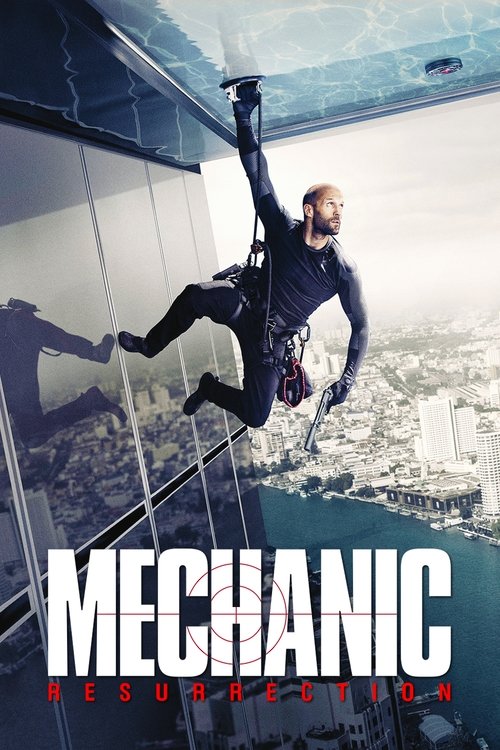
Mechanic: Resurrection
Arthur Bishop thought he had put his murderous past behind him when his most formidable foe kidnaps the love of his life. Now he is forced to travel the globe to complete three impossible assassinations, and do what he does best, make them look like accidents.
Despite a respectable budget of $40.0M, Mechanic: Resurrection became a solid performer, earning $125.7M worldwide—a 214% return.


Plot Structure
Story beats plotted across runtime


Narrative Arc
Emotional journey through the story's key moments
Story Circle
Blueprint 15-beat structure
Arcplot Score Breakdown
Weighted: Precision (70%) + Arc (15%) + Theme (15%)
Mechanic: Resurrection (2016) exhibits carefully calibrated narrative design, characteristic of Dennis Gansel's storytelling approach. This structural analysis examines how the film's 15-point plot structure maps to proven narrative frameworks across 1 hour and 39 minutes. With an Arcplot score of 7.6, the film showcases strong structural fundamentals.
Characters
Cast & narrative archetypes

Arthur Bishop
Gina
Riah Crain
Max Adams
Krill
Adrian Cook
The Principal
Main Cast & Characters
Arthur Bishop
Played by Jason Statham
Elite assassin forced out of retirement to complete three impossible assassinations to save the woman he loves.
Gina
Played by Jessica Alba
A humanitarian aid worker kidnapped and used as leverage to force Bishop back into action.
Riah Crain
Played by Sam Hazeldine
Ruthless arms dealer who blackmails Bishop into performing assassinations by threatening Gina's life.
Max Adams
Played by Tommy Lee Jones
Bishop's former mentor and weapons supplier who provides support and intelligence for his missions.
Krill
Played by Toby Eddington
Powerful human trafficker and one of Bishop's targets, kept in a fortified Malaysian prison.
Adrian Cook
Played by John Cenatiempo
Wealthy arms merchant operating from a yacht in Sydney Harbor, Bishop's second target.
The Principal
Played by Femi Elufowoju Jr.
Crain's employer and the mastermind behind the assassination plot, final target in Bulgaria.
Structural Analysis
The Status Quo at 1 minutes (1% through the runtime) establishes Arthur Bishop living in peaceful anonymity in Rio de Janeiro, faked his death, enjoying his supposed retirement from being an elite assassin.. Notably, this early placement immediately immerses viewers in the story world.
The inciting incident occurs at 11 minutes when Mercenaries attack Bishop in his home. His cover is blown and his peaceful existence is shattered. He barely escapes with his life.. At 11% through the film, this Disruption aligns precisely with traditional story structure. This beat shifts the emotional landscape, launching the protagonist into the central conflict.
The First Threshold at 24 minutes marks the transition into Act II, occurring at 25% of the runtime. This indicates the protagonist's commitment to Crain kidnaps Gina and forces Bishop to accept an impossible mission: assassinate three heavily protected targets or Gina dies. Bishop chooses to accept the deal and re-enter his world as a killer., moving from reaction to action.
At 49 minutes, the Midpoint arrives at 49% of the runtime—precisely centered, creating perfect narrative symmetry. Significantly, this crucial beat Bishop completes the second assassination but discovers Crain never intended to release Gina. The stakes raise - Crain reveals there's a third target, and Bishop realizes he's being used in a larger scheme. False defeat., fundamentally raising what's at risk. The emotional intensity shifts, dividing the narrative into clear before-and-after phases.
The Collapse moment at 73 minutes (74% through) represents the emotional nadir. Here, Bishop completes the third kill but Crain betrays him completely - attempting to kill both Bishop and Gina. Bishop is captured and left for dead. His hope of saving Gina and escaping this life seems extinguished., illustrates the protagonist at their lowest point. This beat's placement in the final quarter sets up the climactic reversal.
The Second Threshold at 79 minutes initiates the final act resolution at 80% of the runtime. Bishop escapes his bonds and discovers Crain's location. He synthesizes his killing skills with his newfound motivation (saving someone he cares about). He stops being reactive and becomes the hunter., demonstrating the transformation achieved throughout the journey.
Emotional Journey
Mechanic: Resurrection's emotional architecture traces a deliberate progression across 15 carefully calibrated beats.
Narrative Framework
This structural analysis employs a 15-point narrative structure framework that maps key story moments. By mapping Mechanic: Resurrection against these established plot points, we can identify how Dennis Gansel utilizes or subverts traditional narrative conventions. The plot point approach reveals not only adherence to structural principles but also creative choices that distinguish Mechanic: Resurrection within the action genre.
Dennis Gansel's Structural Approach
Among the 2 Dennis Gansel films analyzed on Arcplot, the average structural score is 7.2, reflecting strong command of classical structure. Mechanic: Resurrection represents one of the director's most structurally precise works. For comparative analysis, explore the complete Dennis Gansel filmography.
Comparative Analysis
Additional action films include The Bad Guys, Puss in Boots and Venom: The Last Dance. For more Dennis Gansel analyses, see The Wave.
Plot Points by Act
Act I
SetupStatus Quo
Arthur Bishop living in peaceful anonymity in Rio de Janeiro, faked his death, enjoying his supposed retirement from being an elite assassin.
Theme
A contact warns Bishop that "you can never really leave this life" - establishing the theme that past sins and identities cannot be escaped.
Worldbuilding
Bishop's carefully constructed hidden life is revealed. We see his precautions, his skills, and his desire for peace. His past as a mechanic (assassin who makes deaths look accidental) is established.
Disruption
Mercenaries attack Bishop in his home. His cover is blown and his peaceful existence is shattered. He barely escapes with his life.
Resistance
Bishop flees to Thailand. He meets Gina, a humanitarian worker. His old enemy Crain resurfaces, having orchestrated the attack. Bishop resists being pulled back into his old life while trying to understand what Crain wants.
Act II
ConfrontationFirst Threshold
Crain kidnaps Gina and forces Bishop to accept an impossible mission: assassinate three heavily protected targets or Gina dies. Bishop chooses to accept the deal and re-enter his world as a killer.
Mirror World
Bishop's relationship with the captive Gina (communicated through video) becomes his moral anchor. She represents the life he wanted - compassion, connection, redemption - contrasting with his violent skills.
Premise
The "promise of the premise" delivers: Bishop executes elaborate, impossible assassinations. First target in Malaysia, second in Sydney. Each kill showcases his genius for making murders look like accidents. High-octane action spectacle.
Midpoint
Bishop completes the second assassination but discovers Crain never intended to release Gina. The stakes raise - Crain reveals there's a third target, and Bishop realizes he's being used in a larger scheme. False defeat.
Opposition
The third target is revealed to be the most dangerous: a heavily fortified arms dealer. Bishop faces increasing obstacles. Crain tightens control over Gina. Bishop's old mentor/friend provides reluctant assistance. The antagonist closes in.
Collapse
Bishop completes the third kill but Crain betrays him completely - attempting to kill both Bishop and Gina. Bishop is captured and left for dead. His hope of saving Gina and escaping this life seems extinguished.
Crisis
Bishop processes his apparent failure. In his darkest moment, he finds resolve. He realizes the only way forward is to stop running from who he is and use his skills one final time - not for Crain, but for himself.
Act III
ResolutionSecond Threshold
Bishop escapes his bonds and discovers Crain's location. He synthesizes his killing skills with his newfound motivation (saving someone he cares about). He stops being reactive and becomes the hunter.
Synthesis
The finale assault on Crain's yacht fortress. Bishop infiltrates, fights through mercenaries, rescues Gina, and confronts Crain. Elaborate action set pieces culminate in Crain's death and Gina's rescue.
Transformation
Bishop and Gina sail away together. Unlike the opening where he was alone and hiding, he's now with someone who knows who he truly is and accepts him. He's found peace not through denial, but through embracing his nature to protect rather than destroy.