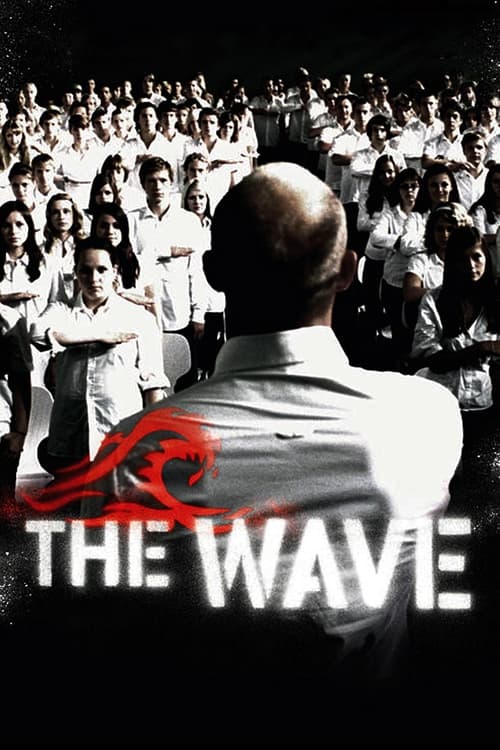
The Wave
A school teacher discusses types of government with his class. His students find it too boring to repeatedly go over national socialism and believe that dictatorship cannot be established in modern Germany. He starts an experiment to show how easily the masses can become manipulated.
Despite its small-scale budget of $7.5M, The Wave became a commercial success, earning $32.4M worldwide—a 331% return. The film's fresh perspective resonated with audiences, proving that strong storytelling can transcend budget limitations.


Plot Structure
Story beats plotted across runtime


Narrative Arc
Emotional journey through the story's key moments
Story Circle
Blueprint 15-beat structure
Arcplot Score Breakdown
Weighted: Precision (70%) + Arc (15%) + Theme (15%)
The Wave (2008) exhibits strategically placed story structure, characteristic of Dennis Gansel's storytelling approach. This structural analysis examines how the film's 15-point plot structure maps to proven narrative frameworks across 1 hour and 47 minutes. With an Arcplot score of 6.7, the film balances conventional beats with creative variation.
Characters
Cast & narrative archetypes

Rainer Wenger
Tim Stoltefuss
Marco
Karo
Anke Wenger
Sinan
Bomber
Kevin
Main Cast & Characters
Rainer Wenger
Played by Jürgen Vogel
A passionate high school teacher who starts a social experiment to teach students about autocracy, which spirals out of control.
Tim Stoltefuss
Played by Frederick Lau
A troubled student from a broken home who becomes obsessively devoted to The Wave movement.
Marco
Played by Max Riemelt
A popular student and water polo player who initially embraces The Wave but becomes concerned as it grows extreme.
Karo
Played by Jennifer Ulrich
Marco's girlfriend and a strong-willed student who recognizes the dangers of The Wave early and actively opposes it.
Anke Wenger
Played by Cristina do Rego
Rainer's wife and fellow teacher who becomes increasingly worried about her husband's experiment.
Sinan
Played by Elyas M'Barek
A Turkish-German student who joins The Wave, finding belonging and empowerment in the movement.
Bomber
Played by Maximilian Mauff
A rebellious student who initially resists authority but becomes an enforcer for The Wave.
Kevin
Played by Maximilian Vollmar
A quiet student who becomes increasingly violent as The Wave escalates.
Structural Analysis
The Status Quo at 1 minutes (1% through the runtime) establishes Teacher Rainer Wenger arrives at school in his vintage car, presenting himself as a cool, unconventional educator beloved by students. His relaxed demeanor and rock band t-shirt establish him as anti-establishment.. The analysis reveals that this early placement immediately immerses viewers in the story world.
The inciting incident occurs at 13 minutes when Rainer proposes an experiment: instead of lecturing about autocracy, they will experience it firsthand. Students must call him "Herr Wenger" and stand to speak. The class dynamic shifts immediately.. At 12% through the film, this Disruption aligns precisely with traditional story structure. This beat shifts the emotional landscape, launching the protagonist into the central conflict.
The First Threshold at 27 minutes marks the transition into Act II, occurring at 25% of the runtime. This illustrates the protagonist's commitment to The class votes unanimously to continue the experiment beyond the first day. They commit to wearing white shirts and spreading The Wave. Rainer crosses a line by fully embracing his role as leader rather than observer., moving from reaction to action.
At 54 minutes, the Midpoint arrives at 50% of the runtime—precisely centered, creating perfect narrative symmetry. Structural examination shows that this crucial beat At a water polo match, The Wave demonstrates its power through synchronized chanting and intimidation, leading to victory. Members feel invincible. This false victory masks the escalating extremism and alienation of non-members like Karo., fundamentally raising what's at risk. The emotional intensity shifts, dividing the narrative into clear before-and-after phases.
The Collapse moment at 80 minutes (75% through) represents the emotional nadir. Here, Rainer discovers the full extent of The Wave's violence and extremism. His wife leaves him. Karo is nearly killed when members threaten her. Rainer realizes he has created exactly what he was teaching against—he has become the autocrat., shows the protagonist at their lowest point. This beat's placement in the final quarter sets up the climactic reversal.
The Second Threshold at 86 minutes initiates the final act resolution at 80% of the runtime. Rainer calls a mandatory assembly of all Wave members in the auditorium. He decides to expose the truth through dramatic confrontation rather than gentle dissolution, risking backlash to deliver the lesson they need., demonstrating the transformation achieved throughout the journey.
Emotional Journey
The Wave's emotional architecture traces a deliberate progression across 15 carefully calibrated beats.
Narrative Framework
This structural analysis employs structural analysis methodology used to understand storytelling architecture. By mapping The Wave against these established plot points, we can identify how Dennis Gansel utilizes or subverts traditional narrative conventions. The plot point approach reveals not only adherence to structural principles but also creative choices that distinguish The Wave within the drama genre.
Dennis Gansel's Structural Approach
Among the 2 Dennis Gansel films analyzed on Arcplot, the average structural score is 7.2, reflecting strong command of classical structure. The Wave takes a more unconventional approach compared to the director's typical style. For comparative analysis, explore the complete Dennis Gansel filmography.
Comparative Analysis
Additional drama films include After Thomas, South Pacific and Dirty Dancing: Havana Nights. For more Dennis Gansel analyses, see Mechanic: Resurrection.
Plot Points by Act
Act I
SetupStatus Quo
Teacher Rainer Wenger arrives at school in his vintage car, presenting himself as a cool, unconventional educator beloved by students. His relaxed demeanor and rock band t-shirt establish him as anti-establishment.
Theme
During project week assignments, a colleague remarks that autocracy couldn't happen again in modern Germany because people have learned from history. This naive assumption becomes the central question the film will disprove.
Worldbuilding
We meet the diverse students: Karo the activist, her boyfriend Marco, the outsider Tim, popular Sinan, and others. Rainer is disappointed to be assigned autocracy instead of anarchy. The comfortable German high school world is established.
Disruption
Rainer proposes an experiment: instead of lecturing about autocracy, they will experience it firsthand. Students must call him "Herr Wenger" and stand to speak. The class dynamic shifts immediately.
Resistance
The experiment develops incrementally. Students adopt uniforms (white shirts), create a group salute, and name themselves "Die Welle." Rainer introduces discipline, unity, and collective identity. Initial resistance from Karo foreshadows conflict.
Act II
ConfrontationFirst Threshold
The class votes unanimously to continue the experiment beyond the first day. They commit to wearing white shirts and spreading The Wave. Rainer crosses a line by fully embracing his role as leader rather than observer.
Mirror World
Tim, the lonely outsider previously bullied, finds belonging in The Wave. He becomes Marco's devoted follower and defender. His transformation from invisible to valued represents both the seductive appeal and dangerous potential of the movement.
Premise
The Wave spreads through the school. Members tag buildings with the wave logo, dominate at a water polo match through collective intimidation, and recruit new members. The group provides identity, purpose, and community to lost teenagers.
Midpoint
At a water polo match, The Wave demonstrates its power through synchronized chanting and intimidation, leading to victory. Members feel invincible. This false victory masks the escalating extremism and alienation of non-members like Karo.
Opposition
Karo openly opposes The Wave and is ostracized, threatening her relationship with Marco. Violence erupts as members attack a student for not joining. Rainer's wife Anke confronts him about becoming a dictator. The movement spirals beyond control.
Collapse
Rainer discovers the full extent of The Wave's violence and extremism. His wife leaves him. Karo is nearly killed when members threaten her. Rainer realizes he has created exactly what he was teaching against—he has become the autocrat.
Crisis
Rainer grapples with his failure and responsibility. He must find a way to end the experiment that will teach rather than traumatize. He devises a plan for a final assembly that will force members to confront what they've become.
Act III
ResolutionSecond Threshold
Rainer calls a mandatory assembly of all Wave members in the auditorium. He decides to expose the truth through dramatic confrontation rather than gentle dissolution, risking backlash to deliver the lesson they need.
Synthesis
At the assembly, Rainer escalates rhetoric to fever pitch, then reveals how easily they embraced fascism. He orders Marco's execution as a "traitor"—students realize with horror they would have obeyed. The Wave dissolves in collective shame and awakening.
Transformation
Tim, unable to accept the loss of his identity and belonging, pulls a gun. When told The Wave is over, he shoots a student and then himself. Rainer is led away by police. The experiment's cost is measured in blood—the ultimate lesson.