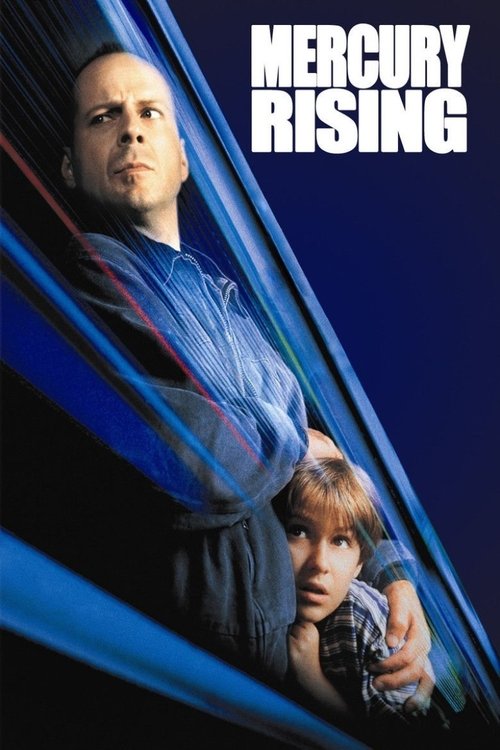
Mercury Rising
Renegade FBI agent Art Jeffries protects a nine-year-old autistic boy who has cracked the government's new "unbreakable" code.
Working with a mid-range budget of $60.0M, the film achieved a modest success with $93.1M in global revenue (+55% profit margin).


Plot Structure
Story beats plotted across runtime


Narrative Arc
Emotional journey through the story's key moments
Story Circle
Blueprint 15-beat structure
Arcplot Score Breakdown
Weighted: Precision (70%) + Arc (15%) + Theme (15%)
Mercury Rising (1998) reveals meticulously timed plot construction, characteristic of Harold Becker's storytelling approach. This structural analysis examines how the film's 15-point plot structure maps to proven narrative frameworks across 1 hour and 51 minutes. With an Arcplot score of 6.7, the film balances conventional beats with creative variation.
Characters
Cast & narrative archetypes

Art Jeffries
Simon Lynch
Nicholas Kudrow
Stacey Siebring
Main Cast & Characters
Art Jeffries
Played by Bruce Willis
An undercover FBI agent who becomes the protector of an autistic boy who cracked a top-secret government code.
Simon Lynch
Played by Miko Hughes
A 9-year-old autistic savant who accidentally deciphers an NSA code called Mercury, making him a target for assassination.
Nicholas Kudrow
Played by Alec Baldwin
A ruthless NSA executive who orders the elimination of anyone who has seen the Mercury code to protect the program.
Stacey Siebring
Played by Chi McBride
Art Jeffries' FBI partner and friend who assists in protecting Simon from the NSA.
Structural Analysis
The Status Quo at 1 minutes (1% through the runtime) establishes Art Jeffries is undercover with a militia group. The operation goes badly wrong when a young informant is killed, establishing Art as a damaged agent haunted by his failure to protect the innocent.. The analysis reveals that this early placement immediately immerses viewers in the story world.
The inciting incident occurs at 13 minutes when Kudrow orders a hit on the Lynch family to protect the Mercury code. A hitman murders Simon's parents while Simon hides. The boy calls the FBI number from the puzzle, setting the collision course with Art.. At 12% through the film, this Disruption aligns precisely with traditional story structure. This beat shifts the emotional landscape, launching the protagonist into the central conflict.
The First Threshold at 28 minutes marks the transition into Act II, occurring at 25% of the runtime. This indicates the protagonist's commitment to Art makes the active choice to protect Simon personally rather than handing him over to the system. When he realizes people are trying to kill the boy, he goes rogue, taking Simon with him and defying orders., moving from reaction to action.
At 56 minutes, the Midpoint arrives at 50% of the runtime—precisely centered, creating perfect narrative symmetry. The analysis reveals that this crucial beat Art's ally Stacey, who was helping him investigate, is murdered by Kudrow's assassin. The stakes raise dramatically—this is no longer just about protecting Simon but about exposing a government conspiracy that kills anyone who gets close., fundamentally raising what's at risk. The emotional intensity shifts, dividing the narrative into clear before-and-after phases.
The Collapse moment at 83 minutes (75% through) represents the emotional nadir. Here, Simon is captured by Kudrow's forces. Art is wounded and seemingly defeated. The boy he swore to protect—his chance at redemption—has been taken. Art faces his worst fear: failing another innocent child., shows the protagonist at their lowest point. This beat's placement in the final quarter sets up the climactic reversal.
The Second Threshold at 89 minutes initiates the final act resolution at 80% of the runtime. Art realizes Kudrow will take Simon to a high-profile location to stage an "accident." Armed with this insight and his connection to Simon, Art commits to a final rescue mission, combining his FBI skills with his newfound emotional purpose., demonstrating the transformation achieved throughout the journey.
Emotional Journey
Mercury Rising's emotional architecture traces a deliberate progression across 15 carefully calibrated beats.
Narrative Framework
This structural analysis employs proven narrative structure principles that track dramatic progression. By mapping Mercury Rising against these established plot points, we can identify how Harold Becker utilizes or subverts traditional narrative conventions. The plot point approach reveals not only adherence to structural principles but also creative choices that distinguish Mercury Rising within the action genre.
Harold Becker's Structural Approach
Among the 6 Harold Becker films analyzed on Arcplot, the average structural score is 7.0, demonstrating varied approaches to story architecture. Mercury Rising takes a more unconventional approach compared to the director's typical style. For comparative analysis, explore the complete Harold Becker filmography.
Comparative Analysis
Additional action films include The Bad Guys, Puss in Boots and Venom: The Last Dance. For more Harold Becker analyses, see Malice, Domestic Disturbance and City Hall.
Plot Points by Act
Act I
SetupStatus Quo
Art Jeffries is undercover with a militia group. The operation goes badly wrong when a young informant is killed, establishing Art as a damaged agent haunted by his failure to protect the innocent.
Theme
Art's superior tells him he's been reassigned because he's "too emotionally involved." The theme is stated: true protection requires emotional connection, not detachment—the very thing the system punishes Art for.
Worldbuilding
We see Art demoted to desk duty, struggling with his failure. Parallel story introduces Simon Lynch, an autistic savant, and his parents. Simon solves a puzzle in a magazine that unknowingly contains the NSA's unbreakable Mercury code. NSA Lt. Col. Kudrow discovers the breach.
Disruption
Kudrow orders a hit on the Lynch family to protect the Mercury code. A hitman murders Simon's parents while Simon hides. The boy calls the FBI number from the puzzle, setting the collision course with Art.
Resistance
Art is sent to investigate what appears to be a murder-suicide. He discovers Simon hiding in the closet. Art pieces together that this wasn't a simple tragedy—someone wanted this family dead. He debates whether to get involved beyond his assignment.
Act II
ConfrontationFirst Threshold
Art makes the active choice to protect Simon personally rather than handing him over to the system. When he realizes people are trying to kill the boy, he goes rogue, taking Simon with him and defying orders.
Mirror World
Art begins to truly connect with Simon, learning how to communicate with the autistic boy. Simon's pure innocence and unique way of seeing the world starts to heal Art's emotional wounds from the informant's death.
Premise
Art protects Simon while investigating the conspiracy. He evades Kudrow's assassins, gains Simon's trust through patience and care, and uncovers that the NSA is behind the murders. Art reaches out to trusted contacts for help while keeping Simon safe in various hideouts.
Midpoint
Art's ally Stacey, who was helping him investigate, is murdered by Kudrow's assassin. The stakes raise dramatically—this is no longer just about protecting Simon but about exposing a government conspiracy that kills anyone who gets close.
Opposition
Kudrow intensifies his pursuit. Art is framed and hunted by his own agency. The assassin gets closer. Art struggles to find anyone he can trust while Simon becomes increasingly traumatized. Every safe haven is compromised.
Collapse
Simon is captured by Kudrow's forces. Art is wounded and seemingly defeated. The boy he swore to protect—his chance at redemption—has been taken. Art faces his worst fear: failing another innocent child.
Crisis
Art, injured and alone, must confront his demons. He processes the guilt from both the informant's death and now Simon's capture. He has to decide whether to give up or find the strength to fight one more time.
Act III
ResolutionSecond Threshold
Art realizes Kudrow will take Simon to a high-profile location to stage an "accident." Armed with this insight and his connection to Simon, Art commits to a final rescue mission, combining his FBI skills with his newfound emotional purpose.
Synthesis
Art infiltrates the Chicago Federal Building where Kudrow holds Simon. A climactic confrontation ensues on the rooftop. Art defeats the assassin and confronts Kudrow. The truth about Mercury is exposed, and Kudrow is killed trying to eliminate Simon.
Transformation
Art sits with Simon, no longer a disgraced loner but a protector who found redemption. Simon reaches out and touches Art—a profound gesture for an autistic child. Art saved the child he couldn't save before, healing his emotional wounds through connection.