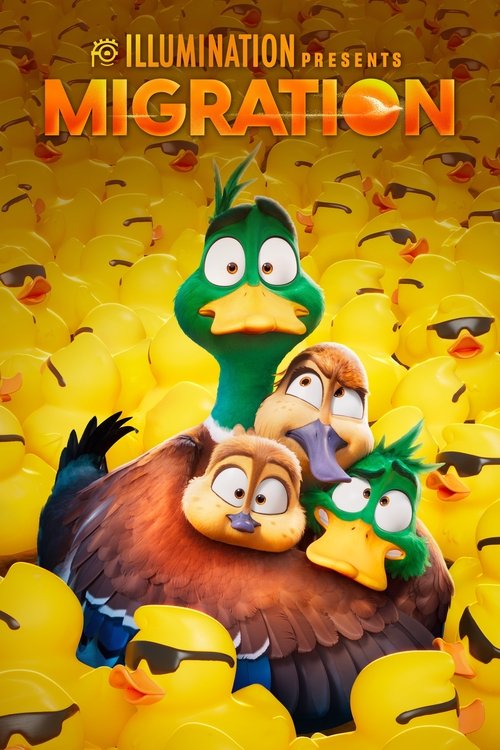
Migration
After a migrating duck family alights on their pond with thrilling tales of far-flung places, the Mallard family embarks on a family road trip, from New England, to New York City, to tropical Jamaica.
Despite a moderate budget of $72.0M, Migration became a financial success, earning $298.8M worldwide—a 315% return.
1 win & 8 nominations


Plot Structure
Story beats plotted across runtime


Narrative Arc
Emotional journey through the story's key moments
Story Circle
Blueprint 15-beat structure
Arcplot Score Breakdown
Weighted: Precision (70%) + Arc (15%) + Theme (15%)
Migration (2023) exemplifies precise plot construction, characteristic of Benjamin Renner's storytelling approach. This structural analysis examines how the film's 15-point plot structure maps to proven narrative frameworks across 1 hour and 23 minutes. With an Arcplot score of 7.4, the film balances conventional beats with creative variation.
Characters
Cast & narrative archetypes

Mack Mallard
Pam Mallard
Dax Mallard
Gwen Mallard
Uncle Dan
Delroy
Chump
Kim
The Chef
Main Cast & Characters
Mack Mallard
Played by Kumail Nanjiani
An overprotective father duck who fears the outside world but learns to embrace adventure for his family.
Pam Mallard
Played by Elizabeth Banks
Mack's adventurous wife who dreams of exploring the world beyond their pond.
Dax Mallard
Played by Caspar Jennings
The enthusiastic teenage son eager for adventure and new experiences.
Gwen Mallard
Played by Tresi Gazal
The young, curious daughter who sees wonder in everything during the family journey.
Uncle Dan
Played by Danny DeVito
Mack's elderly uncle who overcomes his fear of flying to join the migration.
Delroy
Played by Keegan-Michael Key
A friendly Jamaican parrot living in New York City who helps the Mallards navigate urban dangers.
Chump
Played by Awkwafina
A dimwitted but loyal henchman pigeon working for the Chef.
Kim
Played by Carol Kane
The intelligent leader of the pigeon flock who initially distrusts the ducks.
The Chef
Played by David Mitchell
A villainous restaurant chef who captures birds for his cuisine.
Structural Analysis
The Status Quo at 1 minutes (1% through the runtime) establishes The Mallard family lives safely in their New England pond. Mack, the overprotective father, keeps his family close while Pam yearns for adventure. The opening establishes Mack's fear-driven approach to life.. Structural examination shows that this early placement immediately immerses viewers in the story world.
The inciting incident occurs at 10 minutes when The migrating ducks' stories of Jamaica and the wider world captivate Pam and the kids. Pam challenges Mack's fear-based lifestyle, creating family tension. The status quo of staying safely in the pond is now untenable.. At 12% through the film, this Disruption aligns precisely with traditional story structure. This beat shifts the emotional landscape, launching the protagonist into the central conflict.
The First Threshold at 20 minutes marks the transition into Act II, occurring at 24% of the runtime. This demonstrates the protagonist's commitment to The Mallard family takes flight, leaving their pond for the first time. Mack makes the active choice to overcome his fear and lead his family on migration. They enter the wider world, committed to reaching Jamaica., moving from reaction to action.
At 42 minutes, the Midpoint arrives at 50% of the runtime—precisely centered, creating perfect narrative symmetry. Structural examination shows that this crucial beat The family is captured by a chef who plans to cook them. This false defeat raises the stakes dramatically - Mack's worst fears are realized. The fun and games are over; survival is now the immediate concern. The journey's dangers become real., fundamentally raising what's at risk. The emotional intensity shifts, dividing the narrative into clear before-and-after phases.
The Collapse moment at 62 minutes (74% through) represents the emotional nadir. Here, The family is separated in a moment of chaos. Mack believes he has failed them completely - his fear was right all along, and now his family may be lost forever. This represents the death of his identity as protector and his hope for their safety., illustrates the protagonist at their lowest point. This beat's placement in the final quarter sets up the climactic reversal.
The Second Threshold at 66 minutes initiates the final act resolution at 79% of the runtime. Mack realizes that true protection comes from empowering his family, not sheltering them. Armed with new courage and the lessons from Chump and Uncle Dan, he synthesizes caution with bravery. He formulates a bold plan to rescue his family., demonstrating the transformation achieved throughout the journey.
Emotional Journey
Migration's emotional architecture traces a deliberate progression across 15 carefully calibrated beats.
Narrative Framework
This structural analysis employs systematic plot point analysis that identifies crucial turning points. By mapping Migration against these established plot points, we can identify how Benjamin Renner utilizes or subverts traditional narrative conventions. The plot point approach reveals not only adherence to structural principles but also creative choices that distinguish Migration within the family genre.
Comparative Analysis
Additional family films include The Black Stallion, The Bad Guys and Ella Enchanted.
Plot Points by Act
Act I
SetupStatus Quo
The Mallard family lives safely in their New England pond. Mack, the overprotective father, keeps his family close while Pam yearns for adventure. The opening establishes Mack's fear-driven approach to life.
Theme
Uncle Dan, the wise elder duck, speaks about the importance of taking risks and experiencing the world beyond the familiar. "You can't discover new oceans unless you have the courage to lose sight of the shore." Theme: Growth requires leaving your comfort zone.
Worldbuilding
Introduction to the Mallard family dynamics: Mack the cautious father, Pam the adventurous mother, Dax the teenage son wanting more, and Gwen the innocent young daughter. A migrating duck family arrives and shares stories of Jamaica, planting the seed of adventure.
Disruption
The migrating ducks' stories of Jamaica and the wider world captivate Pam and the kids. Pam challenges Mack's fear-based lifestyle, creating family tension. The status quo of staying safely in the pond is now untenable.
Resistance
Mack debates the journey internally and with Pam. He fears the dangers but sees his family's disappointment. Uncle Dan encourages him. Mack finally agrees to migrate to Jamaica, though his fear remains. The family prepares for their first real adventure.
Act II
ConfrontationFirst Threshold
The Mallard family takes flight, leaving their pond for the first time. Mack makes the active choice to overcome his fear and lead his family on migration. They enter the wider world, committed to reaching Jamaica.
Mirror World
The family arrives in New York City and meets Chump, a streetwise Jamaica-bound parrot who becomes their guide. Chump represents the opposite of Mack - bold, experienced, and unafraid. This relationship will teach Mack what courage really means.
Premise
The fun of the migration adventure: flying over new landscapes, experiencing city life, navigating dangers together as a family. The kids grow braver, Pam feels alive, and even Mack begins to see the value of adventure. Comic mishaps and bonding moments.
Midpoint
The family is captured by a chef who plans to cook them. This false defeat raises the stakes dramatically - Mack's worst fears are realized. The fun and games are over; survival is now the immediate concern. The journey's dangers become real.
Opposition
Trapped and facing death, the family must work together to escape. External dangers intensify. Mack's overprotective instincts clash with the need for bold action. The family's unity is tested as they face predators, humans, and the harsh realities of the wild.
Collapse
The family is separated in a moment of chaos. Mack believes he has failed them completely - his fear was right all along, and now his family may be lost forever. This represents the death of his identity as protector and his hope for their safety.
Crisis
Mack processes his darkest moment alone. He confronts the reality that his fear-based protection actually endangered his family. He must decide: retreat to safety or embrace courage to save them. His internal transformation begins.
Act III
ResolutionSecond Threshold
Mack realizes that true protection comes from empowering his family, not sheltering them. Armed with new courage and the lessons from Chump and Uncle Dan, he synthesizes caution with bravery. He formulates a bold plan to rescue his family.
Synthesis
The finale: Mack executes the rescue with newfound courage. The family reunites and works together, each using their unique strengths. They overcome the final obstacles and reach Jamaica together, transformed by their journey.
Transformation
The Mallards arrive in Jamaica, splashing in tropical waters. Mirror image to opening: Mack now encourages his kids to explore and take risks. The once-fearful father has become an adventurous guide. The family plans their next migration, embracing a life of discovery.