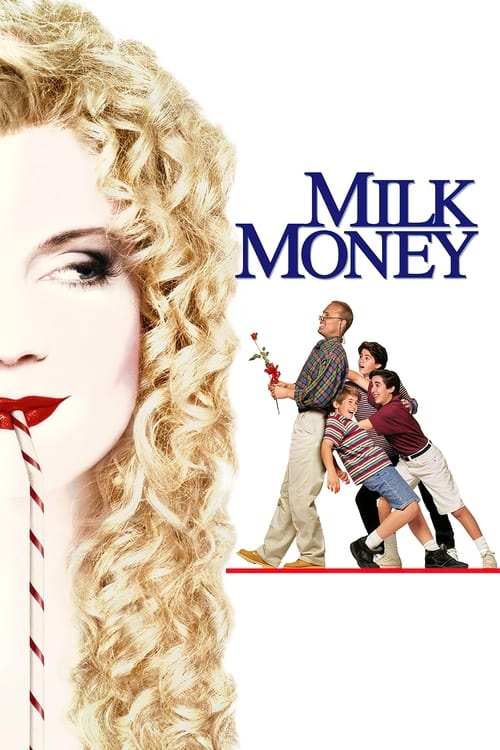
Milk Money
Three young boys pool their money and pay V, a kindhearted prostitute, to strip for them. Afterward, she drives them home to the suburbs -- but then her car breaks down. It's just as well, though, because a mobster named Waltzer is after her, and V realizes the suburbs are the perfect place to hide. But things get a lot more complicated when V falls in love with Tom, a single father who is unaware of her real profession.
The film earned $18.1M at the global box office.


Plot Structure
Story beats plotted across runtime


Narrative Arc
Emotional journey through the story's key moments
Story Circle
Blueprint 15-beat structure
Arcplot Score Breakdown
Weighted: Precision (70%) + Arc (15%) + Theme (15%)
Milk Money (1994) exemplifies deliberately positioned story structure, characteristic of Richard Benjamin's storytelling approach. This structural analysis examines how the film's 15-point plot structure maps to proven narrative frameworks across 1 hour and 48 minutes. With an Arcplot score of 7.3, the film balances conventional beats with creative variation.
Characters
Cast & narrative archetypes

V
Tom Wheeler
Frank Wheeler
Waltzer
Brad
Kevin
Main Cast & Characters
V
Played by Melanie Griffith
A kind-hearted prostitute from the city who befriends three young boys and forms a romantic connection with a widowed scientist.
Tom Wheeler
Played by Ed Harris
A widowed marine biologist and single father struggling to connect with his son while pursuing his research.
Frank Wheeler
Played by Michael Patrick Carter
A curious 12-year-old boy who initiates the journey to the city to learn about women and helps bring his father and V together.
Waltzer
Played by Malcolm McDowell
A dangerous mobster and V's pimp who pursues her when she leaves the city.
Brad
Played by Adam LaVorgna
One of Frank's best friends who joins the adventure to the city.
Kevin
Played by Brian Christopher
The third member of the trio of boys who pool their money for the city trip.
Structural Analysis
The Status Quo at 1 minutes (1% through the runtime) establishes Frank Wheeler, a widowed science teacher, lives a quiet suburban life with his son in their tree-house filled backyard, showing a wholesome but incomplete family missing a mother figure.. Significantly, this early placement immediately immerses viewers in the story world.
The inciting incident occurs at 13 minutes when The boys bike into the city with their "milk money" savings to find a prostitute who will show them what a naked woman looks like - an innocent quest that disrupts their suburban safety.. At 12% through the film, this Disruption aligns precisely with traditional story structure. This beat shifts the emotional landscape, launching the protagonist into the central conflict.
The First Threshold at 26 minutes marks the transition into Act II, occurring at 24% of the runtime. This shows the protagonist's commitment to Frank Jr. Makes the active choice to bring V home and introduce her to his father as a "math tutor," setting the romantic plot in motion and crossing from innocent curiosity into active matchmaking., moving from reaction to action.
At 53 minutes, the Midpoint arrives at 50% of the runtime—precisely centered, creating perfect narrative symmetry. The analysis reveals that this crucial beat Frank and V share their first kiss and genuine romantic connection. False victory: it seems like the relationship could work, but V's hidden past and Frank's need for honesty haven't been addressed yet., fundamentally raising what's at risk. The emotional intensity shifts, dividing the narrative into clear before-and-after phases.
The Collapse moment at 80 minutes (74% through) represents the emotional nadir. Here, The truth about V's profession is revealed to Frank. He feels betrayed by the deception, and V flees back to the city, believing she doesn't deserve this life. The dream of a new family dies., reveals the protagonist at their lowest point. This beat's placement in the final quarter sets up the climactic reversal.
The Second Threshold at 86 minutes initiates the final act resolution at 80% of the runtime. Frank Jr. Makes Frank realize that what V did for a living doesn't change who she is or how much she cares for them. Frank understands that real love means accepting someone's past and choosing a future together., demonstrating the transformation achieved throughout the journey.
Emotional Journey
Milk Money's emotional architecture traces a deliberate progression across 15 carefully calibrated beats.
Narrative Framework
This structural analysis employs structural analysis methodology used to understand storytelling architecture. By mapping Milk Money against these established plot points, we can identify how Richard Benjamin utilizes or subverts traditional narrative conventions. The plot point approach reveals not only adherence to structural principles but also creative choices that distinguish Milk Money within the comedy genre.
Richard Benjamin's Structural Approach
Among the 7 Richard Benjamin films analyzed on Arcplot, the average structural score is 7.1, reflecting strong command of classical structure. Milk Money represents one of the director's most structurally precise works. For comparative analysis, explore the complete Richard Benjamin filmography.
Comparative Analysis
Additional comedy films include The Bad Guys, Ella Enchanted and The Evening Star. For more Richard Benjamin analyses, see Mrs. Winterbourne, City Heat and My Favorite Year.
Plot Points by Act
Act I
SetupStatus Quo
Frank Wheeler, a widowed science teacher, lives a quiet suburban life with his son in their tree-house filled backyard, showing a wholesome but incomplete family missing a mother figure.
Theme
Frank's father-in-law asks him when he's going to start dating again, suggesting "that boy needs a mother" - establishing the theme of found family and moving past loss.
Worldbuilding
Introduction to Frank's world as a devoted single father and science teacher. His son Frank Jr. and friends save money for a curious mission, showing the boys' innocent curiosity about women and adult relationships.
Disruption
The boys bike into the city with their "milk money" savings to find a prostitute who will show them what a naked woman looks like - an innocent quest that disrupts their suburban safety.
Resistance
The boys meet V, a kind-hearted prostitute who reluctantly agrees to help them. After fulfilling their request, her car breaks down, forcing her to come to their suburban neighborhood. The boys debate how to help her.
Act II
ConfrontationFirst Threshold
Frank Jr. makes the active choice to bring V home and introduce her to his father as a "math tutor," setting the romantic plot in motion and crossing from innocent curiosity into active matchmaking.
Mirror World
V and Frank meet and there's immediate chemistry. V represents everything Frank has avoided since his wife's death - spontaneity, romance, and risk. She embodies the film's theme of second chances.
Premise
The "fun and games" of the premise: V pretending to be a tutor while Frank Jr. tries to make them fall in love. Frank and V grow closer, sharing tender moments. V experiences suburban normalcy she never had.
Midpoint
Frank and V share their first kiss and genuine romantic connection. False victory: it seems like the relationship could work, but V's hidden past and Frank's need for honesty haven't been addressed yet.
Opposition
V's dangerous past catches up as her former pimp tracks her down. The lies become harder to maintain. Frank's community and family grow suspicious. V struggles between her growing love and her shame about her profession.
Collapse
The truth about V's profession is revealed to Frank. He feels betrayed by the deception, and V flees back to the city, believing she doesn't deserve this life. The dream of a new family dies.
Crisis
Frank processes his anger and hurt, initially rejecting V completely. Frank Jr. is heartbroken. V returns to her old life but realizes she's changed. Both sit in darkness wondering if love can overcome the past.
Act III
ResolutionSecond Threshold
Frank Jr. makes Frank realize that what V did for a living doesn't change who she is or how much she cares for them. Frank understands that real love means accepting someone's past and choosing a future together.
Synthesis
Frank goes to the city to find V and fight for their relationship. He confronts her dangerous pimp to protect her. The family comes together to rescue V and bring her home, proving she belongs with them.
Transformation
V is integrated into Frank's suburban life legitimately. The image mirrors the opening but now the family is complete - Frank has moved past his grief, V has found redemption, and Frank Jr. has the mother figure he needed.