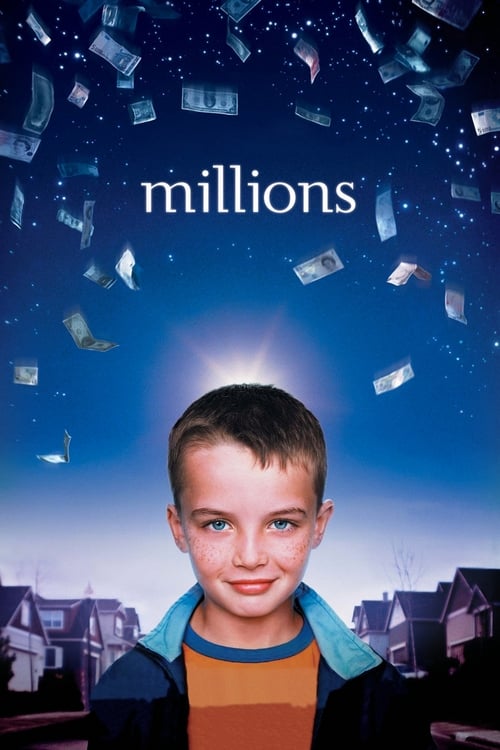
Millions
Two boys, still grieving the death of their mother, find themselves the unwitting benefactors of a bag of bank robbery loot in the week before the United Kingdom switches its official currency to the Euro. What's a kid to do?
Working with a modest budget of $7.5M, the film achieved a steady performer with $11.8M in global revenue (+57% profit margin).
2 wins & 7 nominations


Plot Structure
Story beats plotted across runtime


Narrative Arc
Emotional journey through the story's key moments
Story Circle
Blueprint 15-beat structure
Arcplot Score Breakdown
Weighted: Precision (70%) + Arc (15%) + Theme (15%)
Millions (2004) demonstrates deliberately positioned plot construction, characteristic of Danny Boyle's storytelling approach. This structural analysis examines how the film's 15-point plot structure maps to proven narrative frameworks across 1 hour and 38 minutes. With an Arcplot score of 7.2, the film balances conventional beats with creative variation.
Characters
Cast & narrative archetypes

Damian Cunningham
Anthony Cunningham
Ronnie Cunningham
Dorothy
Main Cast & Characters
Damian Cunningham
Played by Alexander Nathan Etel
A seven-year-old boy obsessed with saints who finds a bag of money and struggles with moral choices about how to use it.
Anthony Cunningham
Played by Lewis McGibbon
Damian's pragmatic older brother who wants to spend the found money on practical things and personal gain.
Ronnie Cunningham
Played by James Nesbitt
The boys' father, a widower trying to rebuild his life and raise his sons after his wife's death.
Dorothy
Played by Daisy Donovan
A kind woman who works at a community center and becomes a potential love interest for Ronnie.
Structural Analysis
The Status Quo at 1 minutes (1% through the runtime) establishes Damian plays alone in his cardboard hermitage near the train tracks, talking to his deceased mother and saints. His innocent, imaginative world is established - a young boy coping with loss through faith and fantasy.. Notably, this early placement immediately immerses viewers in the story world.
The inciting incident occurs at 12 minutes when A bag containing £229,320 in cash literally falls from the sky onto Damian's cardboard hermitage by the train tracks. The ordinary world is shattered by sudden, inexplicable wealth just days before the currency becomes worthless.. At 12% through the film, this Disruption aligns precisely with traditional story structure. This beat shifts the emotional landscape, launching the protagonist into the central conflict.
The First Threshold at 24 minutes marks the transition into Act II, occurring at 25% of the runtime. This demonstrates the protagonist's commitment to The brothers actively decide to spend the money rather than turn it in. Damian begins giving to charities and the poor, while Anthony starts buying things and making investments. They cross into the world of having wealth., moving from reaction to action.
At 48 minutes, the Midpoint arrives at 49% of the runtime—precisely centered, creating perfect narrative symmetry. Notably, this crucial beat The robber who stole the money appears, tracking the boys. Stakes escalate - this isn't found money but stolen money, and dangerous people want it back. The fun is over; real threat enters. False victory (helping others) meets reality (criminal danger)., fundamentally raising what's at risk. The emotional intensity shifts, dividing the narrative into clear before-and-after phases.
The Collapse moment at 73 minutes (74% through) represents the emotional nadir. Here, The robber directly threatens the boys, or the truth comes out to their father in a devastating way. Damian's innocent faith is shattered - the money has brought danger, not blessing. The dream of helping others dies in the face of harsh reality., shows the protagonist at their lowest point. This beat's placement in the final quarter sets up the climactic reversal.
The Second Threshold at 78 minutes initiates the final act resolution at 80% of the runtime. Damian realizes true charity isn't about money but about genuine love and sacrifice. The family unites. They devise a plan to resolve the crisis - likely involving giving away or disposing of the remaining money before the deadline, choosing people over pounds., demonstrating the transformation achieved throughout the journey.
Emotional Journey
Millions's emotional architecture traces a deliberate progression across 15 carefully calibrated beats.
Narrative Framework
This structural analysis employs structural analysis methodology used to understand storytelling architecture. By mapping Millions against these established plot points, we can identify how Danny Boyle utilizes or subverts traditional narrative conventions. The plot point approach reveals not only adherence to structural principles but also creative choices that distinguish Millions within the comedy genre.
Danny Boyle's Structural Approach
Among the 12 Danny Boyle films analyzed on Arcplot, the average structural score is 6.6, demonstrating varied approaches to story architecture. Millions represents one of the director's most structurally precise works. For comparative analysis, explore the complete Danny Boyle filmography.
Comparative Analysis
Additional comedy films include The Bad Guys, Ella Enchanted and The Evening Star. For more Danny Boyle analyses, see Yesterday, T2 Trainspotting and Trainspotting.
Plot Points by Act
Act I
SetupStatus Quo
Damian plays alone in his cardboard hermitage near the train tracks, talking to his deceased mother and saints. His innocent, imaginative world is established - a young boy coping with loss through faith and fantasy.
Theme
Damian's teacher or a saint figure discusses what we do with what we're given, introducing the central question: when blessed with abundance, do we serve ourselves or others?
Worldbuilding
The boys and their father settle into a new housing development after their mother's death. Damian's saintly visions, Anthony's pragmatic materialism, and their father's struggle to hold the family together are established. The impending Euro currency conversion creates urgency.
Disruption
A bag containing £229,320 in cash literally falls from the sky onto Damian's cardboard hermitage by the train tracks. The ordinary world is shattered by sudden, inexplicable wealth just days before the currency becomes worthless.
Resistance
Damian wants to give the money to the poor (following his saints), while Anthony wants to invest it. They debate what to do, hide it, and begin small experiments. Their father remains unaware. The clock is ticking toward the Euro conversion deadline.
Act II
ConfrontationFirst Threshold
The brothers actively decide to spend the money rather than turn it in. Damian begins giving to charities and the poor, while Anthony starts buying things and making investments. They cross into the world of having wealth.
Mirror World
Dorothy, a charity worker and potential love interest for their father, represents the thematic counterpoint - genuine goodness without material motivation. She embodies authentic charity versus Damian's naive giving.
Premise
The "fun and games" of having money: Damian gives generously to anyone in need, Anthony buys property and stocks through school friends. The community reacts - some with genuine need, others with greed. The boys navigate wealth's complications while keeping it secret from their father.
Midpoint
The robber who stole the money appears, tracking the boys. Stakes escalate - this isn't found money but stolen money, and dangerous people want it back. The fun is over; real threat enters. False victory (helping others) meets reality (criminal danger).
Opposition
The robber closes in, pressuring Damian. The currency deadline approaches. Their father discovers something is wrong. Anthony's materialism grows while Damian's faith is tested. The money that seemed like a blessing becomes a burden and a danger to the family.
Collapse
The robber directly threatens the boys, or the truth comes out to their father in a devastating way. Damian's innocent faith is shattered - the money has brought danger, not blessing. The dream of helping others dies in the face of harsh reality.
Crisis
Damian processes the loss of his innocent worldview. The family faces the consequences of the money. Dark night of doubt - did trying to do good only make things worse? Can innocence survive in a corrupt world?
Act III
ResolutionSecond Threshold
Damian realizes true charity isn't about money but about genuine love and sacrifice. The family unites. They devise a plan to resolve the crisis - likely involving giving away or disposing of the remaining money before the deadline, choosing people over pounds.
Synthesis
The finale: confronting the robber, giving away the money in a grand gesture of charity, and resolving the family's emotional wounds. The currency conversion happens. The money becomes worthless, but the family becomes whole. Action and heart combine.
Transformation
The family together in their home, now complete with Dorothy. Damian still sees his saints, but his understanding has matured - true wealth is family and love, not currency. The cardboard hermitage is gone, but faith remains, transformed by experience.