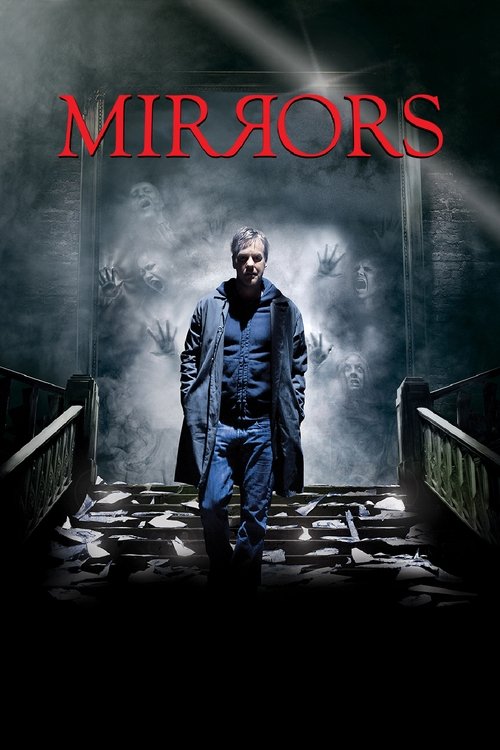
Mirrors
An ex-cop and his family are the target of an evil force that is using mirrors as a gateway into their home.
Despite a moderate budget of $35.0M, Mirrors became a box office success, earning $72.4M worldwide—a 107% return.


Plot Structure
Story beats plotted across runtime


Narrative Arc
Emotional journey through the story's key moments
Story Circle
Blueprint 15-beat structure
Arcplot Score Breakdown
Weighted: Precision (70%) + Arc (15%) + Theme (15%)
Mirrors (2008) exemplifies precise plot construction, characteristic of Alexandre Aja's storytelling approach. This structural analysis examines how the film's 15-point plot structure maps to proven narrative frameworks across 1 hour and 51 minutes. With an Arcplot score of 7.3, the film balances conventional beats with creative variation.
Characters
Cast & narrative archetypes

Ben Carson
Amy Carson
Angela Carson
Gary Lewis
Larry Byrne
Anna Esseker
Michael Carson
Main Cast & Characters
Ben Carson
Played by Kiefer Sutherland
Former NYPD detective turned security guard investigating supernatural occurrences in mirrors while battling alcoholism and trying to reunite with his family.
Amy Carson
Played by Paula Patton
Ben's estranged wife, a medical professional trying to protect their children while dealing with Ben's erratic behavior and addiction recovery.
Angela Carson
Played by Cameron Boyce
Ben and Amy's young daughter who becomes targeted by the malevolent mirror entity.
Gary Lewis
Played by Josh Cole
Night security guard at the Mayflower department store who warns Ben about the mirrors before meeting a gruesome fate.
Larry Byrne
Played by Jason Flemyng
Former security guard at the Mayflower who was driven to murder his family by the mirror entity.
Anna Esseker
Played by Mary Beth Peil
A psychiatric patient with a mysterious connection to the mirror entity and the key to stopping the supernatural threat.
Michael Carson
Played by Erica Gluck
Ben and Amy's young son who is also threatened by the mirror entity.
Structural Analysis
The Status Quo at 1 minutes (1% through the runtime) establishes Gary Lewis, the previous night watchman at the Mayflower department store, is shown fleeing in terror before being forced by his reflection to slit his own throat with a shard of mirror. This horrific opening establishes the deadly supernatural threat.. Structural examination shows that this early placement immediately immerses viewers in the story world.
The inciting incident occurs at 13 minutes when On his first night patrol, Ben discovers the mirrors in the burned Mayflower are impossibly pristine and clean. He sees disturbing visions in them and finds a handprint and the name "Esseker" scratched into a frame, signaling something supernatural is at work.. At 12% through the film, this Disruption aligns precisely with traditional story structure. This beat shifts the emotional landscape, launching the protagonist into the central conflict.
The First Threshold at 28 minutes marks the transition into Act II, occurring at 25% of the runtime. This illustrates the protagonist's commitment to Ben's sister Angela is brutally killed when her reflection forces her to tear her own jaw apart in the bathtub. Ben witnesses the aftermath and realizes the mirrors can reach his family anywhere. He commits fully to finding out what Esseker wants., moving from reaction to action.
At 56 minutes, the Midpoint arrives at 50% of the runtime—precisely centered, creating perfect narrative symmetry. Structural examination shows that this crucial beat Ben discovers that Anna Esseker was a young girl treated at the hospital for schizophrenia, but the treatment transferred a demon from her into the mirrors. The entity wants Anna brought back to reclaim what was taken. This false defeat reveals the horrifying scope of what Ben must do., fundamentally raising what's at risk. The emotional intensity shifts, dividing the narrative into clear before-and-after phases.
The Collapse moment at 83 minutes (75% through) represents the emotional nadir. Here, The demon in the mirrors attacks Ben's family directly, threatening to kill his children. Amy is nearly drowned by her own reflection in the bathtub. Ben realizes he cannot defeat this entity through normal means and must bring Anna back to the Mayflower., demonstrates the protagonist at their lowest point. This beat's placement in the final quarter sets up the climactic reversal.
The Second Threshold at 89 minutes initiates the final act resolution at 80% of the runtime. Ben and Anna enter the burned ruins of the Mayflower department store together. Anna willingly stands before the mirrors to reclaim the demon, accepting that this confrontation has been inevitable since her childhood treatment., demonstrating the transformation achieved throughout the journey.
Emotional Journey
Mirrors's emotional architecture traces a deliberate progression across 15 carefully calibrated beats.
Narrative Framework
This structural analysis employs systematic plot point analysis that identifies crucial turning points. By mapping Mirrors against these established plot points, we can identify how Alexandre Aja utilizes or subverts traditional narrative conventions. The plot point approach reveals not only adherence to structural principles but also creative choices that distinguish Mirrors within the horror genre.
Alexandre Aja's Structural Approach
Among the 6 Alexandre Aja films analyzed on Arcplot, the average structural score is 7.2, reflecting strong command of classical structure. Mirrors represents one of the director's most structurally precise works. For comparative analysis, explore the complete Alexandre Aja filmography.
Comparative Analysis
Additional horror films include Thinner, A Nightmare on Elm Street and Mary Reilly. For more Alexandre Aja analyses, see Never Let Go, The Hills Have Eyes and High Tension.
Plot Points by Act
Act I
SetupStatus Quo
Gary Lewis, the previous night watchman at the Mayflower department store, is shown fleeing in terror before being forced by his reflection to slit his own throat with a shard of mirror. This horrific opening establishes the deadly supernatural threat.
Theme
Ben's sister Angela tells him he needs to "face his demons" and move past the shooting incident that got him suspended. This encapsulates the film's theme: we cannot escape our reflections and must confront what haunts us.
Worldbuilding
Ben Carson is introduced as a troubled ex-cop living with his sister, separated from his wife Amy and their two children. He struggles with alcoholism and guilt over a fatal shooting. He takes a job as night security at the fire-damaged Mayflower department store.
Disruption
On his first night patrol, Ben discovers the mirrors in the burned Mayflower are impossibly pristine and clean. He sees disturbing visions in them and finds a handprint and the name "Esseker" scratched into a frame, signaling something supernatural is at work.
Resistance
Ben investigates the mirrors and the Mayflower's history while experiencing increasingly disturbing visions. He learns about the fire that destroyed the store and begins researching "Esseker." His wife Amy and sister Angela doubt his sanity, thinking his trauma is manifesting.
Act II
ConfrontationFirst Threshold
Ben's sister Angela is brutally killed when her reflection forces her to tear her own jaw apart in the bathtub. Ben witnesses the aftermath and realizes the mirrors can reach his family anywhere. He commits fully to finding out what Esseker wants.
Mirror World
Ben's estranged wife Amy begins to believe him after witnessing strange mirror phenomena herself. Their fractured relationship becomes the emotional subplot as they must work together to protect their children Michael and Daisy from the supernatural threat.
Premise
Ben investigates the Mayflower's dark history, discovering it was originally a psychiatric hospital. He uncovers records about a patient named Anna Esseker who underwent experimental treatment. The mirrors demand he "find Esseker" while threatening his family.
Midpoint
Ben discovers that Anna Esseker was a young girl treated at the hospital for schizophrenia, but the treatment transferred a demon from her into the mirrors. The entity wants Anna brought back to reclaim what was taken. This false defeat reveals the horrifying scope of what Ben must do.
Opposition
Ben races against time to locate Anna Esseker while the mirrors grow more aggressive. Amy covers all reflective surfaces in their home to protect the children. Ben tracks Anna to a convent where she has been hiding for decades, living as a nun to avoid all mirrors.
Collapse
The demon in the mirrors attacks Ben's family directly, threatening to kill his children. Amy is nearly drowned by her own reflection in the bathtub. Ben realizes he cannot defeat this entity through normal means and must bring Anna back to the Mayflower.
Crisis
Ben convinces the reluctant Anna Esseker to return to the Mayflower with him, knowing it means confronting the demon that was exorcised from her decades ago. Anna agrees to sacrifice herself to save Ben's innocent family.
Act III
ResolutionSecond Threshold
Ben and Anna enter the burned ruins of the Mayflower department store together. Anna willingly stands before the mirrors to reclaim the demon, accepting that this confrontation has been inevitable since her childhood treatment.
Synthesis
The demon emerges from the mirrors and possesses Anna. Ben fights the fully manifested demon in a brutal battle through the flooded basement of the Mayflower. He ruptures a gas line and ignites it, destroying the demon and the mirrors in a massive explosion.
Transformation
Ben emerges from the explosion and returns home, but his family cannot see or hear him. He realizes all text appears reversed - he is now trapped inside the mirror world, having traded places with his reflection. His sacrifice saved his family but cost him everything.