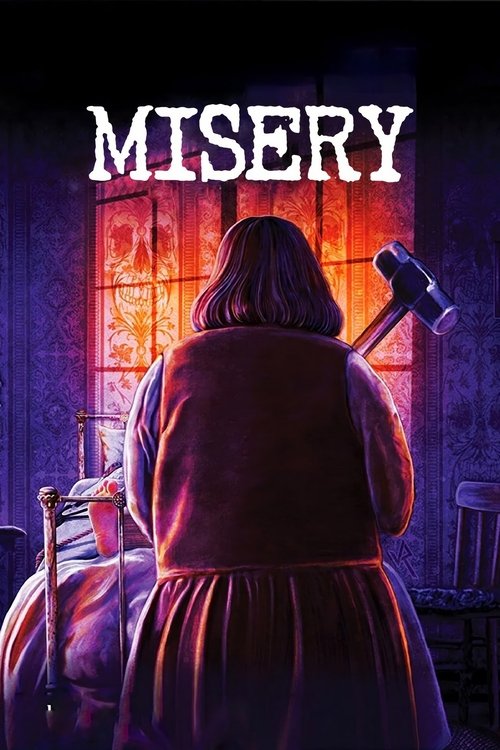
Misery
After an accident, acclaimed novelist Paul Sheldon is rescued by a nurse who claims to be his biggest fan. Her obsession takes a dark turn when she holds him captive in her remote Colorado home and forces him to write back to life the popular literary character he killed off.
Despite a mid-range budget of $20.0M, Misery became a solid performer, earning $61.3M worldwide—a 207% return.
1 Oscar. 7 wins & 10 nominations


Plot Structure
Story beats plotted across runtime


Narrative Arc
Emotional journey through the story's key moments
Story Circle
Blueprint 15-beat structure
Arcplot Score Breakdown
Weighted: Precision (70%) + Arc (15%) + Theme (15%)
Misery (1990) exemplifies precise story structure, characteristic of Rob Reiner's storytelling approach. This structural analysis examines how the film's 15-point plot structure maps to proven narrative frameworks across 1 hour and 47 minutes. With an Arcplot score of 7.2, the film balances conventional beats with creative variation.
Structural Analysis
The Status Quo at 1 minutes (1% through the runtime) establishes Paul Sheldon finishes writing his novel "Misery's Child" at a Colorado lodge, celebrating his creative freedom and independence as a successful author ready to move beyond the romance genre that made him famous.. Structural examination shows that this early placement immediately immerses viewers in the story world.
The inciting incident occurs at 12 minutes when Annie reads the new Misery novel and discovers Paul has killed off her beloved character Misery Chastain. Her rage erupts, transforming from adoring fan to dangerous captor, smashing his medication and leaving him in agony.. At 12% through the film, this Disruption aligns precisely with traditional story structure. This beat shifts the emotional landscape, launching the protagonist into the central conflict.
The First Threshold at 26 minutes marks the transition into Act II, occurring at 25% of the runtime. This indicates the protagonist's commitment to Paul makes the active choice to write "Misery's Return" - not just to survive, but to begin playing the long game of manipulation and escape. He enters the world of psychological warfare with his captor., moving from reaction to action.
At 53 minutes, the Midpoint arrives at 49% of the runtime—precisely centered, creating perfect narrative symmetry. The analysis reveals that this crucial beat Annie performs the "hobbling" - breaking Paul's ankles with a sledgehammer as punishment for leaving his room. This false defeat destroys his hope of physical escape and raises the stakes to life-or-death. The game is no longer about when he'll escape, but if he'll survive., fundamentally raising what's at risk. The emotional intensity shifts, dividing the narrative into clear before-and-after phases.
The Collapse moment at 80 minutes (75% through) represents the emotional nadir. Here, Sheriff Buster discovers Paul's car at Annie's property. Just as rescue seems imminent, Annie kills Buster with a shotgun. Paul's last hope for outside rescue dies literally, leaving him completely alone with a murderer., illustrates the protagonist at their lowest point. This beat's placement in the final quarter sets up the climactic reversal.
The Second Threshold at 85 minutes initiates the final act resolution at 80% of the runtime. Paul finishes the novel and realizes the manuscript itself is his weapon. He understands that Annie's obsession with the story is both his prison and his key to freedom. He prepares for final confrontation, synthesizing his creative power with survival instinct., demonstrating the transformation achieved throughout the journey.
Emotional Journey
Misery's emotional architecture traces a deliberate progression across 15 carefully calibrated beats.
Narrative Framework
This structural analysis employs proven narrative structure principles that track dramatic progression. By mapping Misery against these established plot points, we can identify how Rob Reiner utilizes or subverts traditional narrative conventions. The plot point approach reveals not only adherence to structural principles but also creative choices that distinguish Misery within the drama genre.
Rob Reiner's Structural Approach
Among the 17 Rob Reiner films analyzed on Arcplot, the average structural score is 6.9, demonstrating varied approaches to story architecture. Misery represents one of the director's most structurally precise works. For comparative analysis, explore the complete Rob Reiner filmography.
Comparative Analysis
Additional drama films include After Thomas, South Pacific and Dirty Dancing: Havana Nights. For more Rob Reiner analyses, see The Sure Thing, The American President and The Story of Us.
Plot Points by Act
Act I
SetupStatus Quo
Paul Sheldon finishes writing his novel "Misery's Child" at a Colorado lodge, celebrating his creative freedom and independence as a successful author ready to move beyond the romance genre that made him famous.
Theme
Annie Wilkes tells unconscious Paul "Don't worry, I'm a nurse" - establishing the theme of caretaking twisted into imprisonment, and the power dynamic between savior and captive that will define their relationship.
Worldbuilding
Paul drives through a blizzard, drinks champagne while driving, and crashes. Annie Wilkes finds him in the snow, brings him to her remote farmhouse, and nurses him back to consciousness. We learn she's his "number one fan" and he has severe leg injuries.
Disruption
Annie reads the new Misery novel and discovers Paul has killed off her beloved character Misery Chastain. Her rage erupts, transforming from adoring fan to dangerous captor, smashing his medication and leaving him in agony.
Resistance
Paul realizes he's a prisoner. Annie forces him to burn his new manuscript and demands he write a new novel bringing Misery back to life. Paul debates resistance but his broken legs, isolation, and dependence on Annie for pain medication leave him powerless.
Act II
ConfrontationFirst Threshold
Paul makes the active choice to write "Misery's Return" - not just to survive, but to begin playing the long game of manipulation and escape. He enters the world of psychological warfare with his captor.
Mirror World
Sheriff Buster and his wife Virginia represent the normal world and potential rescue. Their investigation into Paul's disappearance runs parallel to his captivity, embodying the hope and connection to civilization that Paul has lost.
Premise
Paul writes the new Misery novel while secretly exploring Annie's house during her absences, searching for escape routes and tools. He discovers her scrapbook revealing she's a serial killer. The cat-and-mouse game intensifies as he manipulates her emotions through his writing.
Midpoint
Annie performs the "hobbling" - breaking Paul's ankles with a sledgehammer as punishment for leaving his room. This false defeat destroys his hope of physical escape and raises the stakes to life-or-death. The game is no longer about when he'll escape, but if he'll survive.
Opposition
Paul's condition deteriorates as he's completely immobilized. Annie's instability worsens - she kills a state trooper who comes to the door. The sheriff continues investigating. Paul's only weapon is the novel itself, which he uses to manipulate Annie's emotions while secretly planning.
Collapse
Sheriff Buster discovers Paul's car at Annie's property. Just as rescue seems imminent, Annie kills Buster with a shotgun. Paul's last hope for outside rescue dies literally, leaving him completely alone with a murderer.
Crisis
Annie disposes of Buster's body while Paul processes the horror of witnessing murder and losing his rescuer. He faces the dark reality that no one is coming and he must save himself despite his shattered legs, or die in this house.
Act III
ResolutionSecond Threshold
Paul finishes the novel and realizes the manuscript itself is his weapon. He understands that Annie's obsession with the story is both his prison and his key to freedom. He prepares for final confrontation, synthesizing his creative power with survival instinct.
Synthesis
Paul stages a celebration dinner, drugs Annie's wine, and burns the manuscript - the only copy of "Misery's Return." When Annie attacks in rage, Paul fights back using his wit and the typewriter as a weapon, ultimately killing her. He crawls to safety and is rescued.
Transformation
Months later, Paul meets his agent at a restaurant, now walking with a cane. When a waitress says she's his number one fan, he freezes in terror before recovering. He's survived but forever changed - free but haunted, no longer the carefree writer from the opening.