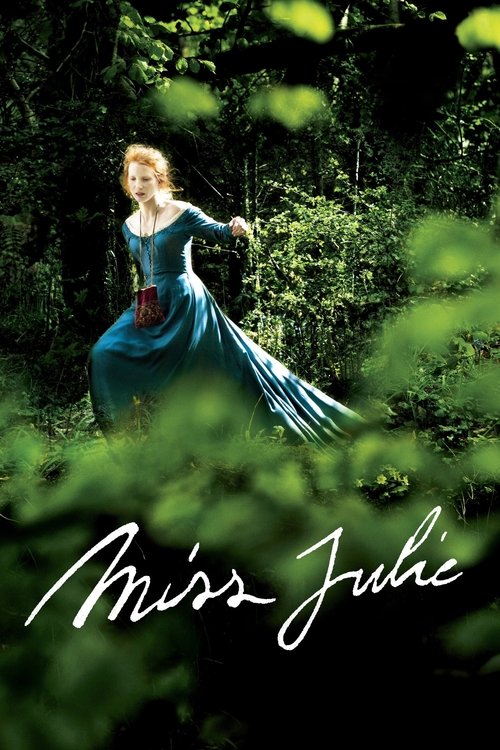
Miss Julie
Over the course of a midsummer night in Fermanagh in 1890, an unsettled daughter of the Anglo-Irish aristocracy encourages her father's valet to seduce her.
The film disappointed at the box office against its tight budget of $5.5M, earning $5.0M globally (-9% loss).
1 win & 7 nominations


Plot Structure
Story beats plotted across runtime


Narrative Arc
Emotional journey through the story's key moments
Story Circle
Blueprint 15-beat structure
Arcplot Score Breakdown
Weighted: Precision (70%) + Arc (15%) + Theme (15%)
Miss Julie (2014) exhibits carefully calibrated narrative architecture, characteristic of Liv Ullmann's storytelling approach. This structural analysis examines how the film's 15-point plot structure maps to proven narrative frameworks across 2 hours and 10 minutes. With an Arcplot score of 7.1, the film balances conventional beats with creative variation.
Characters
Cast & narrative archetypes

Miss Julie
John
Kathleen
Main Cast & Characters
Miss Julie
Played by Jessica Chastain
An aristocratic young woman who engages in a dangerous seduction with her father's valet on Midsummer's Eve, leading to her psychological unraveling.
John
Played by Colin Farrell
The ambitious and calculating valet who becomes entangled in a destructive relationship with Miss Julie, torn between desire and social consequences.
Kathleen
Played by Samantha Morton
John's fiancée and the cook, a devout woman who represents traditional morality and social order.
Structural Analysis
The Status Quo at 2 minutes (1% through the runtime) establishes Opening shots of the estate's kitchen and servants' quarters on Midsummer's Eve. John the valet and Kathleen the cook prepare for the night's festivities, establishing the rigid class hierarchy of the household.. Notably, this early placement immediately immerses viewers in the story world.
The inciting incident occurs at 15 minutes when Miss Julie enters the kitchen and commands John to dance with her at the servants' celebration, breaking social protocol. Her inappropriate familiarity with the valet disrupts the established order and sets the dangerous intimacy in motion.. At 11% through the film, this Disruption aligns precisely with traditional story structure. This beat shifts the emotional landscape, launching the protagonist into the central conflict.
The First Threshold at 31 minutes marks the transition into Act II, occurring at 24% of the runtime. This shows the protagonist's commitment to Julie and John return to the kitchen alone after the dance, and Julie makes the active choice to stay and drink with John rather than maintain proper distance. This decision to remain in his private space crosses the point of no return., moving from reaction to action.
At 62 minutes, the Midpoint arrives at 48% of the runtime—precisely centered, creating perfect narrative symmetry. Significantly, this crucial beat Julie and John have sex (occurs offscreen as they exit to his room). This consummation is a false victory - what seemed like liberation and passion becomes the moment that dooms them both. The act irrevocably destroys the social order and seals their fates., fundamentally raising what's at risk. The emotional intensity shifts, dividing the narrative into clear before-and-after phases.
The Collapse moment at 94 minutes (72% through) represents the emotional nadir. Here, John kills Julie's beloved finch at her command to prove his devotion, but does it with brutal contempt. This literal death symbolizes the death of Julie's romantic illusions, her dignity, and any possibility of escape. She realizes the full horror of her situation and John's true nature., reveals the protagonist at their lowest point. This beat's placement in the final quarter sets up the climactic reversal.
The Second Threshold at 104 minutes initiates the final act resolution at 80% of the runtime. The Count (Julie's father) rings his bell, summoning John. John immediately reverts to his servile role, and this moment crystallizes the truth: the class structure is immutable, John will always choose his position over Julie, and her only escape from disgrace is death. Julie sees clearly for the first time., demonstrating the transformation achieved throughout the journey.
Emotional Journey
Miss Julie's emotional architecture traces a deliberate progression across 15 carefully calibrated beats.
Narrative Framework
This structural analysis employs structural analysis methodology used to understand storytelling architecture. By mapping Miss Julie against these established plot points, we can identify how Liv Ullmann utilizes or subverts traditional narrative conventions. The plot point approach reveals not only adherence to structural principles but also creative choices that distinguish Miss Julie within the drama genre.
Comparative Analysis
Additional drama films include After Thomas, South Pacific and Dirty Dancing: Havana Nights.
Plot Points by Act
Act I
SetupStatus Quo
Opening shots of the estate's kitchen and servants' quarters on Midsummer's Eve. John the valet and Kathleen the cook prepare for the night's festivities, establishing the rigid class hierarchy of the household.
Theme
Kathleen warns John about Miss Julie's behavior after her broken engagement, stating "She's not herself tonight" and discussing how the young mistress doesn't know her proper place - foreshadowing the theme of transgressing social boundaries and the consequences of crossing class lines.
Worldbuilding
Establishment of the estate's social order, the servants' world, and Miss Julie's erratic behavior following her broken engagement. John reveals his ambitions and education, while Kathleen represents traditional servitude. The Midsummer festivities create an atmosphere of potential transgression.
Disruption
Miss Julie enters the kitchen and commands John to dance with her at the servants' celebration, breaking social protocol. Her inappropriate familiarity with the valet disrupts the established order and sets the dangerous intimacy in motion.
Resistance
The dance and initial flirtation between Miss Julie and John. Both characters debate the danger of their attraction - John resists while also being drawn in, and Julie oscillates between asserting her class superiority and her desire for connection. Kathleen serves as a cautionary voice.
Act II
ConfrontationFirst Threshold
Julie and John return to the kitchen alone after the dance, and Julie makes the active choice to stay and drink with John rather than maintain proper distance. This decision to remain in his private space crosses the point of no return.
Mirror World
John shares his childhood memory of glimpsing Julie as an unreachable figure in the estate's garden, like "the Turkish Pavilion" - a story that reveals the thematic heart of the film: the unbridgeable gap between classes and the romantic illusions that both characters harbor.
Premise
The seduction unfolds through intimate conversation, shared drinks, and escalating psychological warfare. Julie and John take turns dominating and submitting, revealing their dreams, resentments, and mutual attraction. The promise of the premise: watching two people from different worlds collide.
Midpoint
Julie and John have sex (occurs offscreen as they exit to his room). This consummation is a false victory - what seemed like liberation and passion becomes the moment that dooms them both. The act irrevocably destroys the social order and seals their fates.
Opposition
The aftermath of their intimacy brings recrimination, shame, and power struggles. John becomes crueler and more contemptuous, while Julie oscillates between defiance and desperation. They plan an impossible escape to start a hotel, but reality and class resentment close in. Kathleen's disapproval adds pressure.
Collapse
John kills Julie's beloved finch at her command to prove his devotion, but does it with brutal contempt. This literal death symbolizes the death of Julie's romantic illusions, her dignity, and any possibility of escape. She realizes the full horror of her situation and John's true nature.
Crisis
Julie descends into despair and self-loathing. She understands she has destroyed herself for nothing - John despises her, escape is impossible, and she cannot return to her former life. John wavers between pity and cruelty. Dawn approaches, bringing the return of her father and social judgment.
Act III
ResolutionSecond Threshold
The Count (Julie's father) rings his bell, summoning John. John immediately reverts to his servile role, and this moment crystallizes the truth: the class structure is immutable, John will always choose his position over Julie, and her only escape from disgrace is death. Julie sees clearly for the first time.
Synthesis
Julie requests John's razor and he gives it to her, essentially commanding her to take her own life to preserve the social order. Their final exchange reveals the complete destruction of both characters - Julie prepares to die, and John returns to servitude, forever haunted. The sun rises on Midsummer morning.
Transformation
Julie walks toward her death with the razor, moving through the estate in the early morning light. The final image mirrors the opening's social order but transformed by tragedy - the class structure remains intact, but at the cost of Julie's life. John remains in the kitchen, a servant forever.