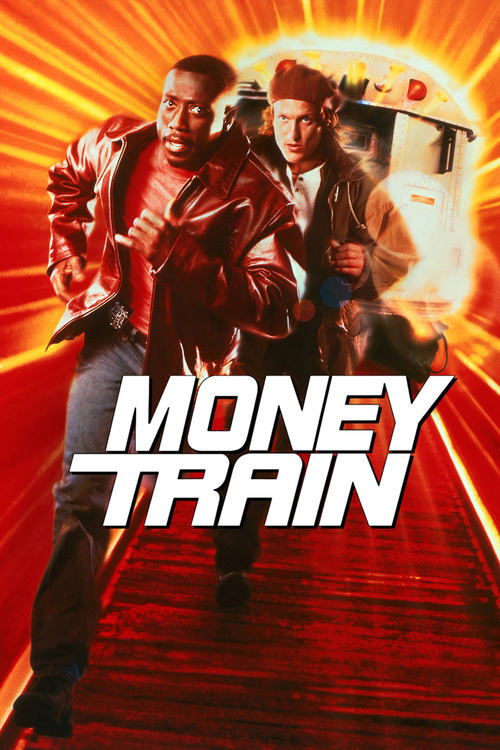
Money Train
When a vengeful New York transit cop decides to steal a trainload of subway fares, his foster brother—a fellow cop—tries to protect him.
Working with a mid-range budget of $68.0M, the film achieved a respectable showing with $77.2M in global revenue (+14% profit margin).


Plot Structure
Story beats plotted across runtime


Narrative Arc
Emotional journey through the story's key moments
Story Circle
Blueprint 15-beat structure
Arcplot Score Breakdown
Weighted: Precision (70%) + Arc (15%) + Theme (15%)
Money Train (1995) showcases strategically placed story structure, characteristic of Joseph Ruben's storytelling approach. This structural analysis examines how the film's 15-point plot structure maps to proven narrative frameworks across 1 hour and 50 minutes. With an Arcplot score of 7.2, the film balances conventional beats with creative variation.
Characters
Cast & narrative archetypes

John
Charlie
Grace Santiago
Donald Patterson
Torch
Main Cast & Characters
John
Played by Wesley Snipes
Impulsive foster brother and transit cop who plans to rob the money train to solve his gambling debts and escape his chaotic life.
Charlie
Played by Woody Harrelson
Responsible foster brother and transit cop who tries to keep John out of trouble while pursuing a relationship with Grace.
Grace Santiago
Played by Jennifer Lopez
Smart and capable transit cop who becomes the romantic interest between the foster brothers while proving herself in a male-dominated workplace.
Donald Patterson
Played by Robert Blake
Cruel and sadistic money train supervisor who torments his employees and guards the cash shipments with brutal efficiency.
Torch
Played by Chris Cooper
Psychotic criminal who sets subway passengers on fire, serving as an early antagonist that reveals the brothers' contrasting approaches.
Structural Analysis
The Status Quo at 1 minutes (1% through the runtime) establishes Foster brothers John and Charlie are transit cops working the New York subway, catching criminals and protecting the money train that collects millions in subway revenue.. Structural examination shows that this early placement immediately immerses viewers in the story world.
The inciting incident occurs at 14 minutes when Charlie's gambling debts spiral out of control when he owes dangerous people significant money. He's threatened and beaten, making his financial desperation acute.. At 13% through the film, this Disruption is delayed, allowing extended setup of the story world. This beat shifts the emotional landscape, launching the protagonist into the central conflict.
The First Threshold at 28 minutes marks the transition into Act II, occurring at 25% of the runtime. This indicates the protagonist's commitment to Charlie actively decides to plan robbing the money train, crossing the line from thinking about it to actually scheming. He begins studying the train's routes and security., moving from reaction to action.
At 56 minutes, the Midpoint arrives at 51% of the runtime—precisely centered, creating perfect narrative symmetry. Structural examination shows that this crucial beat The Torch kills a token booth clerk in a horrific fire attack. The stakes are raised dramatically - this is now about life and death, not just money. The brothers realize they're hunting a murderer., fundamentally raising what's at risk. The emotional intensity shifts, dividing the narrative into clear before-and-after phases.
The Collapse moment at 82 minutes (75% through) represents the emotional nadir. Here, Charlie is beaten badly by enforcers and hits rock bottom. John discovers the full extent of Charlie's betrayal and plan to rob the money train. Their brotherhood appears destroyed, and Charlie is told he's off the force., indicates the protagonist at their lowest point. This beat's placement in the final quarter sets up the climactic reversal.
The Second Threshold at 88 minutes initiates the final act resolution at 80% of the runtime. Charlie goes through with robbing the money train on New Year's Eve. John realizes he must save his brother, not arrest him, and rushes to help. Brotherhood trumps everything., demonstrating the transformation achieved throughout the journey.
Emotional Journey
Money Train's emotional architecture traces a deliberate progression across 15 carefully calibrated beats.
Narrative Framework
This structural analysis employs proven narrative structure principles that track dramatic progression. By mapping Money Train against these established plot points, we can identify how Joseph Ruben utilizes or subverts traditional narrative conventions. The plot point approach reveals not only adherence to structural principles but also creative choices that distinguish Money Train within the action genre.
Joseph Ruben's Structural Approach
Among the 4 Joseph Ruben films analyzed on Arcplot, the average structural score is 7.2, reflecting strong command of classical structure. Money Train represents one of the director's most structurally precise works. For comparative analysis, explore the complete Joseph Ruben filmography.
Comparative Analysis
Additional action films include The Bad Guys, Puss in Boots and Venom: The Last Dance. For more Joseph Ruben analyses, see The Forgotten, The Good Son and Dreamscape.
Plot Points by Act
Act I
SetupStatus Quo
Foster brothers John and Charlie are transit cops working the New York subway, catching criminals and protecting the money train that collects millions in subway revenue.
Theme
Discussion about loyalty versus greed - someone mentions how much money flows through the system daily and what people would do for it.
Worldbuilding
Establishment of the brothers' relationship: John is responsible and by-the-book, Charlie is impulsive and has gambling debts. Grace Santiago is introduced as their new partner and love interest. The dangerous world of transit policing and the legendary money train are established.
Disruption
Charlie's gambling debts spiral out of control when he owes dangerous people significant money. He's threatened and beaten, making his financial desperation acute.
Resistance
Charlie considers various schemes to get money while John tries to keep him on the straight path. Both brothers compete for Grace's affection. The Torch, a psychotic criminal, begins targeting token booth clerks, escalating the danger.
Act II
ConfrontationFirst Threshold
Charlie actively decides to plan robbing the money train, crossing the line from thinking about it to actually scheming. He begins studying the train's routes and security.
Mirror World
Grace and John grow closer, showing genuine partnership and potential romance. Grace represents the honest path and the life John wants - loyalty and integrity over quick money.
Premise
The cat-and-mouse game with the Torch intensifies. Charlie continues planning the heist while maintaining his cop duties. The romantic triangle develops. The audience sees the thrilling world of transit cops versus the temptation of the money train.
Midpoint
The Torch kills a token booth clerk in a horrific fire attack. The stakes are raised dramatically - this is now about life and death, not just money. The brothers realize they're hunting a murderer.
Opposition
Pressure mounts from all sides: the hunt for the Torch intensifies, Charlie's debt collectors become more threatening, and the relationship between the brothers strains as John discovers Charlie's plan. Grace chooses between the brothers.
Collapse
Charlie is beaten badly by enforcers and hits rock bottom. John discovers the full extent of Charlie's betrayal and plan to rob the money train. Their brotherhood appears destroyed, and Charlie is told he's off the force.
Crisis
Charlie, desperate and isolated, wrestles with his choice. John must decide whether to turn in his brother or try to save him. The emotional bond between brothers is tested against duty and morality.
Act III
ResolutionSecond Threshold
Charlie goes through with robbing the money train on New Year's Eve. John realizes he must save his brother, not arrest him, and rushes to help. Brotherhood trumps everything.
Synthesis
The climactic action sequence: John boards the speeding money train to save Charlie. They must work together to survive as the train careens out of control. They confront the Torch in a final showdown. The brothers reconcile and use their combined skills to stop the train and capture the killer.
Transformation
The brothers, battered but together, walk away from the wreckage. Their bond is stronger than before. Charlie has learned that some things (brotherhood, loyalty) are worth more than money. They face consequences together.