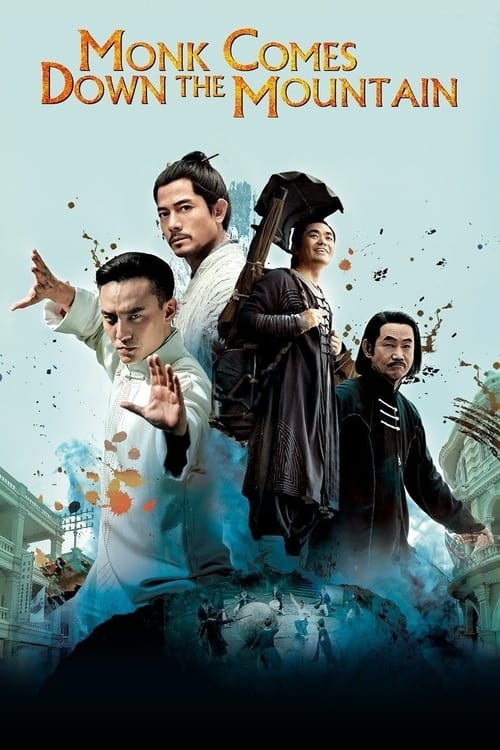
Monk Comes Down the Mountain
A monk leaves his monastery and ventures out into the real world for the first time in his life, and ends up in an adventure with a kung-fu master who is guarding a special artifact.
The film earned $64.5M at the global box office.


Plot Structure
Story beats plotted across runtime


Narrative Arc
Emotional journey through the story's key moments
Story Circle
Blueprint 15-beat structure
Arcplot Score Breakdown
Weighted: Precision (70%) + Arc (15%) + Theme (15%)
Monk Comes Down the Mountain (2015) showcases strategically placed narrative design, characteristic of Chen Kaige's storytelling approach. This structural analysis examines how the film's 15-point plot structure maps to proven narrative frameworks across 1 hour and 53 minutes. With an Arcplot score of 6.8, the film balances conventional beats with creative variation.
Characters
Cast & narrative archetypes

He Anxia
Zhou Xiyu
Cha Laoer
Cui Daochang
Master Zhipu
Lu Yunlong
Xiao Shiyi Lang
Main Cast & Characters
He Anxia
Played by Wang Baoqiang
A naive young Taoist monk sent down from the mountain to experience the mortal world during the Republic of China era.
Zhou Xiyu
Played by Aaron Kwok
A skilled and charismatic martial artist who becomes He Anxia's mentor and guide in the mortal world.
Cha Laoer
Played by Lin Chi-ling
A cunning medicine peddler and con artist who manipulates He Anxia for his own gain.
Cui Daochang
Played by Wang Xueqi
A powerful and corrupt Taoist master who uses his skills for personal gain and oppression.
Master Zhipu
Played by Jaycee Chan
He Anxia's wise and compassionate master at the monastery who sends him on his journey.
Lu Yunlong
Played by Fan Wei
A fierce martial arts master and gambling den owner who tests He Anxia's abilities.
Xiao Shiyi Lang
Played by Vanness Wu
A mysterious and skilled martial artist with his own agenda in the chaotic world.
Structural Analysis
The Status Quo at 1 minutes (1% through the runtime) establishes He Anxia lives as a young monk in a peaceful mountain monastery, innocent and sheltered from the world below, training in martial arts and spiritual practice.. Notably, this early placement immediately immerses viewers in the story world.
The inciting incident occurs at 13 minutes when A food shortage forces the master to send He Anxia down the mountain into the mortal world, disrupting his sheltered existence and thrusting him into uncertainty.. At 12% through the film, this Disruption aligns precisely with traditional story structure. This beat shifts the emotional landscape, launching the protagonist into the central conflict.
The First Threshold at 28 minutes marks the transition into Act II, occurring at 25% of the runtime. This demonstrates the protagonist's commitment to He Anxia chooses to embrace his journey into the martial arts world, accepting Master Zhou's guidance and actively seeking to learn the ways of the jianghu (martial world)., moving from reaction to action.
At 56 minutes, the Midpoint arrives at 50% of the runtime—precisely centered, creating perfect narrative symmetry. Structural examination shows that this crucial beat He Anxia discovers the dark truth about the martial arts world: it is filled with deception, violence, and betrayal. A false defeat occurs when he realizes his innocence makes him vulnerable to manipulation., fundamentally raising what's at risk. The emotional intensity shifts, dividing the narrative into clear before-and-after phases.
The Collapse moment at 84 minutes (74% through) represents the emotional nadir. Here, A devastating loss occurs—either the death of a mentor or beloved companion, or the complete shattering of He Anxia's innocent beliefs. The whiff of death: everything he thought was good in the world dies., illustrates the protagonist at their lowest point. This beat's placement in the final quarter sets up the climactic reversal.
The Second Threshold at 90 minutes initiates the final act resolution at 79% of the runtime. He Anxia synthesizes his mountain wisdom with his worldly experience, realizing that true strength comes from maintaining compassion and purity while fully engaging with an imperfect world. He chooses to act with enlightened purpose., demonstrating the transformation achieved throughout the journey.
Emotional Journey
Monk Comes Down the Mountain's emotional architecture traces a deliberate progression across 15 carefully calibrated beats.
Narrative Framework
This structural analysis employs a 15-point narrative structure framework that maps key story moments. By mapping Monk Comes Down the Mountain against these established plot points, we can identify how Chen Kaige utilizes or subverts traditional narrative conventions. The plot point approach reveals not only adherence to structural principles but also creative choices that distinguish Monk Comes Down the Mountain within the action genre.
Chen Kaige's Structural Approach
Among the 4 Chen Kaige films analyzed on Arcplot, the average structural score is 7.0, demonstrating varied approaches to story architecture. Monk Comes Down the Mountain takes a more unconventional approach compared to the director's typical style. For comparative analysis, explore the complete Chen Kaige filmography.
Comparative Analysis
Additional action films include The Bad Guys, Puss in Boots and Venom: The Last Dance. For more Chen Kaige analyses, see Killing Me Softly, Farewell My Concubine and The Promise.
Plot Points by Act
Act I
SetupStatus Quo
He Anxia lives as a young monk in a peaceful mountain monastery, innocent and sheltered from the world below, training in martial arts and spiritual practice.
Theme
His master tells him that true wisdom comes not from avoiding the world, but from experiencing it—one must descend the mountain to understand the Tao.
Worldbuilding
The monastery life is established: He Anxia's training, his relationship with his master, the spiritual teachings, and the isolated mountain setting. The rules and philosophy of the martial arts world are introduced.
Disruption
A food shortage forces the master to send He Anxia down the mountain into the mortal world, disrupting his sheltered existence and thrusting him into uncertainty.
Resistance
He Anxia hesitantly navigates the strange new world, encountering con artists, performers, and the complexities of human nature. He meets Master Zhou, a pharmacist who becomes his first mentor in the outside world.
Act II
ConfrontationFirst Threshold
He Anxia chooses to embrace his journey into the martial arts world, accepting Master Zhou's guidance and actively seeking to learn the ways of the jianghu (martial world).
Mirror World
He Anxia encounters Cha Lao Si and her theater troupe, particularly developing a connection with a young woman who represents innocence and beauty—a mirror to his own purity, teaching him about love and human connection.
Premise
He Anxia explores the martial arts underworld, learning from various masters, witnessing spectacular kung fu battles, and experiencing the promise of the premise: a naive monk navigating the colorful, dangerous, and magical world of Republican-era martial artists.
Midpoint
He Anxia discovers the dark truth about the martial arts world: it is filled with deception, violence, and betrayal. A false defeat occurs when he realizes his innocence makes him vulnerable to manipulation.
Opposition
The forces of corruption and violence intensify. He Anxia faces increasingly dangerous adversaries, witnesses brutal conflicts between martial arts factions, and his naive worldview is systematically dismantled by harsh realities.
Collapse
A devastating loss occurs—either the death of a mentor or beloved companion, or the complete shattering of He Anxia's innocent beliefs. The whiff of death: everything he thought was good in the world dies.
Crisis
He Anxia mourns in darkness, questioning whether descending the mountain was a mistake. He struggles with whether to retreat to monastic life or face the corrupted world with new understanding.
Act III
ResolutionSecond Threshold
He Anxia synthesizes his mountain wisdom with his worldly experience, realizing that true strength comes from maintaining compassion and purity while fully engaging with an imperfect world. He chooses to act with enlightened purpose.
Synthesis
He Anxia confronts the final antagonistic forces using both his martial skills and spiritual wisdom. The finale demonstrates his transformation: he fights not with naive innocence or cynical corruption, but with enlightened balance.
Transformation
He Anxia, now worldly-wise but spiritually intact, embodies the theme: he has descended the mountain, experienced the world's darkness and light, and emerged transformed—no longer an innocent monk, but an enlightened warrior.