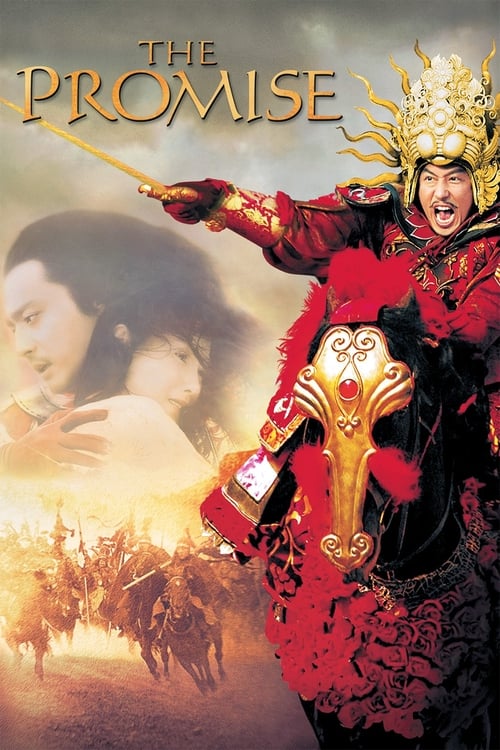
The Promise
An orphaned girl, driven by poverty at such a young age, makes a promise with an enchantress. In return for beauty and the admiration of every man, she will never be with the man she loves. This spell cannot be broken unless the impossible happens: snow falling in spring and the dead coming back to life. Now a grown and beautiful princess, she regrets her promise, for all of the men she's loved has always been met with tragedy.
The film earned $31.0M at the global box office.
1 win & 10 nominations


Plot Structure
Story beats plotted across runtime


Narrative Arc
Emotional journey through the story's key moments
Story Circle
Blueprint 15-beat structure
Arcplot Score Breakdown
Weighted: Precision (70%) + Arc (15%) + Theme (15%)
The Promise (2005) reveals meticulously timed story structure, characteristic of Chen Kaige's storytelling approach. This structural analysis examines how the film's 15-point plot structure maps to proven narrative frameworks across 2 hours and 1 minutes. With an Arcplot score of 6.8, the film balances conventional beats with creative variation.
Structural Analysis
The Status Quo at 1 minutes (1% through the runtime) establishes Young Qingcheng scavenges among corpses on a battlefield, starving and desperate. This establishes a world of war, death, and survival where innocence is already lost.. Of particular interest, this early placement immediately immerses viewers in the story world.
The inciting incident occurs at 15 minutes when General Guangming is mortally wounded in battle. Kunlun witnesses his master's vulnerability, disrupting the established hierarchy. Guangming orders Kunlun to bring him the Crimson Armor to save his life.. At 12% through the film, this Disruption aligns precisely with traditional story structure. This beat shifts the emotional landscape, launching the protagonist into the central conflict.
The First Threshold at 30 minutes marks the transition into Act II, occurring at 25% of the runtime. This shows the protagonist's commitment to Kunlun, wearing Guangming's armor, rescues Princess Qingcheng from assassins. She believes he is the General and falls in love with him. Kunlun actively chooses to embrace this identity rather than reveal the truth, crossing into a new existence., moving from reaction to action.
At 61 minutes, the Midpoint arrives at 50% of the runtime—precisely centered, creating perfect narrative symmetry. The analysis reveals that this crucial beat The truth begins to unravel. Qingcheng starts to suspect that her savior was not Guangming. Duke Wuhuan reveals he knows Kunlun's secret and begins manipulating events. This false defeat raises the stakes as the deception becomes unsustainable., fundamentally raising what's at risk. The emotional intensity shifts, dividing the narrative into clear before-and-after phases.
The Collapse moment at 91 minutes (75% through) represents the emotional nadir. Here, General Guangming dies, sacrificing himself. Qingcheng believes the curse is inescapable - she has lost another man who loved her. Kunlun faces the "whiff of death" as everything he fought for seems destroyed., demonstrates the protagonist at their lowest point. This beat's placement in the final quarter sets up the climactic reversal.
The Second Threshold at 97 minutes initiates the final act resolution at 80% of the runtime. Kunlun realizes that true love requires sacrifice, not deception. He discovers that running fast enough can reverse time itself. He chooses to use his supernatural gift not for survival but for redemption, synthesizing his slave nature with heroic purpose., demonstrating the transformation achieved throughout the journey.
Emotional Journey
The Promise's emotional architecture traces a deliberate progression across 15 carefully calibrated beats.
Narrative Framework
This structural analysis employs systematic plot point analysis that identifies crucial turning points. By mapping The Promise against these established plot points, we can identify how Chen Kaige utilizes or subverts traditional narrative conventions. The plot point approach reveals not only adherence to structural principles but also creative choices that distinguish The Promise within the fantasy genre.
Chen Kaige's Structural Approach
Among the 4 Chen Kaige films analyzed on Arcplot, the average structural score is 7.0, demonstrating varied approaches to story architecture. The Promise takes a more unconventional approach compared to the director's typical style. For comparative analysis, explore the complete Chen Kaige filmography.
Comparative Analysis
Additional fantasy films include Thinner, Ella Enchanted and Conan the Barbarian. For more Chen Kaige analyses, see Killing Me Softly, Monk Comes Down the Mountain and Farewell My Concubine.
Plot Points by Act
Act I
SetupStatus Quo
Young Qingcheng scavenges among corpses on a battlefield, starving and desperate. This establishes a world of war, death, and survival where innocence is already lost.
Theme
The goddess Manshen tells young Qingcheng: "You will have everything you desire, but you will lose every man who truly loves you." The theme of fate versus free will, and whether love can overcome destiny, is established.
Worldbuilding
We see Qingcheng's curse established, then jump forward to meet Kunlun as a slave running with incredible speed for General Guangming's army. The fantasy world of emperors, warriors, and supernatural abilities is introduced.
Disruption
General Guangming is mortally wounded in battle. Kunlun witnesses his master's vulnerability, disrupting the established hierarchy. Guangming orders Kunlun to bring him the Crimson Armor to save his life.
Resistance
Kunlun retrieves the armor and learns to navigate his role as Guangming's trusted slave. He witnesses the political machinations of Duke Wuhuan and begins to understand the complex world of power and betrayal around him.
Act II
ConfrontationFirst Threshold
Kunlun, wearing Guangming's armor, rescues Princess Qingcheng from assassins. She believes he is the General and falls in love with him. Kunlun actively chooses to embrace this identity rather than reveal the truth, crossing into a new existence.
Mirror World
Qingcheng and the man she believes is Guangming share an intimate connection. This subplot embodies the theme: can love flourish when built on deception? The Mirror World relationship will teach Kunlun about his own worth.
Premise
Kunlun experiences life as a hero and lover while maintaining his secret. He performs incredible feats, develops feelings for Qingcheng, and navigates the dangerous court politics. The "promise of the premise" delivers fantasy action and forbidden romance.
Midpoint
The truth begins to unravel. Qingcheng starts to suspect that her savior was not Guangming. Duke Wuhuan reveals he knows Kunlun's secret and begins manipulating events. This false defeat raises the stakes as the deception becomes unsustainable.
Opposition
Wuhuan's schemes intensify. Guangming is framed for the Emperor's murder. Kunlun's identity is exposed, devastating Qingcheng who feels betrayed. The curse seems to be fulfilling itself as everyone Qingcheng loves is destroyed or turns against her.
Collapse
General Guangming dies, sacrificing himself. Qingcheng believes the curse is inescapable - she has lost another man who loved her. Kunlun faces the "whiff of death" as everything he fought for seems destroyed.
Crisis
In the aftermath of Guangming's death, Kunlun and Qingcheng face their darkest hour. The curse appears victorious. Qingcheng despairs that she is doomed to lose everyone, and Kunlun confronts his failure to protect those he loves.
Act III
ResolutionSecond Threshold
Kunlun realizes that true love requires sacrifice, not deception. He discovers that running fast enough can reverse time itself. He chooses to use his supernatural gift not for survival but for redemption, synthesizing his slave nature with heroic purpose.
Synthesis
Kunlun runs faster than he ever has, breaking through time itself. He travels back to young Qingcheng on the battlefield, arriving before she made her bargain with Manshen. He confronts Duke Wuhuan in the final battle and breaks the cycle of fate.
Transformation
Qingcheng is freed from her curse. The final image shows her and Kunlun together, no longer bound by fate's cruel bargain. The slave who was worth nothing has become the man who defied destiny itself through the power of love.