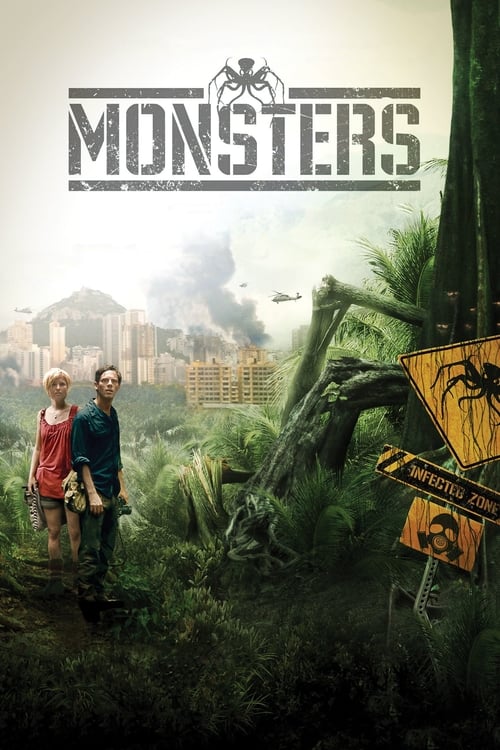
Monsters
Six years ago NASA discovered the possibility of alien life within our solar system. A probe was launched to collect samples, but crashed upon re-entry over Central America. Soon after, new life forms began to appear and half of Mexico was quarantined as an infected zone. Today, the American and Mexican military still struggle to contain "the creatures," while a journalist agrees to escort a shaken tourist through the infected zone in Mexico to the safety of the U.S. border.
Despite its shoestring budget of $500K, Monsters became a runaway success, earning $5.6M worldwide—a remarkable 1028% return. The film's unconventional structure attracted moviegoers, confirming that strong storytelling can transcend budget limitations.
Nominated for 1 BAFTA Award14 wins & 15 nominations


Plot Structure
Story beats plotted across runtime


Narrative Arc
Emotional journey through the story's key moments
Story Circle
Blueprint 15-beat structure
Arcplot Score Breakdown
Weighted: Precision (70%) + Arc (15%) + Theme (15%)
Monsters (2010) reveals carefully calibrated narrative design, characteristic of Gareth Edwards's storytelling approach. This structural analysis examines how the film's 15-point plot structure maps to proven narrative frameworks across 1 hour and 34 minutes. With an Arcplot score of 6.8, the film balances conventional beats with creative variation.
Characters
Cast & narrative archetypes

Andrew Kaulder
Samantha Wynden
Main Cast & Characters
Andrew Kaulder
Played by Scoot McNairy
A photojournalist tasked with escorting his employer's daughter back to the US through an alien-infected zone in Mexico.
Samantha Wynden
Played by Whitney Able
The daughter of a wealthy media mogul who must travel through dangerous infected territory to return home.
Structural Analysis
The Status Quo at 1 minutes (1% through the runtime) establishes Andrew Kaulder photographs the aftermath of alien attacks in Mexico, a cynical photojournalist profiting from tragedy while remaining emotionally detached from the human cost around him.. Of particular interest, this early placement immediately immerses viewers in the story world.
The inciting incident occurs at 12 minutes when Andrew discovers that Samantha's passport has been stolen after a drunken night, and they have missed the last ferry out of Mexico before the dangerous migration season begins. They are now trapped with no safe passage home.. At 13% through the film, this Disruption is delayed, allowing extended setup of the story world. This beat shifts the emotional landscape, launching the protagonist into the central conflict.
The First Threshold at 24 minutes marks the transition into Act II, occurring at 25% of the runtime. This reveals the protagonist's commitment to With no other options, Andrew pays the smugglers and they commit to traveling overland through the Infected Zone. They board boats and vehicles heading into alien territory, crossing the point of no return into genuine danger., moving from reaction to action.
At 47 minutes, the Midpoint arrives at 50% of the runtime—precisely centered, creating perfect narrative symmetry. Structural examination shows that this crucial beat Andrew and Sam experience a moment of transcendent beauty watching bioluminescent trees at night—life that has adapted to the alien presence. The false victory: they've survived halfway and feel a growing connection. But they're also now deep in the most dangerous territory with no way back., fundamentally raising what's at risk. The emotional intensity shifts, dividing the narrative into clear before-and-after phases.
The Collapse moment at 71 minutes (75% through) represents the emotional nadir. Here, Their convoy is attacked by creatures. The guides are killed in the chaos. Andrew and Sam barely escape, fleeing through the jungle as destruction rains around them. They are now completely alone, stranded in the heart of the Infected Zone with no guide, no transport, and no plan., illustrates the protagonist at their lowest point. This beat's placement in the final quarter sets up the climactic reversal.
The Second Threshold at 76 minutes initiates the final act resolution at 81% of the runtime. They spot the massive border wall of the United States ahead—safety is within reach. But more importantly, Andrew and Sam acknowledge their feelings for each other. They share a tender moment, choosing emotional connection over the fear and isolation they've clung to. They will face the final stretch together., demonstrating the transformation achieved throughout the journey.
Emotional Journey
Monsters's emotional architecture traces a deliberate progression across 15 carefully calibrated beats.
Narrative Framework
This structural analysis employs proven narrative structure principles that track dramatic progression. By mapping Monsters against these established plot points, we can identify how Gareth Edwards utilizes or subverts traditional narrative conventions. The plot point approach reveals not only adherence to structural principles but also creative choices that distinguish Monsters within the drama genre.
Gareth Edwards's Structural Approach
Among the 4 Gareth Edwards films analyzed on Arcplot, the average structural score is 7.1, reflecting strong command of classical structure. Monsters takes a more unconventional approach compared to the director's typical style. For comparative analysis, explore the complete Gareth Edwards filmography.
Comparative Analysis
Additional drama films include After Thomas, South Pacific and Dirty Dancing: Havana Nights. For more Gareth Edwards analyses, see The Creator, Rogue One: A Star Wars Story and Godzilla.
Plot Points by Act
Act I
SetupStatus Quo
Andrew Kaulder photographs the aftermath of alien attacks in Mexico, a cynical photojournalist profiting from tragedy while remaining emotionally detached from the human cost around him.
Theme
A local tells Andrew that the creatures are not monsters—they are just animals, misunderstood. "It's different when you're here." This encapsulates the film's theme: proximity breeds understanding, and what we fear from a distance becomes beautiful up close.
Worldbuilding
The infected zone of Mexico is established—a quarantine area where massive alien creatures roam after a NASA probe crash six years prior. Andrew meets Samantha in a hospital after she was injured. Her wealthy father owns Andrew's publication and demands he escort her safely to the US border.
Disruption
Andrew discovers that Samantha's passport has been stolen after a drunken night, and they have missed the last ferry out of Mexico before the dangerous migration season begins. They are now trapped with no safe passage home.
Resistance
Andrew and Sam search desperately for alternatives. They negotiate with smugglers, weigh the risks of traveling through the Infected Zone, and struggle with the exorbitant prices demanded. Andrew resents his babysitting duty while Sam grapples with returning to a life and fiancé she's uncertain about.
Act II
ConfrontationFirst Threshold
With no other options, Andrew pays the smugglers and they commit to traveling overland through the Infected Zone. They board boats and vehicles heading into alien territory, crossing the point of no return into genuine danger.
Mirror World
Sam opens up about her engagement to a man she doesn't truly love, revealing that she feels trapped in her privileged life. Andrew shares his own emotional distance from his son. Their vulnerable confessions begin a genuine connection that mirrors the film's theme of finding intimacy through shared experience.
Premise
The journey through the Infected Zone becomes a strange road trip. Andrew and Sam travel by boat through flooded ruins, witness crashed aircraft and destroyed towns, and see evidence of the creatures everywhere. The alien-occupied world is both terrifying and hauntingly beautiful. Their relationship deepens through shared wonder and fear.
Midpoint
Andrew and Sam experience a moment of transcendent beauty watching bioluminescent trees at night—life that has adapted to the alien presence. The false victory: they've survived halfway and feel a growing connection. But they're also now deep in the most dangerous territory with no way back.
Opposition
The journey becomes increasingly perilous. They travel with armed guides through creature-infested jungle. Tensions rise as they witness more destruction. The military presence intensifies with jets bombing the zone. Andrew's photographs of beauty conflict with the violent reality. Their guides grow more anxious as signs of creature activity increase.
Collapse
Their convoy is attacked by creatures. The guides are killed in the chaos. Andrew and Sam barely escape, fleeing through the jungle as destruction rains around them. They are now completely alone, stranded in the heart of the Infected Zone with no guide, no transport, and no plan.
Crisis
Andrew and Sam wander through the devastation, traumatized and exhausted. They pass through an abandoned town, seeing the human cost of the alien presence in empty homes and discarded lives. The weight of mortality and their uncertain futures hangs over them as they cling to each other for comfort.
Act III
ResolutionSecond Threshold
They spot the massive border wall of the United States ahead—safety is within reach. But more importantly, Andrew and Sam acknowledge their feelings for each other. They share a tender moment, choosing emotional connection over the fear and isolation they've clung to. They will face the final stretch together.
Synthesis
Andrew and Sam make their final approach to the US border, passing through the wall into an evacuated American town. They take shelter in an abandoned gas station. Here they witness something extraordinary: two of the massive creatures meet and communicate in a display of gentle, luminous connection—not monsters, but beings capable of tenderness.
Transformation
As military vehicles arrive, Andrew and Sam embrace, transformed by their journey. The creatures' gentle communion mirrors their own—two beings finding connection in a world of fear and destruction. Andrew is no longer the detached observer; Sam no longer the passive passenger. They have found in each other what the creatures found: understanding through proximity.