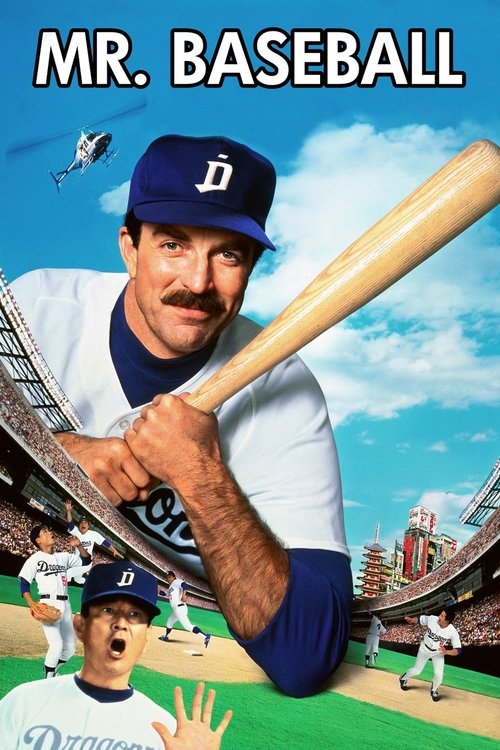
Mr. Baseball
Jack Elliot, a one-time MVP for the New York Yankees is now on the down side of his baseball career. With a falling batting average, does he have one good year left and can the manager of the Chunichi Dragons, a Japanese Central baseball league find it in him?
The film earned $20.0M at the global box office.


Plot Structure
Story beats plotted across runtime


Narrative Arc
Emotional journey through the story's key moments
Story Circle
Blueprint 15-beat structure
Arcplot Score Breakdown
Weighted: Precision (70%) + Arc (15%) + Theme (15%)
Mr. Baseball (1992) showcases deliberately positioned narrative design, characteristic of Fred Schepisi's storytelling approach. This structural analysis examines how the film's 15-point plot structure maps to proven narrative frameworks across 1 hour and 48 minutes. With an Arcplot score of 7.5, the film showcases strong structural fundamentals.
Characters
Cast & narrative archetypes

Jack Elliot
Hiroko Uchiyama
Uchiyama
Max 'Hammer' Dubois
Yoji Nishimura
Main Cast & Characters
Jack Elliot
Played by Tom Selleck
An arrogant aging MLB slugger traded to Japan who must adapt to a new culture and style of baseball
Hiroko Uchiyama
Played by Aya Takanashi
The strong-willed team publicist and translator who becomes Jack's love interest and cultural guide
Uchiyama
Played by Ken Takakura
The disciplined, traditional manager of the Chunichi Dragons who clashes with Jack's American style
Max 'Hammer' Dubois
Played by Dennis Haysbert
Jack's loyal friend and former teammate who provides American perspective and comic relief
Yoji Nishimura
Played by Toshi Shioya
Jack's interpreter and reluctant guide to Japanese culture and customs
Structural Analysis
The Status Quo at 2 minutes (2% through the runtime) establishes Jack Elliot hits a home run for the Yankees in packed Yankee Stadium, celebrated as a star slugger living the American baseball dream at the peak of his career.. Significantly, this early placement immediately immerses viewers in the story world.
The inciting incident occurs at 12 minutes when Jack learns he's been traded to the Chunichi Dragons in Japan - a devastating blow to his ego and identity as an American baseball star. His world is upended.. At 11% through the film, this Disruption aligns precisely with traditional story structure. This beat shifts the emotional landscape, launching the protagonist into the central conflict.
The First Threshold at 27 minutes marks the transition into Act II, occurring at 25% of the runtime. This reveals the protagonist's commitment to Jack commits to playing in Japan despite his resistance. He steps onto the field for his first game with the Dragons, crossing into the new world of Japanese baseball culture., moving from reaction to action.
At 53 minutes, the Midpoint arrives at 50% of the runtime—precisely centered, creating perfect narrative symmetry. Structural examination shows that this crucial beat False victory: Jack has a breakthrough game or moment of success playing his own way, seeming to prove he doesn't need to change. His relationship with Hiroko deepens, but his arrogance remains. The stakes raise as tensions with Manager Uchiyama intensify., fundamentally raising what's at risk. The emotional intensity shifts, dividing the narrative into clear before-and-after phases.
The Collapse moment at 79 minutes (73% through) represents the emotional nadir. Here, All is lost: Jack is benched, humiliated, or removed from a crucial game. Hiroko breaks up with him or he loses her respect. His baseball career in Japan appears over, and he faces the death of his ego and identity as the star he once was., shows the protagonist at their lowest point. This beat's placement in the final quarter sets up the climactic reversal.
The Second Threshold at 85 minutes initiates the final act resolution at 79% of the runtime. Jack has a realization: he must synthesize American individualism with Japanese team discipline. He approaches Uchiyama with humility, commits to the team's way, and prepares for the championship game with a new mindset., demonstrating the transformation achieved throughout the journey.
Emotional Journey
Mr. Baseball's emotional architecture traces a deliberate progression across 15 carefully calibrated beats.
Narrative Framework
This structural analysis employs systematic plot point analysis that identifies crucial turning points. By mapping Mr. Baseball against these established plot points, we can identify how Fred Schepisi utilizes or subverts traditional narrative conventions. The plot point approach reveals not only adherence to structural principles but also creative choices that distinguish Mr. Baseball within the comedy genre.
Fred Schepisi's Structural Approach
Among the 7 Fred Schepisi films analyzed on Arcplot, the average structural score is 7.2, reflecting strong command of classical structure. Mr. Baseball represents one of the director's most structurally precise works. For comparative analysis, explore the complete Fred Schepisi filmography.
Comparative Analysis
Additional comedy films include The Bad Guys, Ella Enchanted and The Evening Star. For more Fred Schepisi analyses, see Six Degrees of Separation, I.Q. and Plenty.
Plot Points by Act
Act I
SetupStatus Quo
Jack Elliot hits a home run for the Yankees in packed Yankee Stadium, celebrated as a star slugger living the American baseball dream at the peak of his career.
Theme
Jack's agent or teammate mentions something about adapting and respecting the game - foreshadowing Jack's need to learn humility and cultural respect beyond his American ego.
Worldbuilding
Establishment of Jack as an aging, arrogant slugger whose statistics are declining. His womanizing lifestyle, ego-driven personality, and resistance to being a team player are shown. The Yankees organization sees him as past his prime.
Disruption
Jack learns he's been traded to the Chunichi Dragons in Japan - a devastating blow to his ego and identity as an American baseball star. His world is upended.
Resistance
Jack resists and debates the trade, tries to maintain his American identity, reluctantly travels to Japan. Culture shock sets in. He meets his new team, the strict manager Uchiyama, and begins to see how different Japanese baseball culture is.
Act II
ConfrontationFirst Threshold
Jack commits to playing in Japan despite his resistance. He steps onto the field for his first game with the Dragons, crossing into the new world of Japanese baseball culture.
Mirror World
Jack meets Hiroko, Manager Uchiyama's daughter and the team's translator. She represents the bridge between cultures and will become the relationship that teaches Jack what he truly needs to learn.
Premise
Fish-out-of-water fun: Jack clashes with Japanese baseball discipline, training methods, and cultural expectations. Comic culture-clash moments with tiny apartments, language barriers, and different playing philosophies. Romance develops with Hiroko as she helps him navigate Japan.
Midpoint
False victory: Jack has a breakthrough game or moment of success playing his own way, seeming to prove he doesn't need to change. His relationship with Hiroko deepens, but his arrogance remains. The stakes raise as tensions with Manager Uchiyama intensify.
Opposition
Jack's refusal to adapt catches up with him. His selfish play hurts the team. The relationship with Hiroko strains as she sees his unwillingness to respect her culture. Manager Uchiyama benches him or they have escalating conflicts. Jack's internal flaws are exposed.
Collapse
All is lost: Jack is benched, humiliated, or removed from a crucial game. Hiroko breaks up with him or he loses her respect. His baseball career in Japan appears over, and he faces the death of his ego and identity as the star he once was.
Crisis
Jack processes his failure in isolation. Dark night of the soul as he confronts who he's become - an arrogant has-been who can't adapt. He reflects on what Hiroko, Uchiyama, and the team have been trying to teach him.
Act III
ResolutionSecond Threshold
Jack has a realization: he must synthesize American individualism with Japanese team discipline. He approaches Uchiyama with humility, commits to the team's way, and prepares for the championship game with a new mindset.
Synthesis
The championship game finale: Jack plays with discipline AND passion, blending both cultures. He sacrifices personal glory for team success, executes a crucial bunt or team play. The Dragons win. He reconciles with Hiroko and earns Uchiyama's respect.
Transformation
Final image mirrors the opening: Jack playing baseball, but now with humility, respect, and cultural integration. He bows to the crowd Japanese-style or shares a moment with Hiroko and Uchiyama, showing he's become a complete player and person.