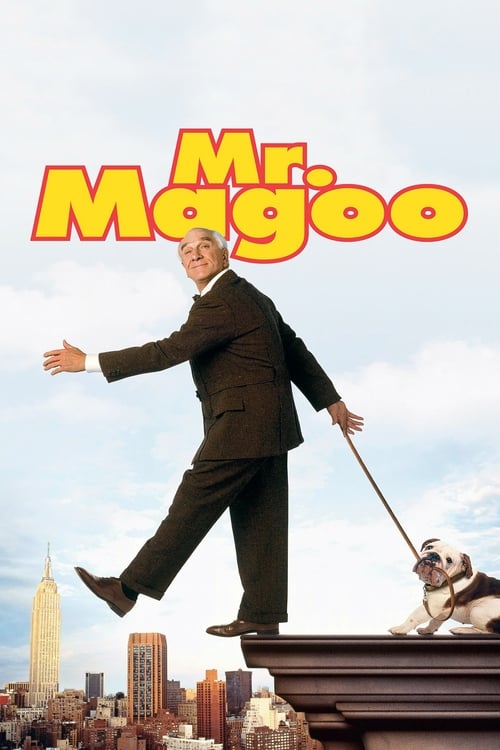
Mr. Magoo
Mr. Magoo, a man with terrible eyesight, gets caught up in a museum robbery.
Despite a respectable budget of $30.0M, Mr. Magoo became a solid performer, earning $75.0M worldwide—a 150% return.


Plot Structure
Story beats plotted across runtime


Narrative Arc
Emotional journey through the story's key moments
Story Circle
Blueprint 15-beat structure
Arcplot Score Breakdown
Weighted: Precision (70%) + Arc (15%) + Theme (15%)
Mr. Magoo (1997) reveals meticulously timed story structure, characteristic of Stanley Tong Gwai-Lai's storytelling approach. This structural analysis examines how the film's 15-point plot structure maps to proven narrative frameworks across 1 hour and 27 minutes. With an Arcplot score of 7.0, the film balances conventional beats with creative variation.
Characters
Cast & narrative archetypes

Quincy Magoo
Luanne LeSeur
Bob Morgan
Austin Cloquet
Waldo
Ortega 'Peru' Luego
Main Cast & Characters
Quincy Magoo
Played by Leslie Nielsen
An extremely nearsighted millionaire who unwittingly becomes involved in a jewel heist while remaining oblivious to the chaos around him.
Luanne LeSeur
Played by Kelly Lynch
A cunning jewel thief who uses Mr. Magoo as an unwitting pawn in her scheme to steal a precious ruby.
Bob Morgan
Played by Matt Keeslar
An undercover FBI agent attempting to recover the stolen jewel and stop the criminal operation.
Austin Cloquet
Played by Nick Chinlund
Luanne's partner in crime and fellow jewel thief who helps orchestrate the ruby heist.
Waldo
Played by Stephen Tobolowsky
Mr. Magoo's loyal nephew and companion who tries to keep his uncle out of trouble.
Ortega 'Peru' Luego
Played by Ernie Hudson
A bumbling henchman working for the thieves who constantly fails in his assignments.
Structural Analysis
The Status Quo at 1 minutes (1% through the runtime) establishes Quincy Magoo, a wealthy and extremely nearsighted man, goes about his privileged life completely oblivious to the chaos his poor vision causes around him. He's content, stubborn, and refuses to admit he has any problems.. Significantly, this early placement immediately immerses viewers in the story world.
The inciting incident occurs at 10 minutes when The Star of Kuristan is stolen from the museum, and through a case of mistaken identity, Magoo becomes entangled in the theft. The precious jewel accidentally ends up in his possession, making him a target for criminals.. At 12% through the film, this Disruption aligns precisely with traditional story structure. This beat shifts the emotional landscape, launching the protagonist into the central conflict.
The First Threshold at 22 minutes marks the transition into Act II, occurring at 25% of the runtime. This indicates the protagonist's commitment to Magoo decides to actively investigate or engage with the strange events happening around him, committing to an adventure (even though he misunderstands what's actually happening). He enters the world of espionage and danger., moving from reaction to action.
At 44 minutes, the Midpoint arrives at 50% of the runtime—precisely centered, creating perfect narrative symmetry. Of particular interest, this crucial beat False victory: Magoo appears to have escaped danger or accomplished something significant, but he's actually in greater peril than ever. The stakes raise as the criminals intensify their pursuit and the authorities become involved., fundamentally raising what's at risk. The emotional intensity shifts, dividing the narrative into clear before-and-after phases.
The Collapse moment at 65 minutes (75% through) represents the emotional nadir. Here, Magoo is captured by the criminals or faces his lowest point - perhaps separated from Waldo, publicly humiliated, or finally forced to confront that his stubbornness has led to disaster. The jewel may be lost and someone endangered., indicates the protagonist at their lowest point. This beat's placement in the final quarter sets up the climactic reversal.
The Second Threshold at 70 minutes initiates the final act resolution at 80% of the runtime. Magoo gains new insight - perhaps finally accepting help from Waldo or understanding he needs to see things differently. He synthesizes his confidence and capabilities with humility and teamwork, ready for the final confrontation., demonstrating the transformation achieved throughout the journey.
Emotional Journey
Mr. Magoo's emotional architecture traces a deliberate progression across 15 carefully calibrated beats.
Narrative Framework
This structural analysis employs structural analysis methodology used to understand storytelling architecture. By mapping Mr. Magoo against these established plot points, we can identify how Stanley Tong Gwai-Lai utilizes or subverts traditional narrative conventions. The plot point approach reveals not only adherence to structural principles but also creative choices that distinguish Mr. Magoo within the comedy genre.
Stanley Tong Gwai-Lai's Structural Approach
Among the 5 Stanley Tong Gwai-Lai films analyzed on Arcplot, the average structural score is 7.0, reflecting strong command of classical structure. Mr. Magoo takes a more unconventional approach compared to the director's typical style. For comparative analysis, explore the complete Stanley Tong Gwai-Lai filmography.
Comparative Analysis
Additional comedy films include The Bad Guys, Ella Enchanted and The Evening Star. For more Stanley Tong Gwai-Lai analyses, see Rumble in the Bronx, Police Story 4: First Strike and The Myth.
Plot Points by Act
Act I
SetupStatus Quo
Quincy Magoo, a wealthy and extremely nearsighted man, goes about his privileged life completely oblivious to the chaos his poor vision causes around him. He's content, stubborn, and refuses to admit he has any problems.
Theme
Magoo's nephew Waldo or another character suggests that perception and accepting help from others matters - establishing the theme that pride and refusing to see the truth can be dangerous.
Worldbuilding
Introduction to Magoo's world: his wealth, his stubborn independence, his nephew Waldo's concern, and the museum's precious jewel (the Star of Kuristan) that will become central to the plot. We see how Magoo's blindness creates havoc.
Disruption
The Star of Kuristan is stolen from the museum, and through a case of mistaken identity, Magoo becomes entangled in the theft. The precious jewel accidentally ends up in his possession, making him a target for criminals.
Resistance
Magoo remains oblivious to the danger he's in while thieves led by Luanne LeSeur pursue him. Waldo tries to help and protect his uncle. Magoo resists any suggestion that he needs assistance or that anything is wrong.
Act II
ConfrontationFirst Threshold
Magoo decides to actively investigate or engage with the strange events happening around him, committing to an adventure (even though he misunderstands what's actually happening). He enters the world of espionage and danger.
Mirror World
Magoo's relationship with Waldo deepens, or he encounters someone who represents trust and partnership. This subplot explores whether Magoo can accept help and see beyond his own limited perspective.
Premise
The fun of watching Magoo bumble through dangerous situations while completely misunderstanding what's happening. Slapstick comedy as he accidentally thwarts the criminals while thinking he's doing something completely different. The promise of the premise delivered.
Midpoint
False victory: Magoo appears to have escaped danger or accomplished something significant, but he's actually in greater peril than ever. The stakes raise as the criminals intensify their pursuit and the authorities become involved.
Opposition
The criminals close in with more elaborate schemes. Magoo's obliviousness becomes more dangerous. Waldo struggles to protect him. The FBI suspects Magoo is the thief. Everything tightens around our protagonist.
Collapse
Magoo is captured by the criminals or faces his lowest point - perhaps separated from Waldo, publicly humiliated, or finally forced to confront that his stubbornness has led to disaster. The jewel may be lost and someone endangered.
Crisis
Magoo faces his dark night of the soul, processing failure and potentially recognizing for the first time that his refusal to acknowledge his limitations has consequences. Brief moment of vulnerability and reflection.
Act III
ResolutionSecond Threshold
Magoo gains new insight - perhaps finally accepting help from Waldo or understanding he needs to see things differently. He synthesizes his confidence and capabilities with humility and teamwork, ready for the final confrontation.
Synthesis
The finale: Magoo confronts the criminals, recovers the Star of Kuristan, and saves the day. He uses both his unexpected strengths and his newfound willingness to work with others. Action-comedy climax with slapstick and heart.
Transformation
Final image mirrors the opening but shows growth: Magoo is still proudly independent but now accepts his nephew's help and perhaps even acknowledges his vision problems with humor. He's learned to see beyond his limited perspective.