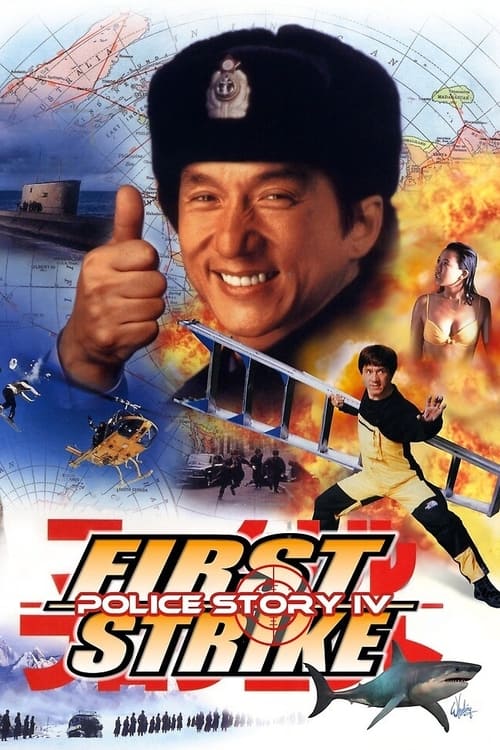
Police Story 4: First Strike
Hong Kong cop Chan Ka-Kui returns, working with Interpol to track down and arrest an illegal weapons dealer. Chan later realizes that things are not as simple as they appear and soon finds himself to be a pawn of an organization posing as Russian intelligence.
Despite its small-scale budget of $1.5M, Police Story 4: First Strike became a box office phenomenon, earning $53.2M worldwide—a remarkable 3445% return. The film's fresh perspective connected with viewers, proving that strong storytelling can transcend budget limitations.


Plot Structure
Story beats plotted across runtime


Narrative Arc
Emotional journey through the story's key moments
Story Circle
Blueprint 15-beat structure
Arcplot Score Breakdown
Weighted: Precision (70%) + Arc (15%) + Theme (15%)
Police Story 4: First Strike (1996) exemplifies strategically placed plot construction, characteristic of Stanley Tong Gwai-Lai's storytelling approach. This structural analysis examines how the film's 15-point plot structure maps to proven narrative frameworks across 1 hour and 47 minutes. With an Arcplot score of 6.7, the film balances conventional beats with creative variation.
Characters
Cast & narrative archetypes

Jackie
Natasha
Tsui
Colonel Gregor Yegorov
Annie
Mark
Main Cast & Characters
Jackie
Played by Jackie Chan
A Hong Kong police detective who gets caught up in an international espionage plot involving nuclear weapons while on assignment with the CIA.
Natasha
Played by Wu Chien-lien
A Ukrainian woman who becomes entangled in the nuclear weapons conspiracy and serves as Jackie's primary ally and love interest.
Tsui
Played by Jackson Lou
A former CIA operative turned arms dealer who orchestrates the theft of a nuclear warhead for personal profit.
Colonel Gregor Yegorov
Played by Yuri Petrov
A Russian intelligence officer who manipulates events from behind the scenes and serves as a major antagonist.
Annie
Played by Annie Wu
Tsui's sister who initially appears innocent but has connections to the criminal conspiracy.
Mark
Played by Bill Tung
An Australian intelligence agent who assists Jackie in tracking down the nuclear weapon.
Structural Analysis
The Status Quo at 1 minutes (1% through the runtime) establishes Jackie Chan as police detective Chan Ka-Kui is on surveillance duty in Ukraine, tracking suspects in his ordinary capacity as an international police operative, showing his world of dangerous but routine undercover work.. Of particular interest, this early placement immediately immerses viewers in the story world.
The inciting incident occurs at 13 minutes when Jackie is framed for murder after the woman he was tracking is killed. He becomes a suspect and realizes he's been set up as a pawn in a much larger conspiracy involving stolen nuclear warheads.. At 13% through the film, this Disruption is delayed, allowing extended setup of the story world. This beat shifts the emotional landscape, launching the protagonist into the central conflict.
The First Threshold at 28 minutes marks the transition into Act II, occurring at 26% of the runtime. This illustrates the protagonist's commitment to Jackie makes the active choice to go to Australia to continue pursuing the case despite the danger. He commits to taking down the nuclear smuggling ring and clearing his name, fully entering the world of international espionage., moving from reaction to action.
At 54 minutes, the Midpoint arrives at 50% of the runtime—precisely centered, creating perfect narrative symmetry. The analysis reveals that this crucial beat False defeat: Jackie discovers the conspiracy goes deeper than he thought. The nuclear weapons dealers have more resources and connections than anticipated. He's captured and realizes he's completely outmatched. The stakes are raised from personal vindication to global security., fundamentally raising what's at risk. The emotional intensity shifts, dividing the narrative into clear before-and-after phases.
The Collapse moment at 80 minutes (75% through) represents the emotional nadir. Here, All is lost: Jackie is captured and tortured in the ice chamber, facing hypothermia and death. Annie is kidnapped and held hostage. The nuclear weapons are about to be sold to terrorists. Jackie hits his physical and emotional low point, seemingly defeated and about to die alone in the freezing cold., reveals the protagonist at their lowest point. This beat's placement in the final quarter sets up the climactic reversal.
The Second Threshold at 86 minutes initiates the final act resolution at 81% of the runtime. Jackie escapes the freezer through ingenuity and determination. He synthesizes what he's learned about the conspiracy with his skills as a fighter and detective. Armed with clarity about who the real villains are and what's at stake, he launches into the final confrontation., demonstrating the transformation achieved throughout the journey.
Emotional Journey
Police Story 4: First Strike's emotional architecture traces a deliberate progression across 15 carefully calibrated beats.
Narrative Framework
This structural analysis employs a 15-point narrative structure framework that maps key story moments. By mapping Police Story 4: First Strike against these established plot points, we can identify how Stanley Tong Gwai-Lai utilizes or subverts traditional narrative conventions. The plot point approach reveals not only adherence to structural principles but also creative choices that distinguish Police Story 4: First Strike within the action genre.
Stanley Tong Gwai-Lai's Structural Approach
Among the 5 Stanley Tong Gwai-Lai films analyzed on Arcplot, the average structural score is 7.0, reflecting strong command of classical structure. Police Story 4: First Strike takes a more unconventional approach compared to the director's typical style. For comparative analysis, explore the complete Stanley Tong Gwai-Lai filmography.
Comparative Analysis
Additional action films include The Bad Guys, Puss in Boots and Venom: The Last Dance. For more Stanley Tong Gwai-Lai analyses, see Rumble in the Bronx, Mr. Magoo and The Myth.
Plot Points by Act
Act I
SetupStatus Quo
Jackie Chan as police detective Chan Ka-Kui is on surveillance duty in Ukraine, tracking suspects in his ordinary capacity as an international police operative, showing his world of dangerous but routine undercover work.
Theme
Uncle Bill warns Jackie about getting involved in international espionage: "This isn't regular police work anymore - you're playing in a much bigger game." The theme of a small cop caught in global politics is stated.
Worldbuilding
Establishment of Jackie's world as a Hong Kong cop working internationally, tracking the sister of a criminal, introduction of the CIA and Russian agents, and the dangerous world of nuclear weapons smuggling. The snowboarding chase through Ukraine establishes the high-octane action style.
Disruption
Jackie is framed for murder after the woman he was tracking is killed. He becomes a suspect and realizes he's been set up as a pawn in a much larger conspiracy involving stolen nuclear warheads.
Resistance
Jackie debates whether to continue the mission or withdraw. He resists fully committing to the dangerous international case. Uncle Bill guides him through the complexity of the situation. Jackie gathers intelligence and tries to clear his name while learning about the nuclear conspiracy.
Act II
ConfrontationFirst Threshold
Jackie makes the active choice to go to Australia to continue pursuing the case despite the danger. He commits to taking down the nuclear smuggling ring and clearing his name, fully entering the world of international espionage.
Mirror World
Jackie meets Annie, a woman who becomes entangled in the conspiracy. She represents innocence caught in a dangerous game, mirroring Jackie's own position as an ordinary cop in an extraordinary situation. Their relationship introduces the human cost of the spy game.
Premise
The "fun and games" of Jackie Chan doing what audiences came for - spectacular action set pieces in Australia including the underwater fight in the shark tank, elaborate chases, and creative fight choreography. Jackie investigates the nuclear smuggling ring while dodging multiple agencies and criminals.
Midpoint
False defeat: Jackie discovers the conspiracy goes deeper than he thought. The nuclear weapons dealers have more resources and connections than anticipated. He's captured and realizes he's completely outmatched. The stakes are raised from personal vindication to global security.
Opposition
The bad guys close in from all sides. Jackie faces increasingly dangerous situations as the smugglers, Russian agents, and CIA all pursue their own agendas. Trust becomes impossible. Annie is in danger. Jackie's isolation and the opposition's power intensify.
Collapse
All is lost: Jackie is captured and tortured in the ice chamber, facing hypothermia and death. Annie is kidnapped and held hostage. The nuclear weapons are about to be sold to terrorists. Jackie hits his physical and emotional low point, seemingly defeated and about to die alone in the freezing cold.
Crisis
Jackie's dark night of the soul in the freezer, where he must find the will to survive and continue fighting. He processes the enormity of the situation and the realization that he's truly on his own against overwhelming odds.
Act III
ResolutionSecond Threshold
Jackie escapes the freezer through ingenuity and determination. He synthesizes what he's learned about the conspiracy with his skills as a fighter and detective. Armed with clarity about who the real villains are and what's at stake, he launches into the final confrontation.
Synthesis
The finale action sequence where Jackie fights his way through the villain's compound, rescues Annie, and stops the nuclear weapons sale. The climactic ladder fight showcases Jackie combining all his skills. He defeats the smugglers and saves the day through determination and improvisation.
Transformation
Jackie returns to his normal life, but transformed by the experience. Where he once was a simple cop on surveillance, he's now proven himself capable of operating in the dangerous world of international espionage. He's earned respect and survived the ultimate test, though he's happy to return to simpler police work.