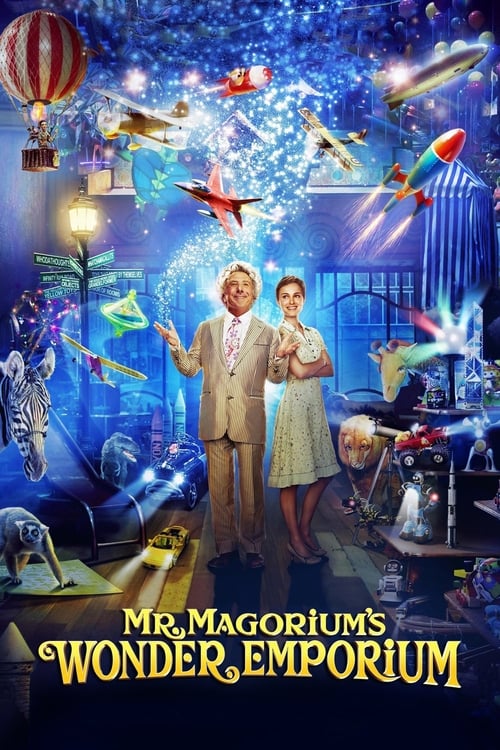
Mr. Magorium's Wonder Emporium
Molly Mahoney is the awkward and insecure manager of Mr. Magorium's Wonder Emporium—the strangest, most fantastic and most wonderful toy store in the world. After Mr. Magorium bequeaths the store to her, a dark and ominous change begins to take over the once-remarkable Emporium.
Working with a respectable budget of $65.0M, the film achieved a modest success with $69.5M in global revenue (+7% profit margin).

Plot Structure
Story beats plotted across runtime


Narrative Arc
Emotional journey through the story's key moments
Story Circle
Blueprint 15-beat structure
Arcplot Score Breakdown
Weighted: Precision (70%) + Arc (15%) + Theme (15%)
Mr. Magorium's Wonder Emporium (2007) reveals meticulously timed plot construction, characteristic of Zach Helm's storytelling approach. This structural analysis examines how the film's 15-point plot structure maps to proven narrative frameworks across 1 hour and 33 minutes. With an Arcplot score of 7.7, the film showcases strong structural fundamentals.
Characters
Cast & narrative archetypes

Molly Mahoney
Mr. Edward Magorium
Eric Applebaum
Henry Weston
Main Cast & Characters
Molly Mahoney
Played by Natalie Portman
A talented pianist working as manager at the magical toy store, struggling with self-doubt and her creative future.
Mr. Edward Magorium
Played by Dustin Hoffman
The 243-year-old eccentric owner of the Wonder Emporium, preparing to leave and pass the store to Molly.
Eric Applebaum
Played by Zach Mills
A lonely, hat-obsessed boy who finds friendship and wonder at the toy store.
Henry Weston
Played by Jason Bateman
A skeptical accountant hired to assess the store's value, who gradually opens up to the magic around him.
Structural Analysis
The Status Quo at 1 minutes (1% through the runtime) establishes The magical Wonder Emporium is shown in full operation, toys coming to life, children playing. Mahoney (Molly) plays piano while Mr. Magorium delights customers. The store is a place of endless wonder and possibility.. Notably, this early placement immediately immerses viewers in the story world.
The inciting incident occurs at 10 minutes when Mr. Magorium announces he is going to die and plans to leave the store to Mahoney. She is shocked and refuses to believe him. The magical status quo is disrupted by mortality entering the whimsical world.. At 11% through the film, this Disruption aligns precisely with traditional story structure. This beat shifts the emotional landscape, launching the protagonist into the central conflict.
The First Threshold at 22 minutes marks the transition into Act II, occurring at 23% of the runtime. This demonstrates the protagonist's commitment to Mahoney actively rejects the store and tells Mr. Magorium she doesn't believe in the magic anymore and wants to leave. This choice to deny her potential triggers the store's tantrum and deepens its decline., moving from reaction to action.
At 45 minutes, the Midpoint arrives at 49% of the runtime—precisely centered, creating perfect narrative symmetry. Of particular interest, this crucial beat Mr. Magorium gives Mahoney the Congreve Cube, telling her it will prove her belief in herself. She tries to make it work but fails completely. False defeat: she cannot unlock the magic, confirming her worst fear that she's not special. Stakes raised - Magorium is really dying., fundamentally raising what's at risk. The emotional intensity shifts, dividing the narrative into clear before-and-after phases.
The Collapse moment at 67 minutes (72% through) represents the emotional nadir. Here, Mr. Magorium dies in the hospital. Mahoney sits with his body, devastated. Literal death - the mentor is gone. The store turns completely gray and lifeless. All magic appears lost forever., indicates the protagonist at their lowest point. This beat's placement in the final quarter sets up the climactic reversal.
The Second Threshold at 73 minutes initiates the final act resolution at 79% of the runtime. Mahoney returns to the store and realizes Magorium's final lesson: the magic was never his, it was always hers. She doesn't need to prove anything - she just needs to believe in herself. She finally understands what the Congreve Cube represents., demonstrating the transformation achieved throughout the journey.
Emotional Journey
Mr. Magorium's Wonder Emporium's emotional architecture traces a deliberate progression across 15 carefully calibrated beats.
Narrative Framework
This structural analysis employs structural analysis methodology used to understand storytelling architecture. By mapping Mr. Magorium's Wonder Emporium against these established plot points, we can identify how Zach Helm utilizes or subverts traditional narrative conventions. The plot point approach reveals not only adherence to structural principles but also creative choices that distinguish Mr. Magorium's Wonder Emporium within the family genre.
Comparative Analysis
Additional family films include The Black Stallion, The Bad Guys and Ella Enchanted.
Plot Points by Act
Act I
SetupStatus Quo
The magical Wonder Emporium is shown in full operation, toys coming to life, children playing. Mahoney (Molly) plays piano while Mr. Magorium delights customers. The store is a place of endless wonder and possibility.
Theme
Mr. Magorium tells Mahoney: "Your life is an occasion. Rise to it." This encapsulates the film's theme about believing in yourself and embracing your potential rather than doubting your magic.
Worldbuilding
Establishment of the Wonder Emporium's magical rules, the relationship between Magorium and Mahoney, her role as store manager, and her struggle as a composer. Introduction of Eric (the hat collector boy) and the store's peculiar physics.
Disruption
Mr. Magorium announces he is going to die and plans to leave the store to Mahoney. She is shocked and refuses to believe him. The magical status quo is disrupted by mortality entering the whimsical world.
Resistance
Mahoney resists the idea of inheriting the store, insisting she wants to be a composer, not a toy store manager. Magorium tries to prepare her. Accountant Henry Weston is hired to organize the store's records. The store begins to darken and malfunction.
Act II
ConfrontationFirst Threshold
Mahoney actively rejects the store and tells Mr. Magorium she doesn't believe in the magic anymore and wants to leave. This choice to deny her potential triggers the store's tantrum and deepens its decline.
Mirror World
Henry Weston, the skeptical accountant who doesn't believe in magic, becomes the thematic mirror. His journey from cynic to believer parallels Mahoney's need to rediscover her own faith in herself and the impossible.
Premise
The store's tantrum escalates - toys rebel, colors drain, magic fails. Mahoney, Eric, and Henry navigate the chaos while Magorium remains serene. The promise of the premise: what happens when a magical place loses its magic? Multiple attempts to revive the store or convince Magorium to stay.
Midpoint
Mr. Magorium gives Mahoney the Congreve Cube, telling her it will prove her belief in herself. She tries to make it work but fails completely. False defeat: she cannot unlock the magic, confirming her worst fear that she's not special. Stakes raised - Magorium is really dying.
Opposition
The store continues dying. Mahoney tries desperately to make the Congreve Cube work but repeatedly fails. She decides to sell the store. Magorium is hospitalized. Eric begs her not to give up. Henry begins to believe but Mahoney has lost all faith in magic and herself.
Collapse
Mr. Magorium dies in the hospital. Mahoney sits with his body, devastated. Literal death - the mentor is gone. The store turns completely gray and lifeless. All magic appears lost forever.
Crisis
Mahoney grieves and retreats from the lifeless store. Eric mourns alone among dead toys. Henry witnesses the complete absence of magic. The dark night - processing the loss and facing the reality that belief cannot be forced, it must be chosen.
Act III
ResolutionSecond Threshold
Mahoney returns to the store and realizes Magorium's final lesson: the magic was never his, it was always hers. She doesn't need to prove anything - she just needs to believe in herself. She finally understands what the Congreve Cube represents.
Synthesis
Mahoney embraces her belief and the Congreve Cube ignites with infinite colors and possibilities. The store explodes back to magical life. She conducts a symphony of toys and wonder. Henry and Eric witness the full restoration. Mahoney becomes the true Emporium's keeper.
Transformation
Mahoney stands confidently in her Wonder Emporium, no longer doubting herself. She is both composer and magician, having risen to the occasion of her life. The store thrives under her belief. Eric has his magic, Henry believes, and Mahoney has found her true self.