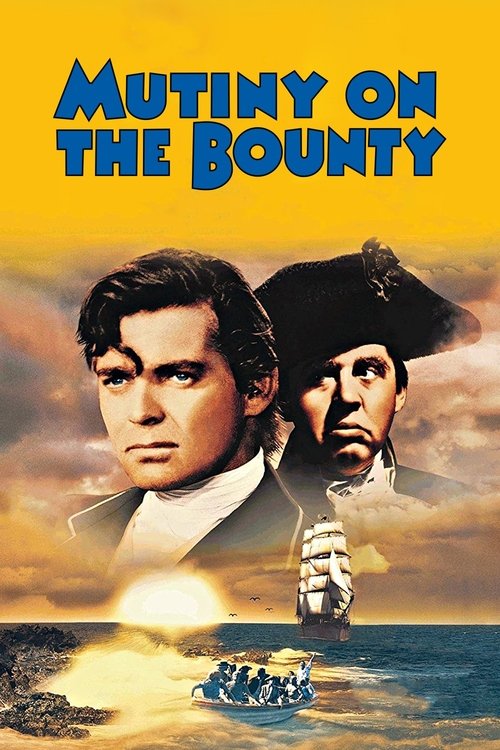
Mutiny on the Bounty
Fletcher Christian successfully leads a revolt against the ruthless Captain Bligh on the HMS Bounty. However, Bligh returns one year later, hell bent on revenge.
Despite its limited budget of $1.9M, Mutiny on the Bounty became a commercial success, earning $4.5M worldwide—a 129% return.
1 Oscar. 8 wins & 7 nominations


Plot Structure
Story beats plotted across runtime


Narrative Arc
Emotional journey through the story's key moments
Story Circle
Blueprint 15-beat structure
Arcplot Score Breakdown
Weighted: Precision (70%) + Arc (15%) + Theme (15%)
Mutiny on the Bounty (1935) showcases strategically placed narrative architecture, characteristic of Frank Lloyd's storytelling approach. This structural analysis examines how the film's 15-point plot structure maps to proven narrative frameworks across 2 hours and 12 minutes. With an Arcplot score of 6.7, the film balances conventional beats with creative variation.
Characters
Cast & narrative archetypes

Fletcher Christian
Captain William Bligh
Roger Byam
Maimiti
Ellison
Smith
Main Cast & Characters
Fletcher Christian
Played by Clark Gable
First mate of HMS Bounty who leads a mutiny against Captain Bligh due to his cruel treatment of the crew.
Captain William Bligh
Played by Charles Laughton
Tyrannical captain of HMS Bounty whose harsh discipline drives his crew to mutiny.
Roger Byam
Played by Franchot Tone
Young midshipman caught between loyalty to the Navy and sympathy for the mutineers.
Maimiti
Played by Movita Castaneda
Tahitian woman who falls in love with Roger Byam.
Ellison
Played by Eddie Quillan
Young sailor who joins the mutiny and faces court-martial.
Smith
Played by Dudley Digges
Loyal sailor who sympathizes with Christian but remains conflicted.
Structural Analysis
The Status Quo at 1 minutes (1% through the runtime) establishes Portsmouth, 1787. Roger Byam, a young law student from a distinguished family, prepares to leave his comfortable life for a scientific voyage to Tahiti aboard HMS Bounty.. The analysis reveals that this early placement immediately immerses viewers in the story world.
The inciting incident occurs at 17 minutes when Bligh orders a man flogged for a minor infraction during the voyage around Cape Horn. The brutal punishment, followed by the sailor's death, reveals Bligh's true tyranny and changes the crew's perception from duty to fear.. At 13% through the film, this Disruption is delayed, allowing extended setup of the story world. This beat shifts the emotional landscape, launching the protagonist into the central conflict.
The First Threshold at 34 minutes marks the transition into Act II, occurring at 26% of the runtime. This indicates the protagonist's commitment to The Bounty arrives in Tahiti, and the crew enters a paradise of freedom, beauty, and humanity that stands in stark contrast to Bligh's rigid world. This new world will test every man's loyalty., moving from reaction to action.
At 66 minutes, the Midpoint arrives at 50% of the runtime—precisely centered, creating perfect narrative symmetry. Notably, this crucial beat Bligh orders departure from Tahiti. The crew must leave their loves and this paradise behind. The return to Bligh's tyranny is now unbearable after experiencing freedom, and tensions reach a breaking point when Bligh's cruelty intensifies during the voyage home., fundamentally raising what's at risk. The emotional intensity shifts, dividing the narrative into clear before-and-after phases.
The Collapse moment at 98 minutes (74% through) represents the emotional nadir. Here, Christian leads the mutiny, seizing control of the Bounty and casting Bligh and loyalists adrift in a small boat. This point of no return means death for mutiny under naval law. Christian has sacrificed everything—career, honor, future—for humanity over duty., reveals the protagonist at their lowest point. This beat's placement in the final quarter sets up the climactic reversal.
The Second Threshold at 105 minutes initiates the final act resolution at 80% of the runtime. A British ship arrives at Tahiti to arrest the mutineers. Byam chooses to surrender and face court-martial rather than flee, believing truth and justice will prevail. Christian and others escape, but Byam and several crew members are taken to England in chains., demonstrating the transformation achieved throughout the journey.
Emotional Journey
Mutiny on the Bounty's emotional architecture traces a deliberate progression across 15 carefully calibrated beats.
Narrative Framework
This structural analysis employs proven narrative structure principles that track dramatic progression. By mapping Mutiny on the Bounty against these established plot points, we can identify how Frank Lloyd utilizes or subverts traditional narrative conventions. The plot point approach reveals not only adherence to structural principles but also creative choices that distinguish Mutiny on the Bounty within the adventure genre.
Frank Lloyd's Structural Approach
Among the 2 Frank Lloyd films analyzed on Arcplot, the average structural score is 7.2, reflecting strong command of classical structure. Mutiny on the Bounty takes a more unconventional approach compared to the director's typical style. For comparative analysis, explore the complete Frank Lloyd filmography.
Comparative Analysis
Additional adventure films include The Black Stallion, The Bad Guys and Puss in Boots. For more Frank Lloyd analyses, see Cavalcade.
Plot Points by Act
Act I
SetupStatus Quo
Portsmouth, 1787. Roger Byam, a young law student from a distinguished family, prepares to leave his comfortable life for a scientific voyage to Tahiti aboard HMS Bounty.
Theme
Byam's friend warns him about Captain Bligh's reputation: "They say he's a tyrant... a man who doesn't know the meaning of mercy." This introduces the film's central question about justice, authority, and when duty conflicts with humanity.
Worldbuilding
Introduction to the Bounty's world: Byam meets the crew including Christian Fletcher, the jovial first mate; Captain Bligh demonstrates his obsession with discipline and efficiency; the ship sets sail with tensions already simmering beneath naval protocol.
Disruption
Bligh orders a man flogged for a minor infraction during the voyage around Cape Horn. The brutal punishment, followed by the sailor's death, reveals Bligh's true tyranny and changes the crew's perception from duty to fear.
Resistance
The crew endures increasingly harsh conditions and punishments as they sail toward Tahiti. Christian Fletcher begins to quietly question Bligh's methods while maintaining his duty. Byam witnesses the growing tension but remains focused on his botanical mission.
Act II
ConfrontationFirst Threshold
The Bounty arrives in Tahiti, and the crew enters a paradise of freedom, beauty, and humanity that stands in stark contrast to Bligh's rigid world. This new world will test every man's loyalty.
Mirror World
Christian meets and falls in love with Maimiti, a Tahitian woman who represents everything Bligh's world is not: compassion, freedom, and natural joy. Byam also forms a relationship with a local chief's daughter. These relationships embody the thematic counterpoint to tyranny.
Premise
The promise of the premise: paradise versus tyranny. The crew experiences five months of Tahitian life, forming deep bonds and discovering an alternative to the brutal naval hierarchy. The breadfruit plants are collected, but the men are transformed.
Midpoint
Bligh orders departure from Tahiti. The crew must leave their loves and this paradise behind. The return to Bligh's tyranny is now unbearable after experiencing freedom, and tensions reach a breaking point when Bligh's cruelty intensifies during the voyage home.
Opposition
Bligh's tyranny escalates: he cuts water rations to preserve the breadfruit, falsely accuses Christian of theft, and orders increasingly brutal punishments. Christian's moral crisis deepens as he struggles between duty and conscience while the crew reaches desperation.
Collapse
Christian leads the mutiny, seizing control of the Bounty and casting Bligh and loyalists adrift in a small boat. This point of no return means death for mutiny under naval law. Christian has sacrificed everything—career, honor, future—for humanity over duty.
Crisis
The mutineers return to Tahiti, but the paradise is now poisoned by the knowledge of their crime. Christian and the others face the reality that they can never go home, never clear their names. Byam, innocent but present during the mutiny, faces the same fate.
Act III
ResolutionSecond Threshold
A British ship arrives at Tahiti to arrest the mutineers. Byam chooses to surrender and face court-martial rather than flee, believing truth and justice will prevail. Christian and others escape, but Byam and several crew members are taken to England in chains.
Synthesis
The court-martial reveals the truth of Bligh's tyranny, but the law demands punishment for mutiny regardless of cause. Byam and others are sentenced to death. Christian's actions are vindicated morally but not legally, exposing the conflict between justice and law.
Transformation
Byam receives a last-minute pardon after his passionate defense of Christian's moral choice. The King and Admiralty acknowledge that Bligh's cruelty, not the men's character, caused the mutiny. The closing image shows the Navy reformed, with humanity tempering authority.