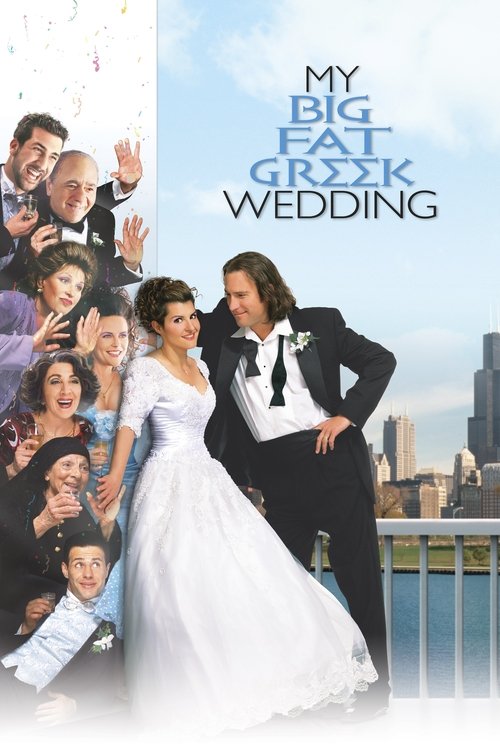
My Big Fat Greek Wedding
A young Greek woman falls in love with a non-Greek and struggles to get her family to accept him while she comes to terms with her heritage and cultural identity.
Despite its tight budget of $5.0M, My Big Fat Greek Wedding became a runaway success, earning $368.7M worldwide—a remarkable 7275% return. The film's bold vision engaged audiences, showing that strong storytelling can transcend budget limitations.
Nominated for 1 Oscar. 20 wins & 29 nominations


Plot Structure
Story beats plotted across runtime


Narrative Arc
Emotional journey through the story's key moments
Story Circle
Blueprint 15-beat structure
Characters
Cast & narrative archetypes

Toula Portokalos
Ian Miller
Gus Portokalos
Maria Portokalos
Aunt Voula
Main Cast & Characters
Toula Portokalos
Played by Nia Vardalos
A shy Greek-American woman working in her family's restaurant who yearns to break free from expectations and find her own identity.
Ian Miller
Played by John Corbett
A quiet, reserved WASP teacher who falls in love with Toula and navigates the culture shock of her boisterous Greek family.
Gus Portokalos
Played by Michael Constantine
Toula's traditional, proud Greek father who believes in three things: Greeks are superior, marriage is essential, and Windex cures everything.
Maria Portokalos
Played by Lainie Kazan
Toula's supportive mother who gently manipulates her stubborn husband while encouraging her daughter to pursue happiness.
Aunt Voula
Played by Andrea Martin
Toula's loud, affectionate aunt who embodies Greek family warmth and has no concept of personal boundaries.
Structural Analysis
The Status Quo at 1 minutes (1% through the runtime) establishes Toula narrates her childhood: frumpy, Greek, and different. At 30, she works at Dancing Zorba's, her family's restaurant, feeling trapped and invisible in her ethnic family bubble while other girls her age are getting married.. Structural examination shows that this early placement immediately immerses viewers in the story world.
The inciting incident occurs at 10 minutes when Ian Miller walks into Dancing Zorba's and Toula is immediately smitten. She's embarrassed by how she looks and acts awkwardly. This handsome, all-American man represents everything outside her Greek world—the life she wants but can't have.. At 11% through the film, this Disruption aligns precisely with traditional story structure. This beat shifts the emotional landscape, launching the protagonist into the central conflict.
The First Threshold at 23 minutes marks the transition into Act II, occurring at 24% of the runtime. This indicates the protagonist's commitment to Ian comes into the travel agency and asks Toula out. She accepts. This is her active choice to pursue a relationship with a non-Greek man, directly defying her father's core expectation and entering a new world of possibility., moving from reaction to action.
At 46 minutes, the Midpoint arrives at 49% of the runtime—precisely centered, creating perfect narrative symmetry. The analysis reveals that this crucial beat Gus discovers Toula is dating Ian (a non-Greek). He erupts in anger, forbids the relationship, and feels betrayed. False defeat: Everything Toula feared has happened. The stakes raise—she must choose between her family and her love. The fun is over., fundamentally raising what's at risk. The emotional intensity shifts, dividing the narrative into clear before-and-after phases.
The Collapse moment at 69 minutes (73% through) represents the emotional nadir. Here, At the wedding rehearsal dinner, the cultural clash peaks. Ian's parents are mortified by the Greek family's behavior. Gus still won't acknowledge Ian. Toula realizes her two worlds may never reconcile—she may have to choose, and either choice means losing part of herself., reveals the protagonist at their lowest point. This beat's placement in the final quarter sets up the climactic reversal.
The Second Threshold at 75 minutes initiates the final act resolution at 79% of the runtime. On the wedding day, Gus gives a toast revealing his synthesis: the name Miller comes from "milo" (apple), and Portokalos means "orange." "We're all different, but in the end, we're all fruit." He gives his blessing. Toula realizes she doesn't have to choose—she can be both., demonstrating the transformation achieved throughout the journey.
Emotional Journey
My Big Fat Greek Wedding's emotional architecture traces a deliberate progression across 15 carefully calibrated beats.
Narrative Framework
This structural analysis employs proven narrative structure principles that track dramatic progression. By mapping My Big Fat Greek Wedding against these established plot points, we can identify how Joel Zwick utilizes or subverts traditional narrative conventions. The plot point approach reveals not only adherence to structural principles but also creative choices that distinguish My Big Fat Greek Wedding within the comedy genre.
Joel Zwick's Structural Approach
Among the 2 Joel Zwick films analyzed on Arcplot, the average structural score is 7.3, reflecting strong command of classical structure. My Big Fat Greek Wedding exemplifies the director's characteristic narrative technique. For comparative analysis, explore the complete Joel Zwick filmography.
Comparative Analysis
Additional comedy films include The Bad Guys, Ella Enchanted and The Evening Star. For more Joel Zwick analyses, see Fat Albert.
Plot Points by Act
Act I
SetupStatus Quo
Toula narrates her childhood: frumpy, Greek, and different. At 30, she works at Dancing Zorba's, her family's restaurant, feeling trapped and invisible in her ethnic family bubble while other girls her age are getting married.
Theme
Toula's Aunt Voula tells her: "Don't worry, you look so... old, no one will know you're pregnant" (when she's not). The theme: finding identity and love while honoring family vs. being consumed by their expectations.
Worldbuilding
Toula's suffocating Greek family life is established. Her father Gus wants her to marry a Greek man and make babies. Her mother is more understanding but passive. Extended family is overwhelming and intrusive. Toula feels like a failure at 30, unmarried, working at the family restaurant.
Disruption
Ian Miller walks into Dancing Zorba's and Toula is immediately smitten. She's embarrassed by how she looks and acts awkwardly. This handsome, all-American man represents everything outside her Greek world—the life she wants but can't have.
Resistance
Toula debates changing her life. Her mother secretly helps her enroll in computer classes at college over her father's objections. Toula transforms herself—new look, contact lenses, confidence. She maneuvers to work at her aunt's travel agency instead of the restaurant.
Act II
ConfrontationFirst Threshold
Ian comes into the travel agency and asks Toula out. She accepts. This is her active choice to pursue a relationship with a non-Greek man, directly defying her father's core expectation and entering a new world of possibility.
Mirror World
Ian and Toula's first date. Ian represents the mirror world—calm, WASP-y, small nuclear family, buttoned-up. He's fascinated by her and her family. Their relationship becomes the B-story that will teach Toula she can be both Greek AND herself.
Premise
The fun and games: Toula and Ian fall in love while she tries to hide the relationship from her family. Cultural clashes provide comedy. Toula navigates between two worlds—the loud, warm, intrusive Greek family and the quiet, reserved relationship with Ian.
Midpoint
Gus discovers Toula is dating Ian (a non-Greek). He erupts in anger, forbids the relationship, and feels betrayed. False defeat: Everything Toula feared has happened. The stakes raise—she must choose between her family and her love. The fun is over.
Opposition
Ian proposes and Toula accepts, but her father won't give his blessing. Ian agrees to be baptized Greek Orthodox to appease the family. Wedding planning becomes a nightmare as the Greek family overwhelms Ian's tiny, proper WASP parents. Cultural conflicts intensify.
Collapse
At the wedding rehearsal dinner, the cultural clash peaks. Ian's parents are mortified by the Greek family's behavior. Gus still won't acknowledge Ian. Toula realizes her two worlds may never reconcile—she may have to choose, and either choice means losing part of herself.
Crisis
The dark night before the wedding. Toula processes her fear that she's forcing two incompatible worlds together. She questions whether love is enough, whether she's being fair to Ian, whether she can ever truly have both her family and her own identity.
Act III
ResolutionSecond Threshold
On the wedding day, Gus gives a toast revealing his synthesis: the name Miller comes from "milo" (apple), and Portokalos means "orange." "We're all different, but in the end, we're all fruit." He gives his blessing. Toula realizes she doesn't have to choose—she can be both.
Synthesis
The wedding celebration. The Greek and American families blend. Toula and Ian marry, combining both cultures. They create their own life—buying a house next door to her parents (compromise), raising their daughter with both heritages, finding balance.
Transformation
Closing image mirrors the opening: Toula drops her daughter off at Greek school, but now she's confident, happy, married to Ian. She's found her identity—fully Greek AND fully herself. The family is still overwhelming, but she's no longer trapped by them.