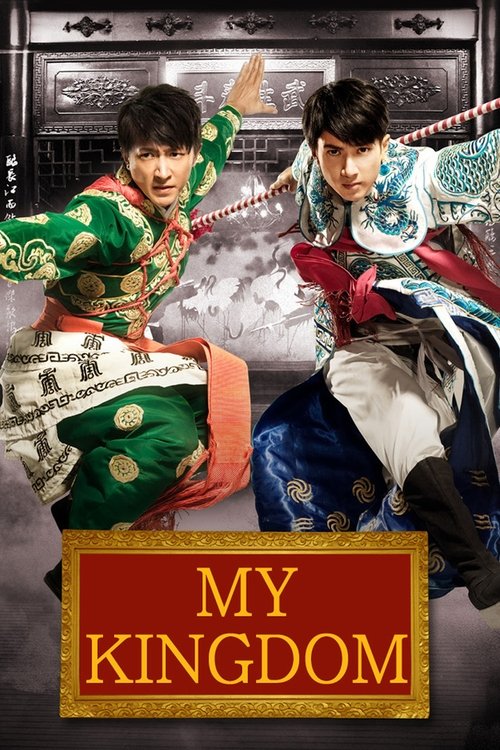
My Kingdom
In the 19th century, the Prince Regent of the Qing Dynasty orders the mass execution of the entire Meng clan. Before his beheading, the leader vows that his family will avenge this travesty of justice. Awaiting his death, a five-year-old Meng boy named Erkui bravely sings an aria. The power and purity of his voice touches the opera star Master Yu and his seven-year-old pupil Guan Yilong. Master Yu rescues the boy and the two orphans become brothers. Years later, Master Yu wins the coveted golden "The Mightiest Warrior" plaque from the Prince Regent, but subsequently loses it in a duel with his archrival Master Yue. Banished from the stage upon his loss, Master Yu spends his time training the two brothers in the village. When the boys grow into men, they set off for Shanghai to pursue revenge. Once they reach Shanghai, they quickly defeat Master Yue, reclaiming not only the plaque but also taking over the Yue's opera troupe.
The film earned $5.8M at the global box office.
1 win & 1 nomination
Plot Structure
Story beats plotted across runtime


Narrative Arc
Emotional journey through the story's key moments
Story Circle
Blueprint 15-beat structure
Arcplot Score Breakdown
Weighted: Precision (70%) + Arc (15%) + Theme (15%)
My Kingdom (2011) showcases deliberately positioned narrative design, characteristic of Xiaosong Gao's storytelling approach. This structural analysis examines how the film's 15-point plot structure maps to proven narrative frameworks across 1 hour and 35 minutes. With an Arcplot score of 7.1, the film balances conventional beats with creative variation.
Characters
Cast & narrative archetypes

Sandeman
Mandy
Kath
Jo
Dean
The Fool
Main Cast & Characters
Sandeman
Played by Richard Harris
Aging Liverpool crime boss struggling to maintain control of his empire while dealing with family turmoil and succession.
Mandy
Played by Lynn Redgrave
Sandeman's eldest daughter, ambitious and ruthless, willing to do anything to claim her father's criminal empire.
Kath
Played by Jimi Mistry
Sandeman's middle daughter, pragmatic and calculating, married into the organization but pursuing her own interests.
Jo
Played by Louise Lombard
Sandeman's youngest daughter, the most moral and honest of the three, who rejects her father's criminal lifestyle.
Dean
Played by Jimi Mistry
A loyal lieutenant in Sandeman's organization who becomes entangled in the family's internal conflicts.
The Fool
Played by Aidan Gillen
Sandeman's trusted advisor and conscience, offering wisdom while witnessing the family's tragic downfall.
Structural Analysis
The Status Quo at 1 minutes (1% through the runtime) establishes Sandeman, a powerful Liverpool crime boss, rules his empire with an iron fist alongside his wife and three daughters. Opening montage establishes his dominance over the criminal underworld.. Structural examination shows that this early placement immediately immerses viewers in the story world.
The inciting incident occurs at 11 minutes when Sandeman's wife is killed in a violent attack, shattering the family. In his grief-stricken rage, Sandeman makes a catastrophic decision to divide his empire among his daughters based on declarations of love.. At 12% through the film, this Disruption aligns precisely with traditional story structure. This beat shifts the emotional landscape, launching the protagonist into the central conflict.
The First Threshold at 23 minutes marks the transition into Act II, occurring at 25% of the runtime. This shows the protagonist's commitment to Sandeman officially transfers control to Mandy and Kath, disowning Tracy completely. He irrevocably abandons his position of power, choosing to trust his manipulative daughters over his honest one., moving from reaction to action.
At 47 minutes, the Midpoint arrives at 49% of the runtime—precisely centered, creating perfect narrative symmetry. Of particular interest, this crucial beat Sandeman is violently cast out by his daughters, thrown onto the streets with nothing. The full reversal is complete - from king to beggar. He realizes too late which daughter truly loved him., fundamentally raising what's at risk. The emotional intensity shifts, dividing the narrative into clear before-and-after phases.
The Collapse moment at 70 minutes (74% through) represents the emotional nadir. Here, Tracy is captured and killed by her sisters' forces. Sandeman, now completely broken, holds his dead daughter - the only one who loved him. The whiff of death is literal and devastating., demonstrates the protagonist at their lowest point. This beat's placement in the final quarter sets up the climactic reversal.
The Second Threshold at 76 minutes initiates the final act resolution at 80% of the runtime. Sandeman understands the truth too late: loyalty cannot be demanded, only earned through genuine love. His kingdom was built on fear, not love, and it has destroyed his family., demonstrating the transformation achieved throughout the journey.
Emotional Journey
My Kingdom's emotional architecture traces a deliberate progression across 15 carefully calibrated beats.
Narrative Framework
This structural analysis employs proven narrative structure principles that track dramatic progression. By mapping My Kingdom against these established plot points, we can identify how Xiaosong Gao utilizes or subverts traditional narrative conventions. The plot point approach reveals not only adherence to structural principles but also creative choices that distinguish My Kingdom within the drama genre.
Comparative Analysis
Additional drama films include After Thomas, South Pacific and Dirty Dancing: Havana Nights.
Plot Points by Act
Act I
SetupStatus Quo
Sandeman, a powerful Liverpool crime boss, rules his empire with an iron fist alongside his wife and three daughters. Opening montage establishes his dominance over the criminal underworld.
Theme
Family advisor warns: "Love and loyalty aren't the same thing." The core question of whether family bonds survive when tested by power and betrayal.
Worldbuilding
Introduction to Sandeman's three daughters - Mandy, Kath, and Tracy - and their different relationships with their father. Establishes the hierarchy of the criminal organization and family dynamics.
Disruption
Sandeman's wife is killed in a violent attack, shattering the family. In his grief-stricken rage, Sandeman makes a catastrophic decision to divide his empire among his daughters based on declarations of love.
Resistance
The two eldest daughters, Mandy and Kath, profess elaborate love to secure power. Youngest daughter Tracy refuses to play the game and speaks honestly, earning her father's fury and banishment. Advisors question Sandeman's judgment.
Act II
ConfrontationFirst Threshold
Sandeman officially transfers control to Mandy and Kath, disowning Tracy completely. He irrevocably abandons his position of power, choosing to trust his manipulative daughters over his honest one.
Mirror World
Tracy, now cast out, finds refuge with her lover Jo. This relationship represents authentic love versus the corrupted family bonds. Meanwhile, Sandeman begins to experience the consequences of his choice.
Premise
Mandy and Kath systematically strip Sandeman of dignity and power. What he thought was love reveals itself as ruthless ambition. Sandeman descends into the criminal underworld he once ruled, now powerless and increasingly deranged.
Midpoint
Sandeman is violently cast out by his daughters, thrown onto the streets with nothing. The full reversal is complete - from king to beggar. He realizes too late which daughter truly loved him.
Opposition
Sandeman wanders Liverpool's underbelly, spiraling into madness. His two elder daughters consolidate power and turn on each other. Violence escalates as the family tears itself apart. Tracy tries to rescue her father but struggles against her sisters' ruthlessness.
Collapse
Tracy is captured and killed by her sisters' forces. Sandeman, now completely broken, holds his dead daughter - the only one who loved him. The whiff of death is literal and devastating.
Crisis
Sandeman cradles Tracy's body, completely shattered by grief and madness. He confronts the full weight of his catastrophic mistakes. The kingdom he built has consumed everything he truly valued.
Act III
ResolutionSecond Threshold
Sandeman understands the truth too late: loyalty cannot be demanded, only earned through genuine love. His kingdom was built on fear, not love, and it has destroyed his family.
Synthesis
Final confrontations between the surviving family members. The criminal empire collapses into chaos and violence. Mandy and Kath's alliance fractures. The cycle of betrayal reaches its inevitable tragic conclusion.
Transformation
Sandeman dies broken and alone, his kingdom in ruins, having lost everything including his only loving daughter. The final image mirrors the opening - but instead of power and family, there is only devastation and loss.