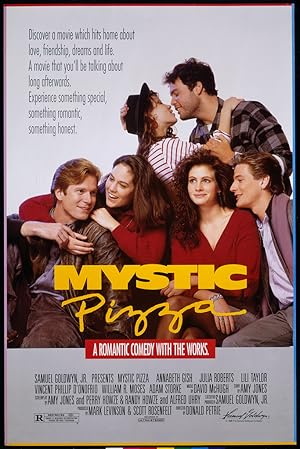
Mystic Pizza
Sisters Kat and Daisy work along with Jojo at the pizza parlour in Mystic, Connecticut. Kat, shortly off to Yale, finds herself drawn to a local architect she is babysitting for, while her more tearaway sister starts dating a guy from the money side of the tracks. Jojo leaves her man at the altar; she loves him but shies away from commitment. Meanwhile the fame of the pizza continues to spread; it seems to contain something almost ..... mystic.
Despite its modest budget of $6.0M, Mystic Pizza became a commercial success, earning $12.8M worldwide—a 113% return.
1 win & 4 nominations


Plot Structure
Story beats plotted across runtime


Narrative Arc
Emotional journey through the story's key moments
Story Circle
Blueprint 15-beat structure
Arcplot Score Breakdown
Weighted: Precision (70%) + Arc (15%) + Theme (15%)
Mystic Pizza (1988) exhibits meticulously timed plot construction, characteristic of Donald Petrie's storytelling approach. This structural analysis examines how the film's 15-point plot structure maps to proven narrative frameworks across 1 hour and 44 minutes. With an Arcplot score of 7.0, the film balances conventional beats with creative variation.
Characters
Cast & narrative archetypes

Daisy Araújo
Kat Araújo
Jojo Barbosa
Bill Montijo
Charles Gordon Windsor Jr.
Tim Travers
Leona
Main Cast & Characters
Daisy Araújo
Played by Julia Roberts
Passionate and impulsive waitress torn between love and independence, struggling with her Portuguese heritage and family expectations.
Kat Araújo
Played by Annabeth Gish
Daisy's Yale-bound sister, ambitious and determined to escape small-town life through education and proper romance.
Jojo Barbosa
Played by Lili Taylor
Grounded waitress engaged to fisherman Bill, facing commitment fears and doubts about settling down too young.
Bill Montijo
Played by Vincent D'Onofrio
Devoted fisherman engaged to Jojo, patient and traditional, wants to marry and start a family.
Charles Gordon Windsor Jr.
Played by Adam Storke
Wealthy Yale architecture student who romances Kat, charming but dealing with unhappy marriage and class differences.
Tim Travers
Played by William R. Moses
Rich playboy who pursues Daisy, arrogant and self-centered, represents the wrong kind of relationship.
Leona
Played by Conchata Ferrell
Tough-talking owner of Mystic Pizza, serves as mother figure and voice of wisdom to the three waitresses.
Structural Analysis
The Status Quo at 2 minutes (2% through the runtime) establishes The three young women—Kat, Daisy, and JoJo—work together at Mystic Pizza, each trapped in their small-town lives with different dreams and fears about their futures.. The analysis reveals that this early placement immediately immerses viewers in the story world.
The inciting incident occurs at 12 minutes when JoJo leaves Bill at the altar, refusing to marry him during the wedding ceremony, creating a public crisis that disrupts her comfortable relationship and forces her to confront her fears.. At 12% through the film, this Disruption aligns precisely with traditional story structure. This beat shifts the emotional landscape, launching the protagonist into the central conflict.
The First Threshold at 25 minutes marks the transition into Act II, occurring at 25% of the runtime. This illustrates the protagonist's commitment to Each woman makes an active choice to enter a new world: Kat accepts her attraction to Tim despite complications, Daisy commits to her relationship with Charlie, and JoJo decides to work on understanding her fear of marriage., moving from reaction to action.
At 51 minutes, the Midpoint arrives at 49% of the runtime—precisely centered, creating perfect narrative symmetry. Significantly, this crucial beat False victory: Kat and Tim kiss and begin an affair; Daisy is accepted by Charlie's mother at a family dinner; JoJo begins to soften toward the idea of marriage. Everything seems to be working out for all three women., fundamentally raising what's at risk. The emotional intensity shifts, dividing the narrative into clear before-and-after phases.
The Collapse moment at 76 minutes (74% through) represents the emotional nadir. Here, All three relationships collapse simultaneously: Kat discovers Tim won't leave his wife and ends it; Daisy catches Charlie with his ex-girlfriend and their relationship dies; JoJo confesses her premarital sex to the priest and faces spiritual crisis., demonstrates the protagonist at their lowest point. This beat's placement in the final quarter sets up the climactic reversal.
The Second Threshold at 83 minutes initiates the final act resolution at 79% of the runtime. Each woman gains clarity: Kat realizes she can pursue her ambitions without compromising her integrity; Daisy understands she doesn't need to change herself for anyone; JoJo recognizes that marriage is about commitment to love, not loss of self., demonstrating the transformation achieved throughout the journey.
Emotional Journey
Mystic Pizza's emotional architecture traces a deliberate progression across 15 carefully calibrated beats.
Narrative Framework
This structural analysis employs a 15-point narrative structure framework that maps key story moments. By mapping Mystic Pizza against these established plot points, we can identify how Donald Petrie utilizes or subverts traditional narrative conventions. The plot point approach reveals not only adherence to structural principles but also creative choices that distinguish Mystic Pizza within the comedy genre.
Donald Petrie's Structural Approach
Among the 10 Donald Petrie films analyzed on Arcplot, the average structural score is 7.1, reflecting strong command of classical structure. Mystic Pizza takes a more unconventional approach compared to the director's typical style. For comparative analysis, explore the complete Donald Petrie filmography.
Comparative Analysis
Additional comedy films include The Bad Guys, Ella Enchanted and The Evening Star. For more Donald Petrie analyses, see Miss Congeniality, My Life in Ruins and Ri¢hie Ri¢h.
Plot Points by Act
Act I
SetupStatus Quo
The three young women—Kat, Daisy, and JoJo—work together at Mystic Pizza, each trapped in their small-town lives with different dreams and fears about their futures.
Theme
Leona, the pizza parlor owner, speaks about the importance of following your heart and being true to yourself, foreshadowing each girl's journey toward self-discovery.
Worldbuilding
Establishing the three distinct storylines: JoJo's fear of marriage to Bill, Kat's academic ambitions and budding attraction to Tim, and Daisy's working-class background and relationship with wealthy Charlie.
Disruption
JoJo leaves Bill at the altar, refusing to marry him during the wedding ceremony, creating a public crisis that disrupts her comfortable relationship and forces her to confront her fears.
Resistance
Each woman debates her path: JoJo struggles with her commitment issues while Bill pressures her to marry; Kat begins tutoring at Tim's home and debates getting involved; Daisy questions whether she belongs in Charlie's upper-class world.
Act II
ConfrontationFirst Threshold
Each woman makes an active choice to enter a new world: Kat accepts her attraction to Tim despite complications, Daisy commits to her relationship with Charlie, and JoJo decides to work on understanding her fear of marriage.
Mirror World
Tim represents the thematic counterpoint for Kat—he's sophisticated, married, and embodies the life of intellectual fulfillment she desires, teaching her about both ambition and ethical boundaries.
Premise
The promise of the premise: Kat explores her intellectual and romantic connection with Tim; Daisy navigates Charlie's wealthy world and meets his family; JoJo attempts to understand her resistance to marriage through self-examination.
Midpoint
False victory: Kat and Tim kiss and begin an affair; Daisy is accepted by Charlie's mother at a family dinner; JoJo begins to soften toward the idea of marriage. Everything seems to be working out for all three women.
Opposition
Consequences intensify: Kat's affair with married Tim becomes complicated and guilt-ridden; Charlie's ex-girlfriend and mother create class-based tensions with Daisy; JoJo's sexual relationship with Bill before marriage violates her Catholic values and creates shame.
Collapse
All three relationships collapse simultaneously: Kat discovers Tim won't leave his wife and ends it; Daisy catches Charlie with his ex-girlfriend and their relationship dies; JoJo confesses her premarital sex to the priest and faces spiritual crisis.
Crisis
Dark night: Each woman processes her loss and failure. They support each other at the pizza parlor, confronting what went wrong and who they really are versus who they were trying to be.
Act III
ResolutionSecond Threshold
Each woman gains clarity: Kat realizes she can pursue her ambitions without compromising her integrity; Daisy understands she doesn't need to change herself for anyone; JoJo recognizes that marriage is about commitment to love, not loss of self.
Synthesis
The finale: Kat prepares for Yale with newfound confidence; Daisy accepts herself and her background; JoJo marries Bill in a ceremony that represents her authentic choice, not obligation. Each woman takes control of her own story.
Transformation
The three women reunite at Mystic Pizza, transformed: confident, self-possessed, and ready for their futures. The final image mirrors the opening but shows growth—they're the same friends, but now they know who they are.