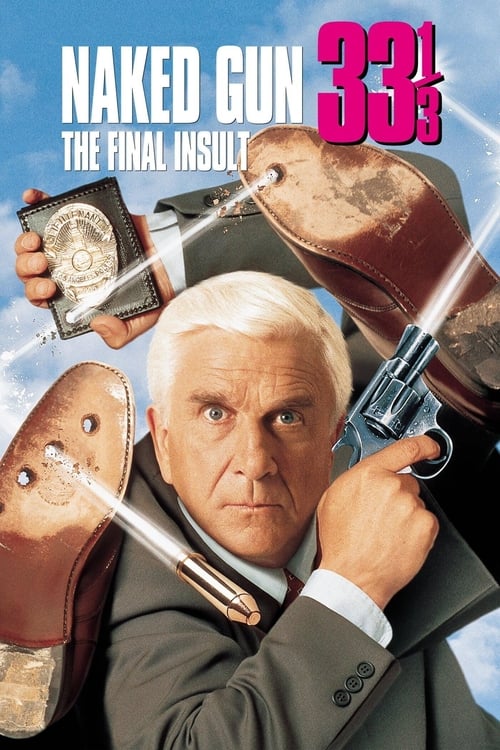
Naked Gun 33⅓: The Final Insult
Frank Drebin is persuaded out of retirement to go undercover in a state prison. There he has to find out what top terrorist, Rocco, has planned for when he escapes. Adding to his problems, Frank's wife, Jane, is desperate for a baby.
Despite a respectable budget of $30.0M, Naked Gun 33⅓: The Final Insult became a commercial success, earning $132.0M worldwide—a 340% return.


Plot Structure
Story beats plotted across runtime


Narrative Arc
Emotional journey through the story's key moments
Story Circle
Blueprint 15-beat structure
Arcplot Score Breakdown
Weighted: Precision (70%) + Arc (15%) + Theme (15%)
Naked Gun 33⅓: The Final Insult (1994) showcases carefully calibrated plot construction, characteristic of Peter Segal's storytelling approach. This structural analysis examines how the film's 15-point plot structure maps to proven narrative frameworks across 1 hour and 23 minutes. With an Arcplot score of 7.7, the film showcases strong structural fundamentals.
Characters
Cast & narrative archetypes

Frank Drebin
Jane Spencer
Rocco Dillon
Tanya Peters
Ed Hocken
Nordberg
Main Cast & Characters
Frank Drebin
Played by Leslie Nielsen
Retired Police Squad detective reluctantly pulled back into action to stop a terrorist plot at the Academy Awards
Jane Spencer
Played by Priscilla Presley
Frank's wife who wants to start a family while Frank struggles with retirement
Rocco Dillon
Played by Fred Ward
Terrorist bomber planning to detonate a bomb at the Academy Awards ceremony
Tanya Peters
Played by Anna Nicole Smith
Rocco's seductive girlfriend and accomplice who attempts to manipulate Frank
Ed Hocken
Played by George Kennedy
Frank's former partner and police captain who recruits him for one last mission
Nordberg
Played by O.J. Simpson
Frank's accident-prone colleague who provides comic support throughout the investigation
Structural Analysis
The Status Quo at 1 minutes (1% through the runtime) establishes Frank Drebin and Jane living in blissful retirement. Frank is content as a househusband, they're happily married and domestic, showing his "after cop life" status quo.. Notably, this early placement immediately immerses viewers in the story world.
The inciting incident occurs at 9 minutes when Jane reveals she wants a baby, creating tension. Simultaneously, Ed reveals they need Frank to go undercover in prison to stop a terrorist plot at the Academy Awards. Frank is torn between his wife's wishes and the call to duty.. At 11% through the film, this Disruption aligns precisely with traditional story structure. This beat shifts the emotional landscape, launching the protagonist into the central conflict.
The First Threshold at 20 minutes marks the transition into Act II, occurring at 24% of the runtime. This indicates the protagonist's commitment to Frank agrees to go undercover in prison without telling Jane the truth. He lies about going on a trip, actively choosing duty over honesty in his marriage, entering the "upside-down world" of prison., moving from reaction to action.
At 41 minutes, the Midpoint arrives at 49% of the runtime—precisely centered, creating perfect narrative symmetry. Notably, this crucial beat False victory: Frank gains Rocco's trust and they break out of prison together. Frank is now inside the terrorist operation. Stakes raise as he's deeper in the mission but also deeper in deception toward Jane., fundamentally raising what's at risk. The emotional intensity shifts, dividing the narrative into clear before-and-after phases.
The Collapse moment at 60 minutes (72% through) represents the emotional nadir. Here, Jane leaves Frank, telling him their marriage is over because he chose police work over their relationship. Frank loses what matters most. His identity crisis reaches its lowest point - he's a cop who's lost his wife, the "whiff of death" for his marriage., demonstrates the protagonist at their lowest point. This beat's placement in the final quarter sets up the climactic reversal.
The Second Threshold at 65 minutes initiates the final act resolution at 78% of the runtime. Frank realizes he must stop the bombing not just as a cop, but to protect Jane and prove his love is genuine. He synthesizes his cop skills with his commitment to his marriage, understanding he can be both protector and husband., demonstrating the transformation achieved throughout the journey.
Emotional Journey
Naked Gun 33⅓: The Final Insult's emotional architecture traces a deliberate progression across 15 carefully calibrated beats.
Narrative Framework
This structural analysis employs systematic plot point analysis that identifies crucial turning points. By mapping Naked Gun 33⅓: The Final Insult against these established plot points, we can identify how Peter Segal utilizes or subverts traditional narrative conventions. The plot point approach reveals not only adherence to structural principles but also creative choices that distinguish Naked Gun 33⅓: The Final Insult within the comedy genre.
Peter Segal's Structural Approach
Among the 8 Peter Segal films analyzed on Arcplot, the average structural score is 7.2, reflecting strong command of classical structure. Naked Gun 33⅓: The Final Insult represents one of the director's most structurally precise works. For comparative analysis, explore the complete Peter Segal filmography.
Comparative Analysis
Additional comedy films include The Bad Guys, Ella Enchanted and The Evening Star. For more Peter Segal analyses, see 50 First Dates, Second Act and Grudge Match.
Plot Points by Act
Act I
SetupStatus Quo
Frank Drebin and Jane living in blissful retirement. Frank is content as a househusband, they're happily married and domestic, showing his "after cop life" status quo.
Theme
Ed and Nordberg visit Frank. Ed mentions "once a cop, always a cop" and questions whether Frank can really leave his old life behind, stating the theme about identity and choosing between duty and domestic life.
Worldbuilding
Establish Frank's new domestic life with Jane, his retirement from police work, and the contrast with his former partner's still-active careers. Ed and Nordberg brief Frank on the new terrorist threat (Rocco Dillon) but Frank resists returning to duty.
Disruption
Jane reveals she wants a baby, creating tension. Simultaneously, Ed reveals they need Frank to go undercover in prison to stop a terrorist plot at the Academy Awards. Frank is torn between his wife's wishes and the call to duty.
Resistance
Frank debates whether to accept the mission. Jane doesn't want him to go. He struggles with the decision, trying to reconcile domestic life with his cop instincts. Ed and Nordberg persuade him this is the only way to stop the terrorist attack.
Act II
ConfrontationFirst Threshold
Frank agrees to go undercover in prison without telling Jane the truth. He lies about going on a trip, actively choosing duty over honesty in his marriage, entering the "upside-down world" of prison.
Mirror World
Frank enters prison and encounters the violent criminal world. His relationship with Jane becomes strained as she believes he's away on business. The prison represents the dark mirror of his domestic world.
Premise
Frank navigates prison life with classic slapstick comedy, tries to befriend Rocco Dillon and his mother Tanya, endures prison violence and absurdity, while Jane grows suspicious and hurt at home. The "fun and games" of Frank undercover in prison.
Midpoint
False victory: Frank gains Rocco's trust and they break out of prison together. Frank is now inside the terrorist operation. Stakes raise as he's deeper in the mission but also deeper in deception toward Jane.
Opposition
Frank works with Rocco and Tanya to plan the Academy Awards attack. Jane discovers Frank's deception and is heartbroken. The terrorist plot advances. Frank's two worlds collide as both his marriage and his mission become more complicated and dangerous.
Collapse
Jane leaves Frank, telling him their marriage is over because he chose police work over their relationship. Frank loses what matters most. His identity crisis reaches its lowest point - he's a cop who's lost his wife, the "whiff of death" for his marriage.
Crisis
Frank processes the loss of Jane while the Academy Awards bomb plot is imminent. He must find a way to stop the attack without his marriage, facing his dark night of the soul about what really matters.
Act III
ResolutionSecond Threshold
Frank realizes he must stop the bombing not just as a cop, but to protect Jane and prove his love is genuine. He synthesizes his cop skills with his commitment to his marriage, understanding he can be both protector and husband.
Synthesis
Frank races to the Academy Awards, battles Rocco and Tanya, stops the bomb plot in spectacular slapstick fashion during the Oscars ceremony. Jane sees his heroism. Final confrontation resolved with Frank saving the day and proving himself.
Transformation
Frank and Jane reunite. Unlike the opening where Frank was simply retired, he's now integrated both identities - the hero cop and the devoted husband. Jane accepts who he is. They're together, transformed, likely expecting the baby she wanted.