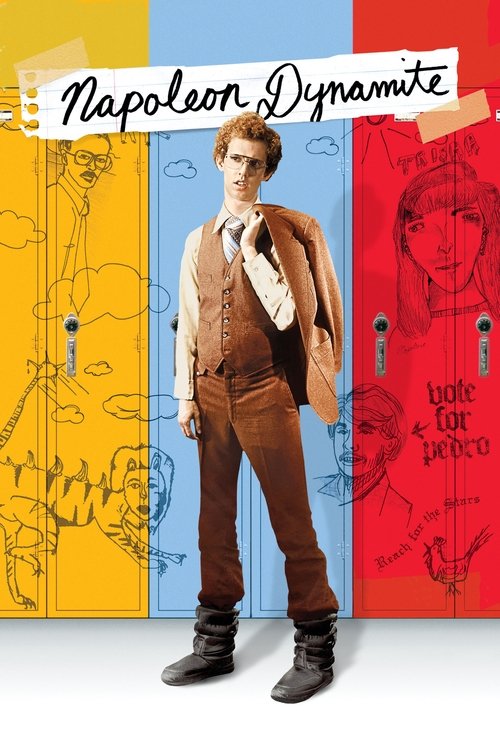
Napoleon Dynamite
A listless and alienated teenager decides to help his new friend win the class presidency in their small western high school, while he must deal with his bizarre family life back home.
Despite its minimal budget of $400K, Napoleon Dynamite became a massive hit, earning $46.1M worldwide—a remarkable 11430% return. The film's distinctive approach engaged audiences, illustrating how strong storytelling can transcend budget limitations.
10 wins & 23 nominations


Plot Structure
Story beats plotted across runtime


Narrative Arc
Emotional journey through the story's key moments
Story Circle
Blueprint 15-beat structure
Arcplot Score Breakdown
Weighted: Precision (70%) + Arc (15%) + Theme (15%)
Napoleon Dynamite (2004) exhibits precise dramatic framework, characteristic of Jared Hess's storytelling approach. This structural analysis examines how the film's 15-point plot structure maps to proven narrative frameworks across 1 hour and 35 minutes. With an Arcplot score of 7.3, the film balances conventional beats with creative variation.
Characters
Cast & narrative archetypes

Napoleon Dynamite
Pedro Sanchez
Deb
Kip Dynamite
Uncle Rico
LaFawnduh
Main Cast & Characters
Napoleon Dynamite
Played by Jon Heder
An awkward teenager with unique interests who helps his friend Pedro run for class president while navigating the social challenges of high school.
Pedro Sanchez
Played by Efren Ramirez
Napoleon's soft-spoken new friend who runs for class president with Napoleon's help.
Deb
Played by Tina Majorino
A shy, awkward girl who sells glamour shots and boondoggle keychains, and becomes Napoleon's love interest.
Kip Dynamite
Played by Aaron Ruell
Napoleon's 32-year-old brother who is obsessed with the internet and online chatrooms, eventually finding love online.
Uncle Rico
Played by Jon Gries
Napoleon and Kip's uncle who lives in the past, obsessed with his high school football glory days, and gets involved in various schemes.
LaFawnduh
Played by Shondrella Avery
Kip's online girlfriend who comes to visit from Detroit, bringing confidence and style to his life.
Structural Analysis
The Status Quo at 1 minutes (1% through the runtime) establishes Napoleon waits alone at a desolate bus stop in rural Idaho, embodying his isolated, awkward existence. His tetherball solo routine establishes his lonely, monotonous world.. Structural examination shows that this early placement immediately immerses viewers in the story world.
The inciting incident occurs at 11 minutes when Grandmother breaks her coccyx in a dune buggy accident and Uncle Rico arrives to "take care" of the boys. This disrupts Napoleon's already fragile status quo and introduces a new antagonistic force.. At 12% through the film, this Disruption aligns precisely with traditional story structure. This beat shifts the emotional landscape, launching the protagonist into the central conflict.
The First Threshold at 23 minutes marks the transition into Act II, occurring at 24% of the runtime. This reveals the protagonist's commitment to Napoleon actively chooses to help Pedro in his quest to ask Summer Wheatley to the dance, fully committing to their friendship. This is his first genuine investment in another person, entering a world of social engagement., moving from reaction to action.
At 46 minutes, the Midpoint arrives at 49% of the runtime—precisely centered, creating perfect narrative symmetry. Notably, this crucial beat Pedro announces he's running for class president. This false victory raises the stakes—Napoleon now has real responsibility to help his friend win. The passive friendship becomes an active mission with public consequences., fundamentally raising what's at risk. The emotional intensity shifts, dividing the narrative into clear before-and-after phases.
The Collapse moment at 70 minutes (74% through) represents the emotional nadir. Here, Deb furiously rejects Napoleon after Uncle Rico's scheme, refusing to go to the dance with him. Napoleon's one genuine connection outside Pedro dies. He stands alone, having lost the girl and facing Pedro's imminent defeat with no solution., reveals the protagonist at their lowest point. This beat's placement in the final quarter sets up the climactic reversal.
The Second Threshold at 75 minutes initiates the final act resolution at 79% of the runtime. At the school assembly, when Pedro has nothing prepared, he turns to Napoleon and asks, "Will you do me a favor?" Napoleon realizes he can offer his one true skill—his authentic, weird self. He chooses to risk total humiliation to help his friend., demonstrating the transformation achieved throughout the journey.
Emotional Journey
Napoleon Dynamite's emotional architecture traces a deliberate progression across 15 carefully calibrated beats.
Narrative Framework
This structural analysis employs structural analysis methodology used to understand storytelling architecture. By mapping Napoleon Dynamite against these established plot points, we can identify how Jared Hess utilizes or subverts traditional narrative conventions. The plot point approach reveals not only adherence to structural principles but also creative choices that distinguish Napoleon Dynamite within the comedy genre.
Jared Hess's Structural Approach
Among the 3 Jared Hess films analyzed on Arcplot, the average structural score is 7.3, reflecting strong command of classical structure. Napoleon Dynamite exemplifies the director's characteristic narrative technique. For comparative analysis, explore the complete Jared Hess filmography.
Comparative Analysis
Additional comedy films include The Bad Guys, Ella Enchanted and The Evening Star. For more Jared Hess analyses, see Masterminds, Nacho Libre.
Plot Points by Act
Act I
SetupStatus Quo
Napoleon waits alone at a desolate bus stop in rural Idaho, embodying his isolated, awkward existence. His tetherball solo routine establishes his lonely, monotonous world.
Theme
Deb tells Napoleon, "I'm trying to earn money for college." The theme of self-improvement and pursuing dreams despite limitations is introduced through her entrepreneurial efforts.
Worldbuilding
Introduction to Napoleon's dysfunctional world: his internet-dating grandmother, bullying brother Kip, school humiliations, and social awkwardness. We see his fantasy drawings, his llama Tina, and his complete lack of social status.
Disruption
Grandmother breaks her coccyx in a dune buggy accident and Uncle Rico arrives to "take care" of the boys. This disrupts Napoleon's already fragile status quo and introduces a new antagonistic force.
Resistance
Napoleon navigates life with Uncle Rico's intrusive presence while befriending Pedro, a new transfer student. Pedro becomes a quiet guide figure, showing Napoleon what understated confidence looks like. Napoleon debates whether to engage with his new friendship.
Act II
ConfrontationFirst Threshold
Napoleon actively chooses to help Pedro in his quest to ask Summer Wheatley to the dance, fully committing to their friendship. This is his first genuine investment in another person, entering a world of social engagement.
Mirror World
Deb and Napoleon's awkward glamour shots session deepens their connection. Deb represents the thematic mirror—someone else pursuing dreams despite social marginalization, showing Napoleon that sincerity and effort matter more than coolness.
Premise
The "promise of the premise"—Napoleon and Pedro's oddball friendship adventures. Building a bike jump, Pedro's failed haircut, getting a suit for the dance, the dance itself, and the beginning of Pedro's class president campaign. The fun, weird world of their friendship.
Midpoint
Pedro announces he's running for class president. This false victory raises the stakes—Napoleon now has real responsibility to help his friend win. The passive friendship becomes an active mission with public consequences.
Opposition
Opposition intensifies: Summer and her jock boyfriend mount a superior campaign; Uncle Rico sabotages Napoleon by humiliating him in front of Deb (selling her fake breast enhancement); Kip gets scammed; Napoleon's social status plummets further as his pathetic family life becomes public.
Collapse
Deb furiously rejects Napoleon after Uncle Rico's scheme, refusing to go to the dance with him. Napoleon's one genuine connection outside Pedro dies. He stands alone, having lost the girl and facing Pedro's imminent defeat with no solution.
Crisis
Napoleon wallows in darkness. He furiously banishes Uncle Rico, but the damage is done. Pedro faces certain humiliation at the assembly with no prepared skit. Napoleon has no answers, only despair at his inability to help his friend.
Act III
ResolutionSecond Threshold
At the school assembly, when Pedro has nothing prepared, he turns to Napoleon and asks, "Will you do me a favor?" Napoleon realizes he can offer his one true skill—his authentic, weird self. He chooses to risk total humiliation to help his friend.
Synthesis
Napoleon performs his spectacular dance routine in front of the entire school. His authentic expression of self, free from shame, wins the crowd. Pedro wins the election. Napoleon reconciles with Deb. Summer is dethroned. The underdogs triumph through sincerity.
Transformation
Napoleon plays tetherball—but now with Deb, not alone. The mirror image to the opening shot shows his transformation: he's moved from isolation to connection, from shame to self-acceptance, from passive victim to active friend.