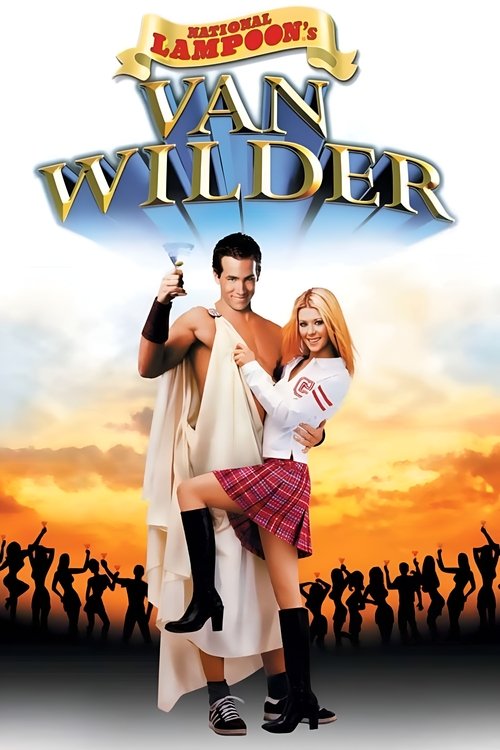
National Lampoon's Van Wilder
Van Wilder has been attending college for far too many years and is scared to graduate, but Van’s father eventually realizes what is going on. When he stops paying his son's tuition fees, Van must come up with the money if he wants to stay in college, so he and his friends come up with a great fund-raising idea – throwing parties. However, when the college magazine finds out and reporter Gwen is sent to do a story on Van Wilder, things get a little complicated.
Despite its modest budget of $6.0M, National Lampoon's Van Wilder became a runaway success, earning $39.2M worldwide—a remarkable 554% return. The film's fresh perspective found its audience, proving that strong storytelling can transcend budget limitations.


Plot Structure
Story beats plotted across runtime


Narrative Arc
Emotional journey through the story's key moments
Story Circle
Blueprint 15-beat structure
Arcplot Score Breakdown
Weighted: Precision (70%) + Arc (15%) + Theme (15%)
National Lampoon's Van Wilder (2002) exhibits meticulously timed narrative design, characteristic of Walt Becker's storytelling approach. This structural analysis examines how the film's 15-point plot structure maps to proven narrative frameworks across 1 hour and 32 minutes. With an Arcplot score of 7.3, the film balances conventional beats with creative variation.
Characters
Cast & narrative archetypes

Van Wilder
Gwen Pearson
Richard Bagg
Taj Mahal Badalandabad
Vance Wilder Sr.
Main Cast & Characters
Van Wilder
Played by Ryan Reynolds
A charismatic seventh-year senior who has made a career of college life, throwing legendary parties and avoiding graduation until his father cuts him off financially.
Gwen Pearson
Played by Tara Reid
An ambitious student journalist assigned to write about Van Wilder who initially dismisses him but gradually discovers his depth and genuine care for others.
Richard Bagg
Played by Daniel Cosgrove
Gwen's pretentious, controlling boyfriend and medical school student who feels threatened by Van's charm and popularity.
Taj Mahal Badalandabad
Played by Kal Penn
Van's enthusiastic and loyal assistant who worships Van and helps organize his legendary parties and campus events.
Vance Wilder Sr.
Played by Tim Matheson
Van's successful father who cuts off his son's tuition to force him to graduate and enter the real world.
Structural Analysis
The Status Quo at 1 minutes (1% through the runtime) establishes Van Wilder holds court at a campus party, beloved king of Coolidge College in his seventh year, living the eternal college dream with no plans to graduate.. Notably, this early placement immediately immerses viewers in the story world.
The inciting incident occurs at 10 minutes when Van's father cuts off his tuition, forcing Van to either get a job, graduate, or leave college - shattering his perpetual student paradise.. At 11% through the film, this Disruption aligns precisely with traditional story structure. This beat shifts the emotional landscape, launching the protagonist into the central conflict.
The First Threshold at 23 minutes marks the transition into Act II, occurring at 25% of the runtime. This reveals the protagonist's commitment to Van commits to opening up to Gwen for her article, agreeing to let her shadow him and see his real life - a choice to be vulnerable rather than maintain his shallow playboy facade., moving from reaction to action.
At 46 minutes, the Midpoint arrives at 50% of the runtime—precisely centered, creating perfect narrative symmetry. The analysis reveals that this crucial beat Van and Gwen kiss and connect emotionally - a false victory as Van believes he can have both growth and his old life, but he hasn't truly committed to change yet., fundamentally raising what's at risk. The emotional intensity shifts, dividing the narrative into clear before-and-after phases.
The Collapse moment at 67 minutes (73% through) represents the emotional nadir. Here, Gwen rejects Van after discovering his deception. Van loses both the girl and his purpose - his party empire feels empty. The "death" of his false self and shallow existence., shows the protagonist at their lowest point. This beat's placement in the final quarter sets up the climactic reversal.
The Second Threshold at 73 minutes initiates the final act resolution at 80% of the runtime. Van decides to write from the heart in the college expo competition, combining his party-planning skills with authentic emotional vulnerability - synthesizing fun with genuine growth., demonstrating the transformation achieved throughout the journey.
Emotional Journey
National Lampoon's Van Wilder's emotional architecture traces a deliberate progression across 15 carefully calibrated beats.
Narrative Framework
This structural analysis employs proven narrative structure principles that track dramatic progression. By mapping National Lampoon's Van Wilder against these established plot points, we can identify how Walt Becker utilizes or subverts traditional narrative conventions. The plot point approach reveals not only adherence to structural principles but also creative choices that distinguish National Lampoon's Van Wilder within the comedy genre.
Walt Becker's Structural Approach
Among the 5 Walt Becker films analyzed on Arcplot, the average structural score is 7.3, reflecting strong command of classical structure. National Lampoon's Van Wilder represents one of the director's most structurally precise works. For comparative analysis, explore the complete Walt Becker filmography.
Comparative Analysis
Additional comedy films include The Bad Guys, Ella Enchanted and The Evening Star. For more Walt Becker analyses, see Clifford the Big Red Dog, Old Dogs and Alvin and the Chipmunks: The Road Chip.
Plot Points by Act
Act I
SetupStatus Quo
Van Wilder holds court at a campus party, beloved king of Coolidge College in his seventh year, living the eternal college dream with no plans to graduate.
Theme
Taj tells Van, "You cannot be a tour guide forever" - hinting at the cost of refusing to grow up and move forward.
Worldbuilding
Establishing Van's empire: his party planning business, his loyal assistant Taj, his popularity on campus, and his fear of commitment shown through his refusal to sleep with his girlfriend Jeannie.
Disruption
Van's father cuts off his tuition, forcing Van to either get a job, graduate, or leave college - shattering his perpetual student paradise.
Resistance
Van debates how to stay in school, starts his "party liaison" business for money, and meets Gwen Pearson who is assigned to write an exposé on him. Van resists real change while scrambling for solutions.
Act II
ConfrontationFirst Threshold
Van commits to opening up to Gwen for her article, agreeing to let her shadow him and see his real life - a choice to be vulnerable rather than maintain his shallow playboy facade.
Mirror World
Van and Gwen share their first genuine conversation where she challenges his avoidance of real life and he begins to see her as representing something meaningful beyond parties and surface-level fun.
Premise
The fun promised by the premise: Van throws outrageous parties, helps outcasts find confidence, bonds with Gwen through adventures, while his feelings deepen and he begins questioning his perpetual student lifestyle.
Midpoint
Van and Gwen kiss and connect emotionally - a false victory as Van believes he can have both growth and his old life, but he hasn't truly committed to change yet.
Opposition
Richard sabotages Van by getting Gwen drunk and sleeping with her, then revealing Van initially pursued her as revenge. Van's flaws catch up as his manipulation and refusal to be genuine destroy his relationship with Gwen.
Collapse
Gwen rejects Van after discovering his deception. Van loses both the girl and his purpose - his party empire feels empty. The "death" of his false self and shallow existence.
Crisis
Van wallows in depression, skipping his own party. He realizes his lifestyle is hollow without authentic connection and that he must genuinely change to become worthy of Gwen.
Act III
ResolutionSecond Threshold
Van decides to write from the heart in the college expo competition, combining his party-planning skills with authentic emotional vulnerability - synthesizing fun with genuine growth.
Synthesis
Van wins the expo with his honest presentation, confronts Richard, proves his genuine change to Gwen, and decides to finally graduate and move forward with his life.
Transformation
Van walks across the graduation stage with Gwen by his side - transformed from perpetual adolescent to committed adult ready to face the real world, having chosen growth over comfort.