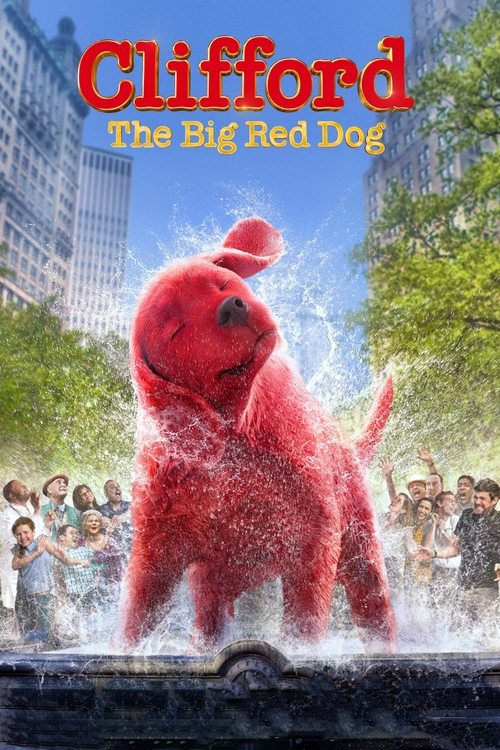
Clifford the Big Red Dog
As Emily struggles to fit in at home and at school, she discovers a small red puppy who is destined to become her best friend. When Clifford magically undergoes one heck of a growth spurt, becomes a gigantic dog and attracts the attention of a genetics company, Emily and her Uncle Casey have to fight the forces of greed as they go on the run across New York City. Along the way, Clifford affects the lives of everyone around him and teaches Emily and her uncle the true meaning of acceptance and unconditional love.
Working with a moderate budget of $64.0M, the film achieved a steady performer with $107.3M in global revenue (+68% profit margin).


Plot Structure
Story beats plotted across runtime


Narrative Arc
Emotional journey through the story's key moments
Story Circle
Blueprint 15-beat structure
Arcplot Score Breakdown
Weighted: Precision (70%) + Arc (15%) + Theme (15%)
Clifford the Big Red Dog (2021) exemplifies deliberately positioned story structure, characteristic of Walt Becker's storytelling approach. This structural analysis examines how the film's 15-point plot structure maps to proven narrative frameworks across 1 hour and 36 minutes. With an Arcplot score of 7.4, the film balances conventional beats with creative variation.
Characters
Cast & narrative archetypes

Emily Elizabeth Howard
Casey Howard
Clifford
Mr. Bridwell
Zack Tieran
Maggie Howard
Owen Yu
Main Cast & Characters
Emily Elizabeth Howard
Played by Darby Camp
A shy middle schooler who becomes the owner of Clifford, a magically giant red dog who helps her find confidence and friendship.
Casey Howard
Played by Jack Whitehall
Emily's fun-loving, irresponsible uncle who must care for her and Clifford while facing his own journey to maturity.
Clifford
Played by Clifford (CGI/Voice: David Alan Grier)
A tiny red puppy who grows to enormous size, representing unconditional love and the magic of believing in yourself.
Mr. Bridwell
Played by John Cleese
A mysterious magical animal rescuer who gives Emily the puppy that becomes Clifford, serving as a wise catalyst for change.
Zack Tieran
Played by Tony Hale
A greedy biotech CEO who wants to capture and exploit Clifford for scientific experiments and corporate profit.
Maggie Howard
Played by Sienna Guillory
Emily's overworked single mother who struggles to balance her career with being present for her daughter.
Owen Yu
Played by Izaac Wang
Emily's kind-hearted classmate and neighbor who becomes a loyal friend and ally in protecting Clifford.
Structural Analysis
The Status Quo at 1 minutes (1% through the runtime) establishes Emily Elizabeth is shown as a lonely middle schooler struggling to fit in, living in a small New York apartment with her single mother. She desperately wants a friend and to feel special.. Structural examination shows that this early placement immediately immerses viewers in the story world.
The inciting incident occurs at 12 minutes when Emily meets Bridwell at a magical tent and is given a tiny red puppy. The mysterious gift offers hope and connection she's been missing.. At 12% through the film, this Disruption aligns precisely with traditional story structure. This beat shifts the emotional landscape, launching the protagonist into the central conflict.
The First Threshold at 24 minutes marks the transition into Act II, occurring at 24% of the runtime. This reveals the protagonist's commitment to Emily and Casey discover giant Clifford and realize they can't hide him. They make the active choice to venture into the city with him, entering a world of chaos and public attention., moving from reaction to action.
At 48 minutes, the Midpoint arrives at 50% of the runtime—precisely centered, creating perfect narrative symmetry. Structural examination shows that this crucial beat Lyfegro Corporation CEO Zack Tieran sees Clifford on TV and mobilizes his biotech company to capture the dog for genetic experimentation. The stakes raise dramatically - false victory of fame becomes real danger., fundamentally raising what's at risk. The emotional intensity shifts, dividing the narrative into clear before-and-after phases.
The Collapse moment at 71 minutes (73% through) represents the emotional nadir. Here, Tieran's forces successfully capture Clifford. Emily loses her best friend. The "death" of their bond - Clifford is taken away in a truck, possibly forever. Emily's worst fear realized: losing someone she loves., demonstrates the protagonist at their lowest point. This beat's placement in the final quarter sets up the climactic reversal.
The Second Threshold at 76 minutes initiates the final act resolution at 80% of the runtime. Emily, Casey, Owen, and the community unite with a plan to rescue Clifford from Lyfegro. Emily synthesizes what she's learned: true friendship and community support are what matter, not being special or popular., demonstrating the transformation achieved throughout the journey.
Emotional Journey
Clifford the Big Red Dog's emotional architecture traces a deliberate progression across 15 carefully calibrated beats.
Narrative Framework
This structural analysis employs systematic plot point analysis that identifies crucial turning points. By mapping Clifford the Big Red Dog against these established plot points, we can identify how Walt Becker utilizes or subverts traditional narrative conventions. The plot point approach reveals not only adherence to structural principles but also creative choices that distinguish Clifford the Big Red Dog within the family genre.
Walt Becker's Structural Approach
Among the 5 Walt Becker films analyzed on Arcplot, the average structural score is 7.3, reflecting strong command of classical structure. Clifford the Big Red Dog represents one of the director's most structurally precise works. For comparative analysis, explore the complete Walt Becker filmography.
Comparative Analysis
Additional family films include The Black Stallion, The Bad Guys and Ella Enchanted. For more Walt Becker analyses, see National Lampoon's Van Wilder, Old Dogs and Alvin and the Chipmunks: The Road Chip.
Plot Points by Act
Act I
SetupStatus Quo
Emily Elizabeth is shown as a lonely middle schooler struggling to fit in, living in a small New York apartment with her single mother. She desperately wants a friend and to feel special.
Theme
The magical animal rescuer Bridwell tells Emily, "The size of your love determines how big he grows." This establishes the theme that love and acceptance make us bigger/better.
Worldbuilding
Setup of Emily's world: her struggles at school with mean girls, her loving but busy mother, her irresponsible uncle Casey who comes to babysit, and her yearning to belong somewhere.
Disruption
Emily meets Bridwell at a magical tent and is given a tiny red puppy. The mysterious gift offers hope and connection she's been missing.
Resistance
Emily debates what to do with the puppy in her no-pets apartment. Uncle Casey is skeptical. Emily bonds with Clifford overnight, and her love causes him to grow to enormous size by morning.
Act II
ConfrontationFirst Threshold
Emily and Casey discover giant Clifford and realize they can't hide him. They make the active choice to venture into the city with him, entering a world of chaos and public attention.
Mirror World
Emily takes Clifford to school, where her classmate Owen is introduced as someone who also struggles to fit in. This subplot explores the theme of acceptance and finding your pack.
Premise
The promise of the premise: giant dog adventures in New York City. Clifford becomes a viral sensation, Emily gains popularity, they play in the city, cause chaos, and experience the fun of having a magical companion.
Midpoint
Lyfegro Corporation CEO Zack Tieran sees Clifford on TV and mobilizes his biotech company to capture the dog for genetic experimentation. The stakes raise dramatically - false victory of fame becomes real danger.
Opposition
Tieran and his team close in on Clifford. Emily's mom returns and is upset. The apartment building landlord wants them evicted. Media frenzy intensifies. Emily's flaws (seeking popularity over genuine connection) catch up with her.
Collapse
Tieran's forces successfully capture Clifford. Emily loses her best friend. The "death" of their bond - Clifford is taken away in a truck, possibly forever. Emily's worst fear realized: losing someone she loves.
Crisis
Emily processes her loss and realizes what Clifford truly meant to her - not popularity, but unconditional love and acceptance. She decides she must save him no matter the cost.
Act III
ResolutionSecond Threshold
Emily, Casey, Owen, and the community unite with a plan to rescue Clifford from Lyfegro. Emily synthesizes what she's learned: true friendship and community support are what matter, not being special or popular.
Synthesis
The finale rescue mission. The community helps Emily break into Lyfegro, outwit Tieran, and free Clifford. Emily stands up for what's right, embracing who she truly is rather than seeking validation.
Transformation
Final image mirrors the opening: Emily at school, but now confident and surrounded by real friends including Owen. Clifford remains big because her love is genuine and strong. She has found where she belongs.