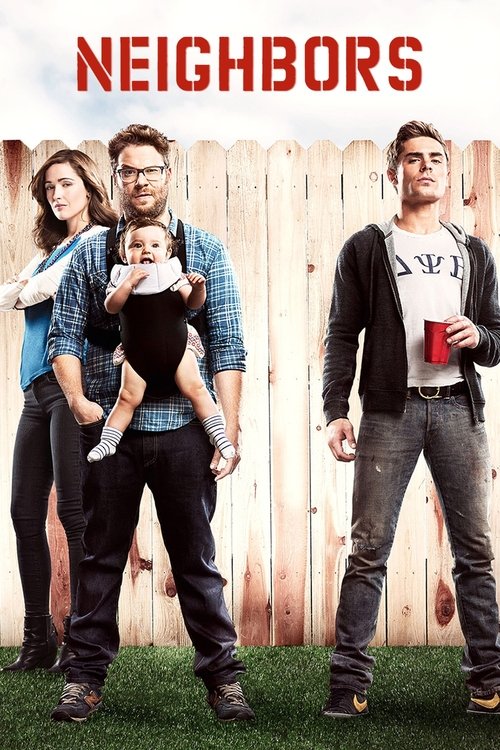
Neighbors
A couple with a newborn baby face unexpected difficulties after they are forced to live next to a fraternity house.
Despite a respectable budget of $18.0M, Neighbors became a box office phenomenon, earning $270.7M worldwide—a remarkable 1404% return.
7 wins & 11 nominations


Plot Structure
Story beats plotted across runtime


Narrative Arc
Emotional journey through the story's key moments
Story Circle
Blueprint 15-beat structure
Arcplot Score Breakdown
Weighted: Precision (70%) + Arc (15%) + Theme (15%)
Neighbors (2014) exhibits deliberately positioned narrative architecture, characteristic of Nicholas Stoller's storytelling approach. This structural analysis examines how the film's 15-point plot structure maps to proven narrative frameworks across 1 hour and 37 minutes. With an Arcplot score of 7.1, the film balances conventional beats with creative variation.
Characters
Cast & narrative archetypes

Mac Radner
Kelly Radner
Teddy Sanders
Pete Regazolli
Jimmy Blevins
Paula Faldt
Main Cast & Characters
Mac Radner
Played by Seth Rogen
A new father trying to balance responsible parenthood with his fading youth, drawn into an escalating war with the fraternity next door.
Kelly Radner
Played by Rose Byrne
Mac's wife and partner in parenthood, equally invested in their suburban life and equally frustrated by the fraternity disruption.
Teddy Sanders
Played by Zac Efron
The charismatic fraternity president struggling with impending graduation and the loss of his college glory days.
Pete Regazolli
Played by Dave Franco
Teddy's best friend and fraternity vice president, more grounded and ready to move forward with adult life.
Jimmy Blevins
Played by Ike Barinholtz
Mac's friend and coworker who joins in the pranks against the fraternity.
Paula Faldt
Played by Carla Gallo
Kelly's friend who provides moral support during the conflict.
Structural Analysis
The Status Quo at 1 minutes (1% through the runtime) establishes Mac and Kelly Radner are new parents trying to maintain their coolness while adjusting to life with baby Stella. Opening montage shows them attempting (and failing) to have sex and party like they used to, establishing their struggle between parenthood and youth.. Notably, this early placement immediately immerses viewers in the story world.
The inciting incident occurs at 11 minutes when The Delta Psi Beta fraternity, led by Teddy Sanders and Pete, moves in next door. Mac and Kelly's quiet suburban life is immediately disrupted by loud college students. Their worst nightmare of becoming "the old people" is realized.. At 11% through the film, this Disruption aligns precisely with traditional story structure. This beat shifts the emotional landscape, launching the protagonist into the central conflict.
The First Threshold at 23 minutes marks the transition into Act II, occurring at 24% of the runtime. This reveals the protagonist's commitment to After the first party gets too loud and Stella won't sleep, Mac calls the police directly instead of asking Teddy first (breaking their agreement). Teddy discovers it was Mac who called. This irreversible action launches all-out war between the families and the frat., moving from reaction to action.
At 47 minutes, the Midpoint arrives at 49% of the runtime—precisely centered, creating perfect narrative symmetry. Of particular interest, this crucial beat False victory: Mac and Kelly successfully get the frat on probation with the dean. They think they've won. They celebrate and have sex for the first time in months. But this victory makes Teddy more desperate and dangerous., fundamentally raising what's at risk. The emotional intensity shifts, dividing the narrative into clear before-and-after phases.
The Collapse moment at 65 minutes (67% through) represents the emotional nadir. Here, Mac and Kelly's plan to sabotage the toga party fails spectacularly. Their marriage hits rock bottom during a massive fight where they blame each other. The frat party is happening and seems unstoppable. Mac realizes he's become obsessed with defeating kids instead of being a good father and husband., demonstrates the protagonist at their lowest point. This beat's placement in the final quarter sets up the climactic reversal.
The Second Threshold at 74 minutes initiates the final act resolution at 76% of the runtime. Mac realizes the solution: stop trying to beat the frat at their own game and instead accept being adults. He and Kelly reconcile with a new approach—they'll use their adult resources and maturity. Meanwhile, Pete helps them by revealing the frat's financial vulnerability., demonstrating the transformation achieved throughout the journey.
Emotional Journey
Neighbors's emotional architecture traces a deliberate progression across 15 carefully calibrated beats.
Narrative Framework
This structural analysis employs proven narrative structure principles that track dramatic progression. By mapping Neighbors against these established plot points, we can identify how Nicholas Stoller utilizes or subverts traditional narrative conventions. The plot point approach reveals not only adherence to structural principles but also creative choices that distinguish Neighbors within the comedy genre.
Nicholas Stoller's Structural Approach
Among the 6 Nicholas Stoller films analyzed on Arcplot, the average structural score is 7.3, reflecting strong command of classical structure. Neighbors takes a more unconventional approach compared to the director's typical style. For comparative analysis, explore the complete Nicholas Stoller filmography.
Comparative Analysis
Additional comedy films include The Bad Guys, Ella Enchanted and The Evening Star. For more Nicholas Stoller analyses, see Forgetting Sarah Marshall, Get Him to the Greek and The Five-Year Engagement.
Plot Points by Act
Act I
SetupStatus Quo
Mac and Kelly Radner are new parents trying to maintain their coolness while adjusting to life with baby Stella. Opening montage shows them attempting (and failing) to have sex and party like they used to, establishing their struggle between parenthood and youth.
Theme
Kelly tells Mac: "We're not old, we're just parents." This establishes the central theme about accepting adulthood and letting go of youthful identity while finding new meaning in responsibility.
Worldbuilding
The Radners' world as young parents in their suburban home is established. They love their baby but miss their old lives. The neighborhood is quiet and peaceful. They discuss their fears about becoming boring adults.
Disruption
The Delta Psi Beta fraternity, led by Teddy Sanders and Pete, moves in next door. Mac and Kelly's quiet suburban life is immediately disrupted by loud college students. Their worst nightmare of becoming "the old people" is realized.
Resistance
Mac and Kelly debate how to handle the situation. They try to befriend the fraternity, joining their party to avoid being "those neighbors" who complain. They smoke weed with Teddy and Pete, trying to prove they're still cool. Mentor figure: their own past selves.
Act II
ConfrontationFirst Threshold
After the first party gets too loud and Stella won't sleep, Mac calls the police directly instead of asking Teddy first (breaking their agreement). Teddy discovers it was Mac who called. This irreversible action launches all-out war between the families and the frat.
Mirror World
The relationship with Teddy becomes the thematic mirror. Teddy represents who Mac used to be—young, cool, living for the moment. The war becomes about Mac confronting his own fading youth and what it means to grow up.
Premise
Escalating pranks and war between the Radners and Delta Psi. Mac and Kelly sabotage the frat's parties, steal their weed, and try various schemes. The fraternity retaliates with airbags, loud parties, and psychological warfare. Comedy premise delivered in full force.
Midpoint
False victory: Mac and Kelly successfully get the frat on probation with the dean. They think they've won. They celebrate and have sex for the first time in months. But this victory makes Teddy more desperate and dangerous.
Opposition
The frat fights back harder. Teddy plans their epic end-of-year party (Toga party) that will cement their legacy. Mac and Kelly's marriage strains under the pressure. Pete begins questioning the war and grows apart from Teddy. Stakes escalate as both sides get more desperate.
Collapse
Mac and Kelly's plan to sabotage the toga party fails spectacularly. Their marriage hits rock bottom during a massive fight where they blame each other. The frat party is happening and seems unstoppable. Mac realizes he's become obsessed with defeating kids instead of being a good father and husband.
Crisis
Mac and Kelly separate briefly and reflect on what they've become. Mac has his dark night realizing his obsession with staying young has made him act more immature than ever. They process whether their marriage can survive this ordeal.
Act III
ResolutionSecond Threshold
Mac realizes the solution: stop trying to beat the frat at their own game and instead accept being adults. He and Kelly reconcile with a new approach—they'll use their adult resources and maturity. Meanwhile, Pete helps them by revealing the frat's financial vulnerability.
Synthesis
Mac and Kelly execute their final plan: they help the toga party succeed so much that it violates probation, getting the frat shut down. Teddy and Pete's friendship fractures as Pete moves on to adulthood (graduation, job). Teddy faces being left behind. The frat is disbanded.
Transformation
Final image mirrors the opening: Mac and Kelly with Stella, but now they've fully embraced being parents. They run into Teddy, who is starting to grow up himself. The Radners are at peace with their new identity, no longer fighting their age but owning it.