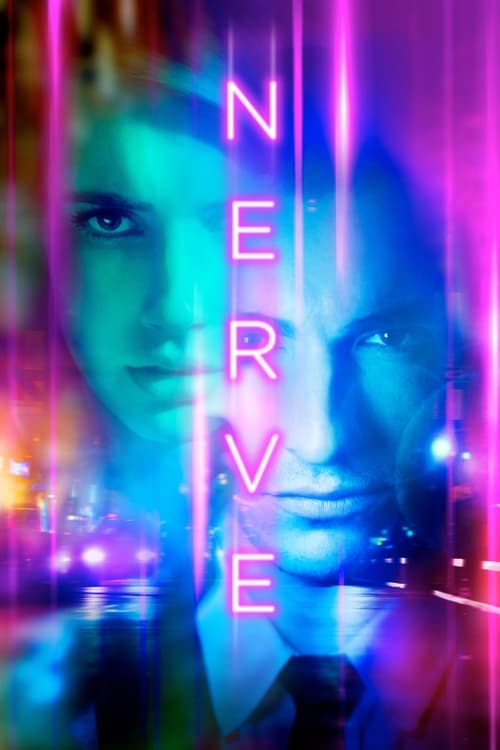
Nerve
Industrious high school senior Vee Delmonico has had it with living life on the sidelines. When pressured by friends to join the popular online game Nerve, Vee decides to sign up for just one dare in what seems like harmless fun. But as she finds herself caught up in the thrill of the adrenaline-fueled competition partnered with a mysterious stranger, the game begins to take a sinister turn with increasingly dangerous acts, leading her into a high stakes finale that will determine her entire future.
Despite a respectable budget of $19.0M, Nerve became a commercial success, earning $85.2M worldwide—a 349% return.


Plot Structure
Story beats plotted across runtime


Narrative Arc
Emotional journey through the story's key moments
Story Circle
Blueprint 15-beat structure
Arcplot Score Breakdown
Weighted: Precision (70%) + Arc (15%) + Theme (15%)
Nerve (2016) reveals precise narrative architecture, characteristic of Henry Joost's storytelling approach. This structural analysis examines how the film's 15-point plot structure maps to proven narrative frameworks across 1 hour and 36 minutes. With an Arcplot score of 7.4, the film balances conventional beats with creative variation.
Characters
Cast & narrative archetypes

Vee Delmonico
Ian
Sydney
Tommy
Ty
Nancy Delmonico
Main Cast & Characters
Vee Delmonico
Played by Emma Roberts
A cautious high school senior who becomes a player in the dangerous online game Nerve to break out of her shell.
Ian
Played by Dave Franco
A mysterious and charming fellow Nerve player who partners with Vee as the dares escalate.
Sydney
Played by Emily Meade
Vee's popular best friend who is an experienced Nerve player seeking fame and validation through the game.
Tommy
Played by Miles Heizer
Vee's loyal friend who harbors feelings for her and tries to protect her from the dangers of Nerve.
Ty
Played by Machine Gun Kelly
Sydney's ex-boyfriend and a cocky Nerve player who becomes increasingly reckless in pursuit of the game.
Nancy Delmonico
Played by Juliette Lewis
Vee's protective mother who worries about her daughter's college plans and future.
Structural Analysis
The Status Quo at 1 minutes (1% through the runtime) establishes Vee is a quiet, risk-averse high school senior working in the diner, contrasted with her popular best friend Sydney who is playing Nerve. She's invisible, safe, and stuck in her comfort zone.. Of particular interest, this early placement immediately immerses viewers in the story world.
The inciting incident occurs at 12 minutes when After being humiliated by Sydney at the party when called a "watcher" in life, Vee impulsively signs up for Nerve as a Player. The app immediately issues her first dare. The game has entered her life.. At 12% through the film, this Disruption aligns precisely with traditional story structure. This beat shifts the emotional landscape, launching the protagonist into the central conflict.
The First Threshold at 23 minutes marks the transition into Act II, occurring at 24% of the runtime. This illustrates the protagonist's commitment to Vee chooses to continue playing despite warnings. She accepts the dare to go to Manhattan with Ian (a stranger), fully committing to the game and leaving her safe world behind. This is her active choice to become a Player in life., moving from reaction to action.
At 48 minutes, the Midpoint arrives at 50% of the runtime—precisely centered, creating perfect narrative symmetry. Structural examination shows that this crucial beat False victory turns to defeat: Vee and Ian are leading the game and falling for each other, but Ty falls from a ladder during his dare and is seriously injured. Vee witnesses the dark side of the game. She decides to bail, but discovers she's trapped—the game won't let her quit., fundamentally raising what's at risk. The emotional intensity shifts, dividing the narrative into clear before-and-after phases.
The Collapse moment at 70 minutes (73% through) represents the emotional nadir. Here, Vee is given the final dare: shoot Ian or lose everything (her identity, future, money). She's isolated from friends, her mother thinks she's missing, and she's become exactly what she feared—a puppet. Her dream of agency has died; she's more trapped than ever., reveals the protagonist at their lowest point. This beat's placement in the final quarter sets up the climactic reversal.
The Second Threshold at 77 minutes initiates the final act resolution at 80% of the runtime. Vee and Ian realize the game's code can be broken by creating a tie—something the algorithm can't handle. Vee synthesizes what she's learned: she must take a real risk (not a dare) by turning the game against itself. She chooses authentic courage over performed bravery., demonstrating the transformation achieved throughout the journey.
Emotional Journey
Nerve's emotional architecture traces a deliberate progression across 15 carefully calibrated beats.
Narrative Framework
This structural analysis employs a 15-point narrative structure framework that maps key story moments. By mapping Nerve against these established plot points, we can identify how Henry Joost utilizes or subverts traditional narrative conventions. The plot point approach reveals not only adherence to structural principles but also creative choices that distinguish Nerve within the mystery genre.
Henry Joost's Structural Approach
Among the 2 Henry Joost films analyzed on Arcplot, the average structural score is 7.3, reflecting strong command of classical structure. Nerve represents one of the director's most structurally precise works. For comparative analysis, explore the complete Henry Joost filmography.
Comparative Analysis
Additional mystery films include Lone Star, The Wicker Man and A Soldier's Story. For more Henry Joost analyses, see Paranormal Activity 4.
Plot Points by Act
Act I
SetupStatus Quo
Vee is a quiet, risk-averse high school senior working in the diner, contrasted with her popular best friend Sydney who is playing Nerve. She's invisible, safe, and stuck in her comfort zone.
Theme
Sydney tells Vee, "You're either a Watcher or a Player." This establishes the central thematic question: Will you live life as a passive observer or an active participant willing to take risks?
Worldbuilding
Introduction to Nerve app mechanics, Vee's home life with her overprotective mother still grieving her son, her college acceptance to CalArts that she's afraid to accept, and her unrequited crush on JP who dates Sydney. Vee is paralyzed by fear and loss.
Disruption
After being humiliated by Sydney at the party when called a "watcher" in life, Vee impulsively signs up for Nerve as a Player. The app immediately issues her first dare. The game has entered her life.
Resistance
Vee completes her first dare (kiss a stranger for 5 seconds), meets Ian, and they're paired for escalating dares. Her friends Tommy and Liv try to warn her about the dangers of the game. Vee debates whether to continue but is seduced by the money, attention, and Ian.
Act II
ConfrontationFirst Threshold
Vee chooses to continue playing despite warnings. She accepts the dare to go to Manhattan with Ian (a stranger), fully committing to the game and leaving her safe world behind. This is her active choice to become a Player in life.
Mirror World
Ian and Vee bond during the tattoo parlor dare. Ian represents what Vee could become: someone who takes risks and lives fully. Their relationship becomes the B-story that carries the theme of authenticity vs. performance.
Premise
The fun and games of playing Nerve: trying on expensive clothes, motorcycle ride blindfolded, singing on stage, hanging from a ladder between buildings. Vee and Ian become the top Players, gaining thousands of watchers. The promise of the premise is delivered: what if you said yes to everything?
Midpoint
False victory turns to defeat: Vee and Ian are leading the game and falling for each other, but Ty falls from a ladder during his dare and is seriously injured. Vee witnesses the dark side of the game. She decides to bail, but discovers she's trapped—the game won't let her quit.
Opposition
The game turns sinister. Vee discovers she can't bail without losing everything. Her personal information is weaponized against her. Sydney becomes an enemy Player. Vee learns Ian is a prisoner of the game from a previous season. The Watchers grow more demanding, and the dares become dangerous and dehumanizing.
Collapse
Vee is given the final dare: shoot Ian or lose everything (her identity, future, money). She's isolated from friends, her mother thinks she's missing, and she's become exactly what she feared—a puppet. Her dream of agency has died; she's more trapped than ever.
Crisis
Vee processes the horror of what the game has become. The crowd of Watchers chants for violence. She realizes the game has turned people into a mob hungry for spectacle. This is her dark night: facing that her desire for validation has fed this monster.
Act III
ResolutionSecond Threshold
Vee and Ian realize the game's code can be broken by creating a tie—something the algorithm can't handle. Vee synthesizes what she's learned: she must take a real risk (not a dare) by turning the game against itself. She chooses authentic courage over performed bravery.
Synthesis
Vee and Ian stage a fake shooting that creates a tie, crashing the game. Tommy and the hackers expose all Watchers' identities, making them accessories to murder. The crowd scatters in fear. Nerve is shut down. Vee defeats the game not by playing, but by refusing to play by its rules.
Transformation
Vee walks confidently through her graduation, accepted to CalArts, reconciled with her mother and friends. She and Ian are together. She's no longer invisible or paralyzed by fear, but she's also learned the difference between authentic risk-taking and performance for others. She's a Player in her own life, not someone else's game.