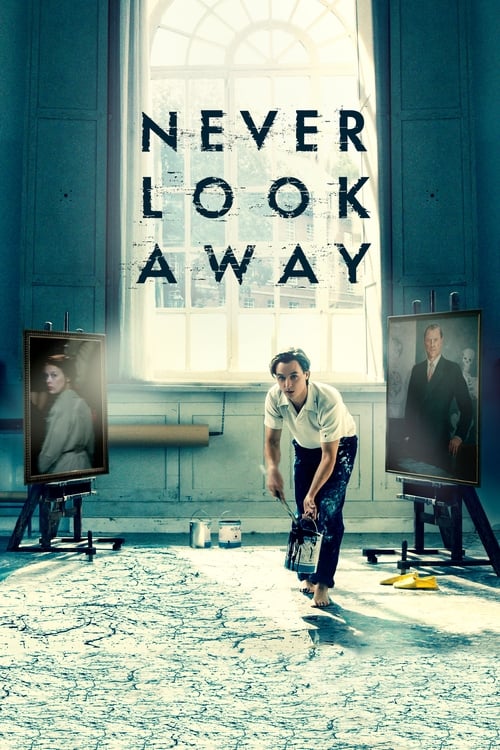
Never Look Away
German artist Kurt Barnert has escaped East Germany and now lives in West Germany, but is tormented by his childhood under the Nazis and the GDR regime.
The film earned $4.8M at the global box office.
Nominated for 2 Oscars. 5 wins & 18 nominations


Plot Structure
Story beats plotted across runtime


Narrative Arc
Emotional journey through the story's key moments
Story Circle
Blueprint 15-beat structure
Arcplot Score Breakdown
Weighted: Precision (70%) + Arc (15%) + Theme (15%)
Never Look Away (2018) exemplifies precise plot construction, characteristic of Florian Henckel von Donnersmarck's storytelling approach. This structural analysis examines how the film's 15-point plot structure maps to proven narrative frameworks across 3 hours and 9 minutes. With an Arcplot score of 7.4, the film balances conventional beats with creative variation.
Characters
Cast & narrative archetypes

Kurt Barnert
Elisabeth May
Ellie Seeband
Professor Carl Seeband
Professor Antonius van Verten
Günther Preusser
Main Cast & Characters
Kurt Barnert
Played by Tom Schilling
An artist haunted by childhood trauma in Nazi and Communist Germany who seeks truth through painting
Elisabeth May
Played by Saskia Rosendahl
Kurt's beloved aunt who suffers from mental illness and is murdered in the Nazi euthanasia program
Ellie Seeband
Played by Paula Beer
Kurt's wife and muse, a fashion student whose family secrets are intertwined with his past
Professor Carl Seeband
Played by Sebastian Koch
Ellie's father, a gynecologist and former Nazi doctor hiding his dark past
Professor Antonius van Verten
Played by Oliver Masucci
Kurt's art professor in West Germany who challenges him to find his authentic voice
Günther Preusser
Played by Hanno Koffler
Kurt's fellow art student and close friend who supports his artistic development
Structural Analysis
The Status Quo at 2 minutes (1% through the runtime) establishes Young Kurt visits the Entartete Kunst (Degenerate Art) exhibition with his beloved Aunt Elisabeth in 1937 Dresden. She whispers "Never look away" - teaching him to see truth and beauty in everything, even what's forbidden.. The analysis reveals that this early placement immediately immerses viewers in the story world.
The inciting incident occurs at 26 minutes when Adult Kurt learns his beloved Aunt Elisabeth was killed in the Nazi euthanasia program. This loss, combined with the oppressive Socialist Realism doctrine in East Germany, creates a void - he can make technically proficient art but cannot access authentic emotional truth.. At 14% through the film, this Disruption is delayed, allowing extended setup of the story world. This beat shifts the emotional landscape, launching the protagonist into the central conflict.
The First Threshold at 51 minutes marks the transition into Act II, occurring at 27% of the runtime. This demonstrates the protagonist's commitment to Kurt and Ellie make the active choice to flee East Germany together, escaping to West Germany. This irreversible decision separates them from family and launches them into a new world of supposed artistic freedom - but Kurt still cannot find his authentic voice., moving from reaction to action.
At 97 minutes, the Midpoint arrives at 51% of the runtime—precisely centered, creating perfect narrative symmetry. The analysis reveals that this crucial beat False defeat: Professor van Verten brutally critiques Kurt's abstract work, declaring it inauthentic and derivative. Kurt burns his paintings in despair. Meanwhile, Ellie reveals her father pressured her to have an abortion without telling Kurt - a secret betrayal that echoes unknown family trauma., fundamentally raising what's at risk. The emotional intensity shifts, dividing the narrative into clear before-and-after phases.
The Collapse moment at 143 minutes (76% through) represents the emotional nadir. Here, Kurt discovers the abortion deception. His marriage nearly collapses. His artistic career appears finished - van Verten has rejected him, his peers have moved on, and he has produced nothing authentic. The "whiff of death" is his dying artistic soul and the revelation of betrayal by Ellie's father., reveals the protagonist at their lowest point. This beat's placement in the final quarter sets up the climactic reversal.
The Second Threshold at 153 minutes initiates the final act resolution at 81% of the runtime. Breakthrough: Kurt synthesizes his aunt's lesson ("never look away"), van Verten's demand for authenticity, and his technical skills. He begins painting blurred photorealistic works based on personal and found photographs - transforming private truth into universal art. He reconciles with Ellie., demonstrating the transformation achieved throughout the journey.
Emotional Journey
Never Look Away's emotional architecture traces a deliberate progression across 15 carefully calibrated beats.
Narrative Framework
This structural analysis employs proven narrative structure principles that track dramatic progression. By mapping Never Look Away against these established plot points, we can identify how Florian Henckel von Donnersmarck utilizes or subverts traditional narrative conventions. The plot point approach reveals not only adherence to structural principles but also creative choices that distinguish Never Look Away within the drama genre.
Florian Henckel von Donnersmarck's Structural Approach
Among the 3 Florian Henckel von Donnersmarck films analyzed on Arcplot, the average structural score is 6.1, demonstrating varied approaches to story architecture. Never Look Away represents one of the director's most structurally precise works. For comparative analysis, explore the complete Florian Henckel von Donnersmarck filmography.
Comparative Analysis
Additional drama films include After Thomas, South Pacific and Dirty Dancing: Havana Nights. For more Florian Henckel von Donnersmarck analyses, see The Tourist, The Lives of Others.
Plot Points by Act
Act I
SetupStatus Quo
Young Kurt visits the Entartete Kunst (Degenerate Art) exhibition with his beloved Aunt Elisabeth in 1937 Dresden. She whispers "Never look away" - teaching him to see truth and beauty in everything, even what's forbidden.
Theme
Aunt Elisabeth tells young Kurt: "Everything that is true is beautiful." This becomes the film's thematic core - the search for authentic truth through art, regardless of political ideology or personal cost.
Worldbuilding
Nazi Germany, 1937-1945. Kurt grows up witnessing his aunt's mental illness, her forced sterilization under Nazi eugenics, and eventual murder in the T4 euthanasia program. He discovers art as refuge. The war ends; Soviet occupation begins. Kurt survives childhood trauma through drawing and observation.
Disruption
Adult Kurt learns his beloved Aunt Elisabeth was killed in the Nazi euthanasia program. This loss, combined with the oppressive Socialist Realism doctrine in East Germany, creates a void - he can make technically proficient art but cannot access authentic emotional truth.
Resistance
Kurt attends art school in Dresden under Soviet control, creating Socialist Realist propaganda murals. He meets Ellie, falls in love, but struggles with artistic authenticity. His professor demands ideologically correct art. Kurt debates whether to stay in East Germany or flee to the West for artistic freedom.
Act II
ConfrontationFirst Threshold
Kurt and Ellie make the active choice to flee East Germany together, escaping to West Germany. This irreversible decision separates them from family and launches them into a new world of supposed artistic freedom - but Kurt still cannot find his authentic voice.
Mirror World
In Düsseldorf, Kurt encounters Professor Antonius van Verten at the art academy - a charismatic teacher who challenges students to find radical authenticity. Van Verten becomes the thematic mirror, pushing Kurt toward the truth his aunt taught him: "Never look away."
Premise
West Germany, early 1960s. Kurt explores various modern art movements - abstract expressionism, happenings, conceptual art - trying to find his voice. He marries Ellie despite her father's (Professor Seeband) disapproval. Kurt experiments but remains disconnected from his work, unable to access the deep truth van Verten demands.
Midpoint
False defeat: Professor van Verten brutally critiques Kurt's abstract work, declaring it inauthentic and derivative. Kurt burns his paintings in despair. Meanwhile, Ellie reveals her father pressured her to have an abortion without telling Kurt - a secret betrayal that echoes unknown family trauma.
Opposition
Kurt spirals, experimenting desperately with photography, projection, and blurred images. The audience learns Professor Seeband's secret: he was the Nazi doctor who sterilized and condemned Aunt Elisabeth to death. He now sabotages Kurt's marriage. The past closes in from all sides, though Kurt doesn't know the connection.
Collapse
Kurt discovers the abortion deception. His marriage nearly collapses. His artistic career appears finished - van Verten has rejected him, his peers have moved on, and he has produced nothing authentic. The "whiff of death" is his dying artistic soul and the revelation of betrayal by Ellie's father.
Crisis
Dark night: Kurt processes the betrayal and his failures. He nearly abandons art entirely. In his darkest moment, he returns to family photographs, childhood memories, images of Elisabeth. He begins to understand what van Verten and his aunt both meant - truth lies in not looking away from personal history.
Act III
ResolutionSecond Threshold
Breakthrough: Kurt synthesizes his aunt's lesson ("never look away"), van Verten's demand for authenticity, and his technical skills. He begins painting blurred photorealistic works based on personal and found photographs - transforming private truth into universal art. He reconciles with Ellie.
Synthesis
Kurt creates his masterwork series - blurred paintings from photographs including his aunt, his childhood, anonymous people, and unknowingly, Professor Seeband. The paintings are exhibited to acclaim. Seeband sees himself in a gallery but doesn't recognize the artist is his son-in-law. Truth is revealed through art without revenge.
Transformation
Final image mirrors the opening: Kurt paints in his studio, but now with authentic purpose. Ellie is pregnant - new life emerges from truth-telling. The camera pulls back to reveal his completed works. Unlike the boy in the museum, the artist has learned to look directly at truth and transform it into beauty.