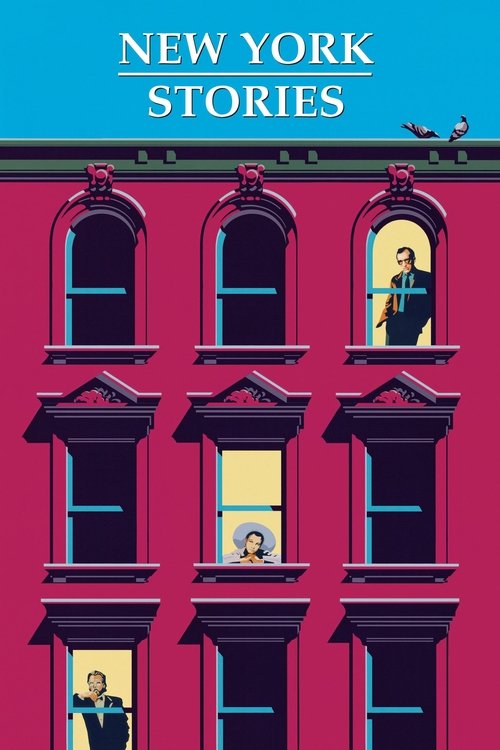
New York Stories
Three tales of love, ambition, and neurosis unfold in the city that never sleeps. In "Life Lessons" (Martin Scorsese), a tormented painter channels heartbreak into his art. In "Life Without Zoë" (Francis Ford Coppola), a precocious 12-year-old navigates privilege and loneliness in a Manhattan hotel. And in "Oedipus Wrecks" (Woody Allen), a man’s domineering mother literally becomes a looming presence over New York.
The film underperformed commercially against its respectable budget of $15.0M, earning $10.8M globally (-28% loss). While initial box office returns were modest, the film has gained appreciation for its unique voice within the comedy genre.


Plot Structure
Story beats plotted across runtime


Narrative Arc
Emotional journey through the story's key moments
Story Circle
Blueprint 15-beat structure
Arcplot Score Breakdown
Weighted: Precision (70%) + Arc (15%) + Theme (15%)
New York Stories (1989) exhibits precise dramatic framework, characteristic of Francis Ford Coppola's storytelling approach. This structural analysis examines how the film's 15-point plot structure maps to proven narrative frameworks across 2 hours and 4 minutes. With an Arcplot score of 6.8, the film balances conventional beats with creative variation.
Structural Analysis
The Status Quo at 1 minutes (1% through the runtime) establishes In "Life Lessons," celebrated abstract expressionist painter Lionel Dobie works frenetically in his massive SoHo loft, surrounded by his art and the trappings of his successful career, establishing the world of obsessive New York artists.. Of particular interest, this early placement immediately immerses viewers in the story world.
The inciting incident occurs at 15 minutes when Paulette announces definitively that she is leaving Lionel and moving out of the loft, threatening both his emotional stability and his ability to create art, which he claims depends on her presence.. At 12% through the film, this Disruption aligns precisely with traditional story structure. This beat shifts the emotional landscape, launching the protagonist into the central conflict.
The First Threshold at 31 minutes marks the transition into Act II, occurring at 25% of the runtime. This demonstrates the protagonist's commitment to Paulette agrees to stay temporarily, but only in a separate space and without romantic involvement. Lionel accepts these terms, crossing into a new dynamic where he must create while watching the woman he desires slip away., moving from reaction to action.
At 62 minutes, the Midpoint arrives at 50% of the runtime—precisely centered, creating perfect narrative symmetry. Significantly, this crucial beat In "Life Without Zoe," young Zoe successfully reunites her globe-trotting parents by orchestrating the return of a stolen jewel, achieving a false victory of familial connection in the fairy-tale middle segment., fundamentally raising what's at risk. The emotional intensity shifts, dividing the narrative into clear before-and-after phases.
The Collapse moment at 93 minutes (75% through) represents the emotional nadir. Here, Sheldon's mother, now a giant apparition floating over New York, broadcasts his embarrassing childhood secrets to all of Manhattan, destroying his relationship with fiancée Lisa and representing complete loss of autonomy and dignity., illustrates the protagonist at their lowest point. This beat's placement in the final quarter sets up the climactic reversal.
The Second Threshold at 99 minutes initiates the final act resolution at 80% of the runtime. Sheldon meets Treva, a warm Jewish psychic who genuinely connects with both him and his mother. He realizes that fighting his identity and heritage was the source of his conflict—acceptance offers a path forward., demonstrating the transformation achieved throughout the journey.
Emotional Journey
New York Stories's emotional architecture traces a deliberate progression across 15 carefully calibrated beats.
Narrative Framework
This structural analysis employs a 15-point narrative structure framework that maps key story moments. By mapping New York Stories against these established plot points, we can identify how Francis Ford Coppola utilizes or subverts traditional narrative conventions. The plot point approach reveals not only adherence to structural principles but also creative choices that distinguish New York Stories within the comedy genre.
Francis Ford Coppola's Structural Approach
Among the 16 Francis Ford Coppola films analyzed on Arcplot, the average structural score is 6.5, demonstrating varied approaches to story architecture. New York Stories represents one of the director's most structurally precise works. For comparative analysis, explore the complete Francis Ford Coppola filmography.
Comparative Analysis
Additional comedy films include The Bad Guys, Ella Enchanted and The Evening Star. For more Francis Ford Coppola analyses, see Apocalypse Now, The Conversation and The Godfather Part II.
Plot Points by Act
Act I
SetupStatus Quo
In "Life Lessons," celebrated abstract expressionist painter Lionel Dobie works frenetically in his massive SoHo loft, surrounded by his art and the trappings of his successful career, establishing the world of obsessive New York artists.
Theme
Paulette tells Lionel she's leaving because she'll never be a real painter, and he responds that suffering is essential to art—stating the film's thematic exploration of how artists exploit personal pain and relationships for their creative work.
Worldbuilding
The first segment establishes Lionel's toxic dynamic with his young assistant/lover Paulette, their living arrangement in his loft, and the New York art world's demands as his dealer pressures him about an upcoming show.
Disruption
Paulette announces definitively that she is leaving Lionel and moving out of the loft, threatening both his emotional stability and his ability to create art, which he claims depends on her presence.
Resistance
Lionel desperately negotiates with Paulette to stay, promising her the upstairs bedroom and artistic mentorship. He manipulates her insecurities about her talent while secretly feeding off her presence for his own creative energy.
Act II
ConfrontationFirst Threshold
Paulette agrees to stay temporarily, but only in a separate space and without romantic involvement. Lionel accepts these terms, crossing into a new dynamic where he must create while watching the woman he desires slip away.
Mirror World
Paulette begins seeing a young performance artist named Gregory Stark, representing everything Lionel isn't—young, emotionally available, and collaborative—forcing Lionel to confront what he cannot offer.
Premise
The anthology explores its thematic territory: Lionel's tortured creativity fueled by jealousy; transition to "Life Without Zoe" where a privileged girl navigates her absent parents' glamorous world; each segment examining how New Yorkers construct meaning around obsession.
Midpoint
In "Life Without Zoe," young Zoe successfully reunites her globe-trotting parents by orchestrating the return of a stolen jewel, achieving a false victory of familial connection in the fairy-tale middle segment.
Opposition
The film transitions to "Oedipus Wrecks" where lawyer Sheldon Mills struggles against his domineering mother's interference in his relationship with his shiksa fiancée, culminating in his mother's supernatural appearance in the sky above Manhattan.
Collapse
Sheldon's mother, now a giant apparition floating over New York, broadcasts his embarrassing childhood secrets to all of Manhattan, destroying his relationship with fiancée Lisa and representing complete loss of autonomy and dignity.
Crisis
Sheldon desperately consults various mystics and psychics trying to bring his mother back down from the sky, while his life falls apart and he must confront his lifelong inability to establish boundaries with her.
Act III
ResolutionSecond Threshold
Sheldon meets Treva, a warm Jewish psychic who genuinely connects with both him and his mother. He realizes that fighting his identity and heritage was the source of his conflict—acceptance offers a path forward.
Synthesis
Treva successfully brings Sheldon's mother back to earth. Sheldon embraces a relationship with Treva, who his mother adores. Across all three segments, protagonists find resolution through accepting rather than fighting their fundamental natures.
Transformation
Sheldon sits contentedly with Treva and his now-approving mother, having found peace by embracing his identity. The anthology closes affirming that New York's artists and neurotics alike find wholeness through accepting their obsessions rather than escaping them.