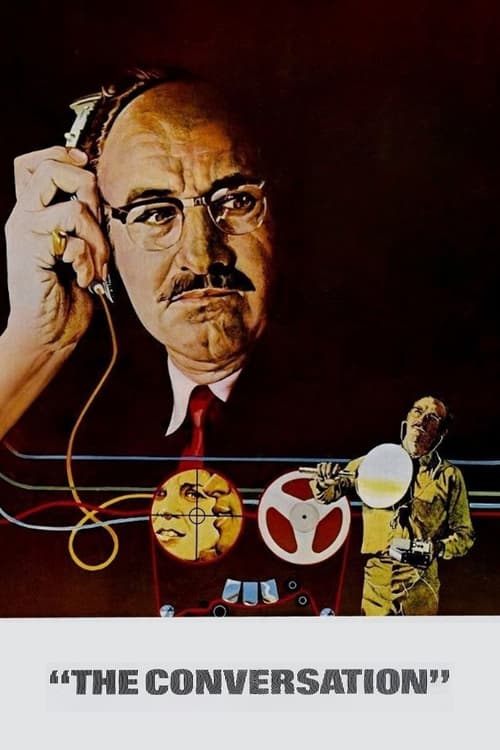
The Conversation
A paranoid, secretive surveillance expert has a crisis of conscience when he suspects that the couple he is spying on will be murdered.
Despite its modest budget of $1.6M, The Conversation became a commercial success, earning $4.8M worldwide—a 200% return.
Nominated for 3 Oscars. 14 wins & 17 nominations


Plot Structure
Story beats plotted across runtime


Narrative Arc
Emotional journey through the story's key moments
Story Circle
Blueprint 15-beat structure
Arcplot Score Breakdown
Weighted: Precision (70%) + Arc (15%) + Theme (15%)
The Conversation (1974) showcases precise narrative design, characteristic of Francis Ford Coppola's storytelling approach. This structural analysis examines how the film's 15-point plot structure maps to proven narrative frameworks across 1 hour and 54 minutes. With an Arcplot score of 6.9, the film balances conventional beats with creative variation.
Characters
Cast & narrative archetypes

Harry Caul
Stan
Ann
Mark
Bernie Moran
The Director
Martin Stett
Main Cast & Characters
Harry Caul
Played by Gene Hackman
A paranoid surveillance expert who becomes entangled in a mysterious recording that may involve murder.
Stan
Played by John Cazale
Harry's assistant and colleague in the surveillance business, more casual and less obsessive than Harry.
Ann
Played by Cindy Williams
The young woman being surveilled, whose conversation becomes the center of Harry's moral crisis.
Mark
Played by Frederic Forrest
The young man being surveilled alongside Ann, whose cryptic conversation suggests danger.
Bernie Moran
Played by Allen Garfield
A rival surveillance expert who challenges Harry's technical superiority and professional pride.
The Director
Played by Robert Duvall
The mysterious corporate executive who hired Harry and becomes increasingly menacing.
Martin Stett
Played by Harrison Ford
The Director's cold and intimidating assistant who pressures Harry for the surveillance tapes.
Structural Analysis
The Status Quo at 1 minutes (1% through the runtime) establishes Harry Caul conducts professional surveillance in Union Square, San Francisco. He's detached, methodical, isolated behind his equipment—the best in the business, emotionally disconnected from his subjects.. Significantly, this early placement immediately immerses viewers in the story world.
The inciting incident occurs at 15 minutes when The Director's assistant demands the tapes, but Harry refuses to hand them over to anyone except the Director personally. Harry's professional protocol is disrupted by an uneasy feeling about this particular job—something feels wrong.. At 13% through the film, this Disruption is delayed, allowing extended setup of the story world. This beat shifts the emotional landscape, launching the protagonist into the central conflict.
The First Threshold at 29 minutes marks the transition into Act II, occurring at 25% of the runtime. This demonstrates the protagonist's commitment to Harry makes the active choice to keep the tapes and not deliver them. He violates his own professional code of detachment. For the first time, he lets personal judgment override client obligation—he fears the couple will be killed., moving from reaction to action.
At 57 minutes, the Midpoint arrives at 50% of the runtime—precisely centered, creating perfect narrative symmetry. Notably, this crucial beat The woman from the surveillance (Ann) appears at Harry's workshop and takes the tapes. False defeat: Harry's attempt to protect them fails. He realizes he's been manipulated. The stakes crystallize—he may have been wrong about who's in danger., fundamentally raising what's at risk. The emotional intensity shifts, dividing the narrative into clear before-and-after phases.
The Collapse moment at 86 minutes (75% through) represents the emotional nadir. Here, Harry discovers blood seeping through the hotel bathroom. He flees in horror, realizing a murder has occurred—the very thing he tried to prevent. His worst fear confirmed: his work has led to death. The whiff of death is literal., indicates the protagonist at their lowest point. This beat's placement in the final quarter sets up the climactic reversal.
The Second Threshold at 91 minutes initiates the final act resolution at 80% of the runtime. Harry realizes he's been wrong all along: the couple weren't the victims—they were the killers. The Director was their target. Harry re-hears the tape with new understanding: "He'd kill us if he got the chance"—so they killed him first. The synthesis of information reveals the truth., demonstrating the transformation achieved throughout the journey.
Emotional Journey
The Conversation's emotional architecture traces a deliberate progression across 15 carefully calibrated beats.
Narrative Framework
This structural analysis employs systematic plot point analysis that identifies crucial turning points. By mapping The Conversation against these established plot points, we can identify how Francis Ford Coppola utilizes or subverts traditional narrative conventions. The plot point approach reveals not only adherence to structural principles but also creative choices that distinguish The Conversation within the crime genre.
Francis Ford Coppola's Structural Approach
Among the 16 Francis Ford Coppola films analyzed on Arcplot, the average structural score is 6.5, demonstrating varied approaches to story architecture. The Conversation represents one of the director's most structurally precise works. For comparative analysis, explore the complete Francis Ford Coppola filmography.
Comparative Analysis
Additional crime films include The Bad Guys, Rustom and The Whole Ten Yards. For more Francis Ford Coppola analyses, see Apocalypse Now, The Godfather Part II and Tucker: The Man and His Dream.
Plot Points by Act
Act I
SetupStatus Quo
Harry Caul conducts professional surveillance in Union Square, San Francisco. He's detached, methodical, isolated behind his equipment—the best in the business, emotionally disconnected from his subjects.
Theme
The recorded conversation reveals: "He'd kill us if he got the chance." The couple discusses danger and surveillance itself. The theme emerges: privacy, paranoia, and the moral weight of information—what happens when you know too much?
Worldbuilding
Establishing Harry's isolated world: his meticulous workshop, his secrecy about methods, his competitive relationship with rival surveillance expert Bernie Moran, his Catholic guilt, and his fear of personal involvement. He lives alone, plays saxophone, trusts no one.
Disruption
The Director's assistant demands the tapes, but Harry refuses to hand them over to anyone except the Director personally. Harry's professional protocol is disrupted by an uneasy feeling about this particular job—something feels wrong.
Resistance
Harry debates what to do with the tapes. He attends a surveillance convention, drinks with colleagues, remembers a previous job where people died. He's haunted by responsibility. His paranoia increases—his workshop may have been bugged, someone might be following him.
Act II
ConfrontationFirst Threshold
Harry makes the active choice to keep the tapes and not deliver them. He violates his own professional code of detachment. For the first time, he lets personal judgment override client obligation—he fears the couple will be killed.
Mirror World
Amy, a woman from Harry's building, engages him in a tentative relationship. She represents intimacy, openness, and trust—everything Harry's surveillance career has trained him to reject. She's the emotional counterpoint to his paranoid isolation.
Premise
Harry obsessively refines the surveillance tape, extracting clearer audio. He becomes emotionally invested in protecting the couple. He interacts with Amy, revealing vulnerability. The promise: a surveillance expert becomes the subject of his own paranoid methodology.
Midpoint
The woman from the surveillance (Ann) appears at Harry's workshop and takes the tapes. False defeat: Harry's attempt to protect them fails. He realizes he's been manipulated. The stakes crystallize—he may have been wrong about who's in danger.
Opposition
Harry's world collapses inward. He goes to the hotel room referenced in the tape. He hears sounds of violence through the wall. His paranoia intensifies—he believes murder is happening. Amy leaves him. His workshop is destroyed. Everyone is closing in.
Collapse
Harry discovers blood seeping through the hotel bathroom. He flees in horror, realizing a murder has occurred—the very thing he tried to prevent. His worst fear confirmed: his work has led to death. The whiff of death is literal.
Crisis
Harry retreats into shock and guilt. He's confronted by his own moral failure and complicity. He processes the horror of what his surveillance has facilitated. Dark night of realization: he can't escape responsibility for the information he gathers.
Act III
ResolutionSecond Threshold
Harry realizes he's been wrong all along: the couple weren't the victims—they were the killers. The Director was their target. Harry re-hears the tape with new understanding: "He'd kill us if he got the chance"—so they killed him first. The synthesis of information reveals the truth.
Synthesis
Harry receives a phone call threatening him: "We'll be listening." He tears apart his entire apartment searching for surveillance devices, destroying everything in paranoid desperation. The surveiller becomes the surveilled. His fortress of privacy is obliterated.
Transformation
Harry sits alone in his destroyed apartment, playing his saxophone. His world is dismantled, his paranoia complete, but he's achieved a kind of broken acceptance. He's now living the isolation and surveillance he once only inflicted on others—transformed into his own victim.