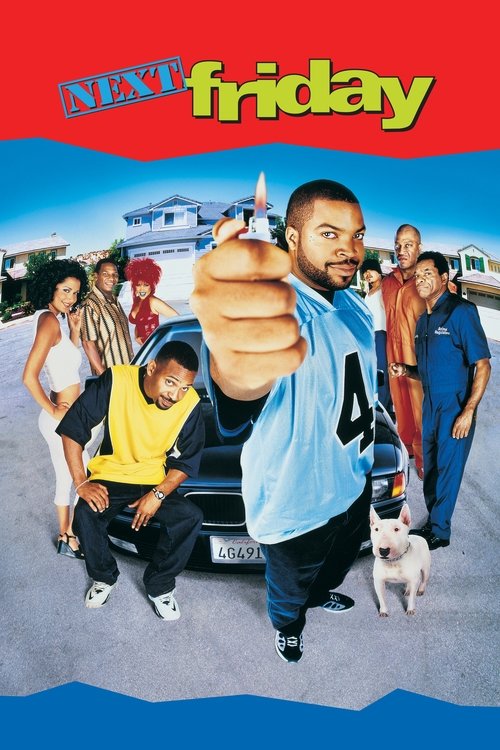
Next Friday
A streetwise man flees South Central Los Angeles, heading to the suburbs and his lottery-winner uncle and cousin, to avoid a neighborhood thug with a grudge who has just escaped from prison.
Despite its small-scale budget of $11.0M, Next Friday became a financial success, earning $59.8M worldwide—a 444% return. The film's fresh perspective found its audience, showing that strong storytelling can transcend budget limitations.


Plot Structure
Story beats plotted across runtime


Narrative Arc
Emotional journey through the story's key moments
Story Circle
Blueprint 15-beat structure
Arcplot Score Breakdown
Weighted: Precision (70%) + Arc (15%) + Theme (15%)
Next Friday (2000) showcases strategically placed plot construction, characteristic of Steve Carr's storytelling approach. This structural analysis examines how the film's 15-point plot structure maps to proven narrative frameworks across 1 hour and 38 minutes. With an Arcplot score of 7.1, the film balances conventional beats with creative variation.
Characters
Cast & narrative archetypes

Craig Jones
Day-Day Jones
Uncle Elroy
Mr. Jones
Deebo
Joker
Baby Joker
Mrs. Ho-Kym
Karla
D'Wana
Main Cast & Characters
Craig Jones
Played by Ice Cube
A young man sent to live with his uncle in the suburbs to avoid Deebo, who must navigate new territory while staying out of trouble.
Day-Day Jones
Played by Mike Epps
Craig's fast-talking, scheming cousin who works at a record store and gets them both into various predicaments.
Uncle Elroy
Played by Don 'D.C.' Curry
Craig's eccentric uncle who won the lottery and now lives in Rancho Cucamonga, providing Craig a suburban refuge.
Mr. Jones
Played by John Witherspoon
Craig's father who sends him to live with Elroy to protect him from Deebo's revenge.
Deebo
Played by Tom Lister Jr.
The intimidating neighborhood bully who escapes from prison seeking revenge on Craig for knocking him out.
Joker
Played by Jacob Vargas
A cholo gang member who terrorizes the neighborhood and becomes an antagonist to Craig and Day-Day.
Baby Joker
Played by Lobo Sebastian
Joker's younger brother and fellow gang member who assists in intimidating the neighborhood.
Mrs. Ho-Kym
Played by Amy Hill
The strict Korean landlady who constantly monitors Day-Day and threatens eviction.
Karla
Played by Lisa Rodriguez
Day-Day's jealous and aggressive ex-girlfriend who stalks him throughout the film.
D'Wana
Played by Tamala Jones
One of the attractive sisters living next door who catches Craig's romantic interest.
Structural Analysis
The Status Quo at 1 minutes (1% through the runtime) establishes Craig wakes up in his father's house, unemployed and still dealing with neighborhood drama. The opening shows him in the same situation as the first film - broke, jobless, and stuck.. Notably, this early placement immediately immerses viewers in the story world.
The inciting incident occurs at 12 minutes when Damon threatens Craig's family, forcing Craig's parents to send him to Rancho Cucamonga to stay with his Uncle Elroy and cousin Day-Day to escape the danger.. At 12% through the film, this Disruption aligns precisely with traditional story structure. This beat shifts the emotional landscape, launching the protagonist into the central conflict.
The First Threshold at 24 minutes marks the transition into Act II, occurring at 25% of the runtime. This reveals the protagonist's commitment to Craig arrives at Uncle Elroy's house in Rancho Cucamonga and commits to staying in this new suburban environment, entering a completely different world from his inner-city neighborhood., moving from reaction to action.
At 50 minutes, the Midpoint arrives at 51% of the runtime—precisely centered, creating perfect narrative symmetry. Notably, this crucial beat The Jokers rob Uncle Elroy's house and steal his rent money. This false defeat raises the stakes - now Craig and Day-Day must get the money back or face eviction, making the problems follow Craig even to the suburbs., fundamentally raising what's at risk. The emotional intensity shifts, dividing the narrative into clear before-and-after phases.
The Collapse moment at 73 minutes (74% through) represents the emotional nadir. Here, The Jokers humiliate Craig and Day-Day, taking their dog Chico. This is the lowest point - they've lost the money, lost respect, and lost what they care about. Craig realizes running away doesn't solve problems., shows the protagonist at their lowest point. This beat's placement in the final quarter sets up the climactic reversal.
The Second Threshold at 78 minutes initiates the final act resolution at 80% of the runtime. Craig decides to confront the Jokers directly. He synthesizes his street smarts from the hood with his new determination to build a better life, choosing to fight for what's right rather than run away., demonstrating the transformation achieved throughout the journey.
Emotional Journey
Next Friday's emotional architecture traces a deliberate progression across 15 carefully calibrated beats.
Narrative Framework
This structural analysis employs structural analysis methodology used to understand storytelling architecture. By mapping Next Friday against these established plot points, we can identify how Steve Carr utilizes or subverts traditional narrative conventions. The plot point approach reveals not only adherence to structural principles but also creative choices that distinguish Next Friday within the comedy genre.
Steve Carr's Structural Approach
Among the 6 Steve Carr films analyzed on Arcplot, the average structural score is 7.3, reflecting strong command of classical structure. Next Friday takes a more unconventional approach compared to the director's typical style. For comparative analysis, explore the complete Steve Carr filmography.
Comparative Analysis
Additional comedy films include The Bad Guys, Ella Enchanted and The Evening Star. For more Steve Carr analyses, see Are We Done Yet?, Daddy Day Care and Middle School: The Worst Years of My Life.
Plot Points by Act
Act I
SetupStatus Quo
Craig wakes up in his father's house, unemployed and still dealing with neighborhood drama. The opening shows him in the same situation as the first film - broke, jobless, and stuck.
Theme
Craig's father tells him "You need to get out of this neighborhood before it kills you." This establishes the theme of escaping toxic environments and starting fresh.
Worldbuilding
We see Craig's daily life in the neighborhood, his relationship with his parents, the threat from Deebo's brother Damon who just got out of prison seeking revenge, and Craig's desire to stay out of trouble.
Disruption
Damon threatens Craig's family, forcing Craig's parents to send him to Rancho Cucamonga to stay with his Uncle Elroy and cousin Day-Day to escape the danger.
Resistance
Craig reluctantly prepares to leave his neighborhood and travels to the suburbs. He debates whether this is necessary and resists leaving his familiar world, but ultimately has no choice given the threat.
Act II
ConfrontationFirst Threshold
Craig arrives at Uncle Elroy's house in Rancho Cucamonga and commits to staying in this new suburban environment, entering a completely different world from his inner-city neighborhood.
Mirror World
Craig meets Karla, the beautiful girl next door, establishing the romantic subplot that will teach him about finding something worth staying for in this new environment.
Premise
Craig experiences the "fun and games" of suburban life with Day-Day - dealing with eccentric neighbors, the local thugs Joker and Lil' Joker, working at the record store, and navigating the culture clash between inner city and suburbs.
Midpoint
The Jokers rob Uncle Elroy's house and steal his rent money. This false defeat raises the stakes - now Craig and Day-Day must get the money back or face eviction, making the problems follow Craig even to the suburbs.
Opposition
Craig and Day-Day try various schemes to get the money back while dealing with increasing pressure from the Jokers, Uncle Elroy's demands, and the ticking clock. Their attempts keep failing and the situation worsens.
Collapse
The Jokers humiliate Craig and Day-Day, taking their dog Chico. This is the lowest point - they've lost the money, lost respect, and lost what they care about. Craig realizes running away doesn't solve problems.
Crisis
Craig reflects on always running from his problems. He realizes he needs to stand up and fight, not for violence's sake but to protect what matters - his family, his dignity, and his new life.
Act III
ResolutionSecond Threshold
Craig decides to confront the Jokers directly. He synthesizes his street smarts from the hood with his new determination to build a better life, choosing to fight for what's right rather than run away.
Synthesis
The final confrontation with the Jokers at the party. Craig and Day-Day fight back, retrieve their money and dog, and earn respect in their new neighborhood. The community comes together to support them.
Transformation
Craig sits peacefully with Karla and his new friends, having established himself in Rancho Cucamonga. He's transformed from running away from problems to standing his ground and building a new life.