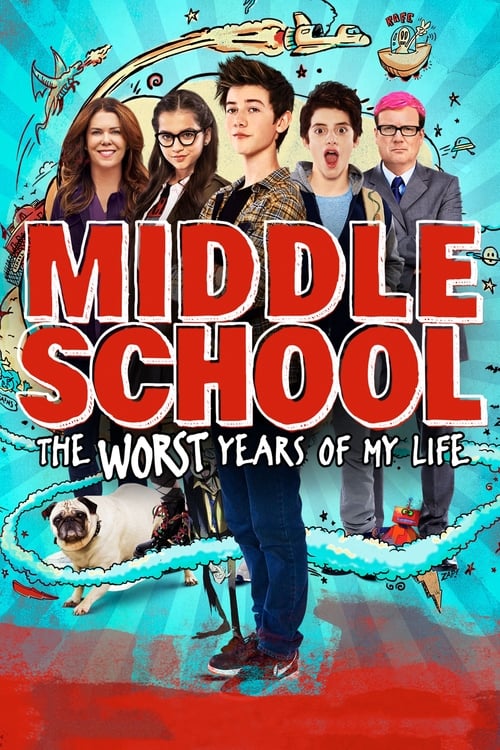
Middle School: The Worst Years of My Life
A quiet teenage artist Rafe Katchadorian has a wild imagination and is sick of middle school and the rules that have been put before him. Rafe and his best friend Leo have come up with a plan: break every rule in the school hand book and as you expect trouble follows.
Despite its small-scale budget of $8.5M, Middle School: The Worst Years of My Life became a financial success, earning $23.3M worldwide—a 174% return.


Plot Structure
Story beats plotted across runtime


Narrative Arc
Emotional journey through the story's key moments
Story Circle
Blueprint 15-beat structure
Arcplot Score Breakdown
Weighted: Precision (70%) + Arc (15%) + Theme (15%)
Middle School: The Worst Years of My Life (2016) showcases meticulously timed story structure, characteristic of Steve Carr's storytelling approach. This structural analysis examines how the film's 15-point plot structure maps to proven narrative frameworks across 1 hour and 32 minutes. With an Arcplot score of 7.3, the film balances conventional beats with creative variation.
Characters
Cast & narrative archetypes

Rafe Khatchadorian
Leo
Principal Dwight
Jules Khatchadorian
Georgia Khatchadorian
Jeanne Galletta
Carl
Main Cast & Characters
Rafe Khatchadorian
Played by Griffin Gluck
A creative middle schooler who rebels against oppressive school rules by breaking every one in the handbook with his imaginary friend's help.
Leo
Played by Thomas Barbusca
Rafe's imaginary best friend and creative muse who encourages him to break free from conformity and express himself.
Principal Dwight
Played by Andy Daly
The tyrannical, rule-obsessed principal who runs Hills Village Middle School like a military academy and serves as Rafe's primary antagonist.
Jules Khatchadorian
Played by Lauren Graham
Rafe's supportive single mother who struggles to balance raising her kids while dating an insensitive boyfriend.
Georgia Khatchadorian
Played by Alexa Nisenson
Rafe's younger sister who is wise beyond her years and provides grounded perspective on family dynamics.
Jeanne Galletta
Played by Isabela Moner
A kind, artistic classmate who befriends Rafe and shares his passion for creativity and individuality.
Carl
Played by Rob Riggle
Jules' self-centered boyfriend who is insensitive to the kids and represents the oppressive adult authority Rafe rebels against.
Structural Analysis
The Status Quo at 1 minutes (1% through the runtime) establishes Rafe Khatchadorian introduces himself through animated sequences, showing his imaginative inner world as a way to escape his mundane life. He's starting a new school year, feeling invisible and disconnected.. Structural examination shows that this early placement immediately immerses viewers in the story world.
The inciting incident occurs at 10 minutes when Principal Dwight publicly humiliates Rafe over a minor infraction and confiscates his precious sketchbook, crushing his creative spirit. Rafe realizes this school system will destroy his individuality.. At 11% through the film, this Disruption aligns precisely with traditional story structure. This beat shifts the emotional landscape, launching the protagonist into the central conflict.
The First Threshold at 23 minutes marks the transition into Act II, occurring at 25% of the runtime. This illustrates the protagonist's commitment to Rafe makes the active choice to wage "Operation R.A.F.E." (Rules Aren't For Everyone), committing to break every school rule and earn points for creativity. He turns his oppression into a game., moving from reaction to action.
At 46 minutes, the Midpoint arrives at 50% of the runtime—precisely centered, creating perfect narrative symmetry. The analysis reveals that this crucial beat Rafe's rebellion reaches its peak when he orchestrates a massive school-wide prank that makes him a hero to his classmates. He and Jeanne share a triumphant moment. However, Principal Dwight becomes obsessed with catching the culprit, raising the stakes., fundamentally raising what's at risk. The emotional intensity shifts, dividing the narrative into clear before-and-after phases.
The Collapse moment at 68 minutes (74% through) represents the emotional nadir. Here, Rafe is caught and expelled from school. The devastating reveal: Leo is not just an imaginary friend but Rafe's deceased older brother, who died of leukemia. Rafe has been using fantasy and rebellion to avoid processing his grief. His world collapses emotionally and literally., illustrates the protagonist at their lowest point. This beat's placement in the final quarter sets up the climactic reversal.
The Second Threshold at 73 minutes initiates the final act resolution at 80% of the runtime. Rafe discovers Principal Dwight has been embezzling school funds meant for art and music programs. Armed with this evidence and newfound maturity, Rafe decides to fight back—not for himself, but for all students. He channels Leo's spirit constructively., demonstrating the transformation achieved throughout the journey.
Emotional Journey
Middle School: The Worst Years of My Life's emotional architecture traces a deliberate progression across 15 carefully calibrated beats.
Narrative Framework
This structural analysis employs proven narrative structure principles that track dramatic progression. By mapping Middle School: The Worst Years of My Life against these established plot points, we can identify how Steve Carr utilizes or subverts traditional narrative conventions. The plot point approach reveals not only adherence to structural principles but also creative choices that distinguish Middle School: The Worst Years of My Life within the family genre.
Steve Carr's Structural Approach
Among the 6 Steve Carr films analyzed on Arcplot, the average structural score is 7.3, reflecting strong command of classical structure. Middle School: The Worst Years of My Life exemplifies the director's characteristic narrative technique. For comparative analysis, explore the complete Steve Carr filmography.
Comparative Analysis
Additional family films include The Black Stallion, The Bad Guys and Ella Enchanted. For more Steve Carr analyses, see Are We Done Yet?, Next Friday and Daddy Day Care.
Plot Points by Act
Act I
SetupStatus Quo
Rafe Khatchadorian introduces himself through animated sequences, showing his imaginative inner world as a way to escape his mundane life. He's starting a new school year, feeling invisible and disconnected.
Theme
Rafe's imaginary friend Leo tells him, "You gotta break the rules sometimes to find out who you really are." This establishes the theme of self-expression versus conformity.
Worldbuilding
We meet Rafe's family: supportive mom Jules, artistic younger sister Georgia, and overbearing boyfriend Carl. Rafe arrives at Hills Village Middle School and encounters tyrannical Principal Dwight, who enforces endless petty rules. Rafe meets his only friend Miller and develops a crush on Jeanne Galletta.
Disruption
Principal Dwight publicly humiliates Rafe over a minor infraction and confiscates his precious sketchbook, crushing his creative spirit. Rafe realizes this school system will destroy his individuality.
Resistance
Leo challenges Rafe to break every rule in Principal Dwight's oppressive rule book. Rafe debates whether to fight back or conform. He considers the risks and consequences, while Leo pushes him toward rebellion.
Act II
ConfrontationFirst Threshold
Rafe makes the active choice to wage "Operation R.A.F.E." (Rules Aren't For Everyone), committing to break every school rule and earn points for creativity. He turns his oppression into a game.
Mirror World
Rafe connects with Jeanne Galletta, an artistic girl who shares his creative spirit. She represents authentic self-expression and becomes his romantic interest and thematic mirror.
Premise
The "fun and games" of Operation R.A.F.E. unfold. Rafe executes increasingly elaborate pranks: releasing chickens in school, creating hallway slip-and-slides, staging flash mobs. His confidence grows, he gains notoriety, and students rally behind the mysterious rebel.
Midpoint
Rafe's rebellion reaches its peak when he orchestrates a massive school-wide prank that makes him a hero to his classmates. He and Jeanne share a triumphant moment. However, Principal Dwight becomes obsessed with catching the culprit, raising the stakes.
Opposition
Principal Dwight tightens security and hunts for the rule-breaker. Rafe's home life deteriorates as Carl becomes more controlling. Miller gets caught and expelled because of Rafe's actions. Jeanne distances herself when she learns Rafe has been lying to her. The rebellion that freed Rafe now hurts those he cares about.
Collapse
Rafe is caught and expelled from school. The devastating reveal: Leo is not just an imaginary friend but Rafe's deceased older brother, who died of leukemia. Rafe has been using fantasy and rebellion to avoid processing his grief. His world collapses emotionally and literally.
Crisis
Rafe hits rock bottom, facing his brother's death and his own destructive behavior. His mom confronts him about running from pain. He realizes his rebellion was never about freedom—it was about hiding from loss. He must decide who he wants to be.
Act III
ResolutionSecond Threshold
Rafe discovers Principal Dwight has been embezzling school funds meant for art and music programs. Armed with this evidence and newfound maturity, Rafe decides to fight back—not for himself, but for all students. He channels Leo's spirit constructively.
Synthesis
Rafe exposes Principal Dwight at a school board meeting, presenting evidence of embezzlement. Students rally behind him. Dwight is removed, and the school board agrees to restore creative programs. Rafe reconciles with Miller and Jeanne. His mom stands up to Carl and ends their relationship.
Transformation
Rafe returns to a transformed school with art restored and a new supportive principal. He opens his sketchbook to draw, but this time it's not about escape—it's genuine self-expression. Leo appears one final time to say goodbye. Rafe has learned to honor his brother's memory while living his own life.