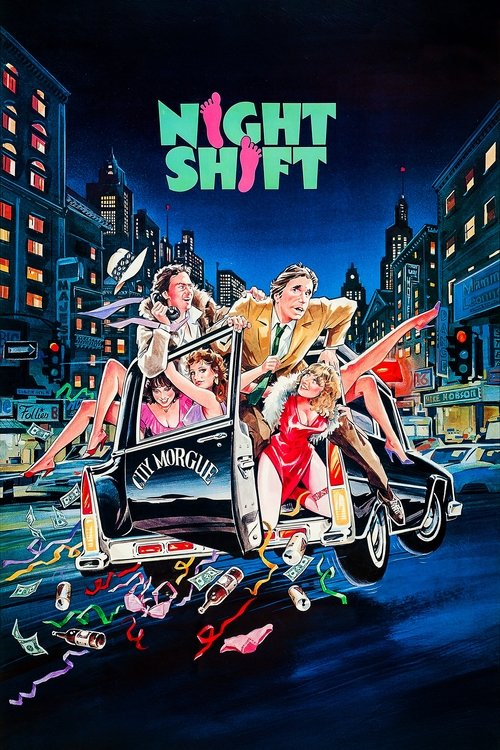
Night Shift
A nebbish of a morgue attendant gets shunted back to the night shift where he is shackled with an obnoxious neophyte partner who dreams of the "one great idea" for success. His life takes a bizarre turn when a prostitute neighbor complains about the loss of her pimp. His partner, upon hearing the situation, suggests that they fill that opening themselves using the morgue at night.
Despite its modest budget of $8.1M, Night Shift became a solid performer, earning $21.1M worldwide—a 160% return.
1 win & 1 nomination


Plot Structure
Story beats plotted across runtime


Narrative Arc
Emotional journey through the story's key moments
Story Circle
Blueprint 15-beat structure
Arcplot Score Breakdown
Weighted: Precision (70%) + Arc (15%) + Theme (15%)
Night Shift (1982) exemplifies meticulously timed narrative architecture, characteristic of Ron Howard's storytelling approach. This structural analysis examines how the film's 15-point plot structure maps to proven narrative frameworks across 1 hour and 46 minutes. With an Arcplot score of 7.6, the film showcases strong structural fundamentals.
Characters
Cast & narrative archetypes

Chuck Lumley
Bill Blazejowski
Belinda Keaton
Main Cast & Characters
Chuck Lumley
Played by Henry Winkler
A quiet, by-the-book morgue attendant who gets pulled into his co-worker's wild entrepreneurial scheme. Reserved and risk-averse, seeking stability.
Bill Blazejowski
Played by Michael Keaton
A hyperactive, idea-obsessed entrepreneur who convinces Chuck to turn the morgue into a call-girl operation. Chaotic, visionary, and irrepressibly energetic.
Belinda Keaton
Played by Shelley Long
A compassionate neighbor and love interest to Chuck who gets drawn into their scheme. Works as a call girl but dreams of a better life.
Structural Analysis
The Status Quo at 1 minutes (1% through the runtime) establishes Chuck Lumley works as a mild-mannered morgue attendant during the day shift, living a safe, routine existence under his fiancée Charlotte's strict control.. Significantly, this early placement immediately immerses viewers in the story world.
The inciting incident occurs at 12 minutes when Chuck is forced to take the night shift at the morgue against his will, disrupting his comfortable routine and engagement plans.. At 11% through the film, this Disruption aligns precisely with traditional story structure. This beat shifts the emotional landscape, launching the protagonist into the central conflict.
The First Threshold at 26 minutes marks the transition into Act II, occurring at 25% of the runtime. This indicates the protagonist's commitment to Chuck actively chooses to help Belinda and agrees to Bill's scheme to turn the morgue into a base of operations for a "love brokerage" business, crossing into the new world., moving from reaction to action.
At 54 minutes, the Midpoint arrives at 51% of the runtime—precisely centered, creating perfect narrative symmetry. Structural examination shows that this crucial beat False victory: The business is booming, Chuck is making real money and gaining confidence, and he's falling for Belinda. But the stakes raise as their operation attracts unwanted attention., fundamentally raising what's at risk. The emotional intensity shifts, dividing the narrative into clear before-and-after phases.
The Collapse moment at 77 minutes (73% through) represents the emotional nadir. Here, Chuck and Bill are caught; their scheme collapses. Chuck loses his job, faces potential criminal charges, and Belinda is in danger from her pimp. Chuck's old life is dead., illustrates the protagonist at their lowest point. This beat's placement in the final quarter sets up the climactic reversal.
The Second Threshold at 85 minutes initiates the final act resolution at 80% of the runtime. Chuck has a revelation: he synthesizes his organizational skills with Bill's creative chaos and realizes he can stand up for himself, save Belinda, and embrace his new identity., demonstrating the transformation achieved throughout the journey.
Emotional Journey
Night Shift's emotional architecture traces a deliberate progression across 15 carefully calibrated beats.
Narrative Framework
This structural analysis employs structural analysis methodology used to understand storytelling architecture. By mapping Night Shift against these established plot points, we can identify how Ron Howard utilizes or subverts traditional narrative conventions. The plot point approach reveals not only adherence to structural principles but also creative choices that distinguish Night Shift within the comedy genre.
Ron Howard's Structural Approach
Among the 24 Ron Howard films analyzed on Arcplot, the average structural score is 7.0, demonstrating varied approaches to story architecture. Night Shift represents one of the director's most structurally precise works. For comparative analysis, explore the complete Ron Howard filmography.
Comparative Analysis
Additional comedy films include The Bad Guys, Ella Enchanted and The Evening Star. For more Ron Howard analyses, see Apollo 13, Solo: A Star Wars Story and Cinderella Man.
Plot Points by Act
Act I
SetupStatus Quo
Chuck Lumley works as a mild-mannered morgue attendant during the day shift, living a safe, routine existence under his fiancée Charlotte's strict control.
Theme
Bill Blazejowski tells Chuck, "You've got to take chances if you want to get ahead in life" - establishing the theme of breaking free from fear and taking risks.
Worldbuilding
Introduction to Chuck's controlled life with fiancée Charlotte, his safe morgue job, and the chaotic world of his new coworker Bill, an idea-man who can't stop generating schemes.
Disruption
Chuck is forced to take the night shift at the morgue against his will, disrupting his comfortable routine and engagement plans.
Resistance
Chuck reluctantly adjusts to working nights with the manic Bill. He meets Belinda, a prostitute, and Bill begins pitching wild business ideas while Chuck resists change.
Act II
ConfrontationFirst Threshold
Chuck actively chooses to help Belinda and agrees to Bill's scheme to turn the morgue into a base of operations for a "love brokerage" business, crossing into the new world.
Mirror World
Chuck's relationship with Belinda deepens; she represents freedom, authenticity, and self-acceptance - the thematic opposite of Charlotte's controlling influence.
Premise
The fun and games of running a prostitution ring from the morgue. Chuck and Bill navigate outrageous situations, deal with colorful clients and working girls, and the business thrives.
Midpoint
False victory: The business is booming, Chuck is making real money and gaining confidence, and he's falling for Belinda. But the stakes raise as their operation attracts unwanted attention.
Opposition
Pressure mounts from multiple directions: Charlotte grows suspicious, the pimp threatens them, workplace authorities investigate, and Chuck's double life becomes unsustainable.
Collapse
Chuck and Bill are caught; their scheme collapses. Chuck loses his job, faces potential criminal charges, and Belinda is in danger from her pimp. Chuck's old life is dead.
Crisis
Chuck hits rock bottom, processing the loss of his safe job and questioning whether taking the risk was worth it. He must decide who he really wants to be.
Act III
ResolutionSecond Threshold
Chuck has a revelation: he synthesizes his organizational skills with Bill's creative chaos and realizes he can stand up for himself, save Belinda, and embrace his new identity.
Synthesis
Chuck and Bill execute a plan to outwit the pimp, protect the women, and legitimize their business. Chuck confronts Charlotte and chooses Belinda and his new life.
Transformation
Final image shows Chuck fully transformed - confident, entrepreneurial, with Belinda by his side, running a legitimate business. He's become the risk-taker he needed to be.