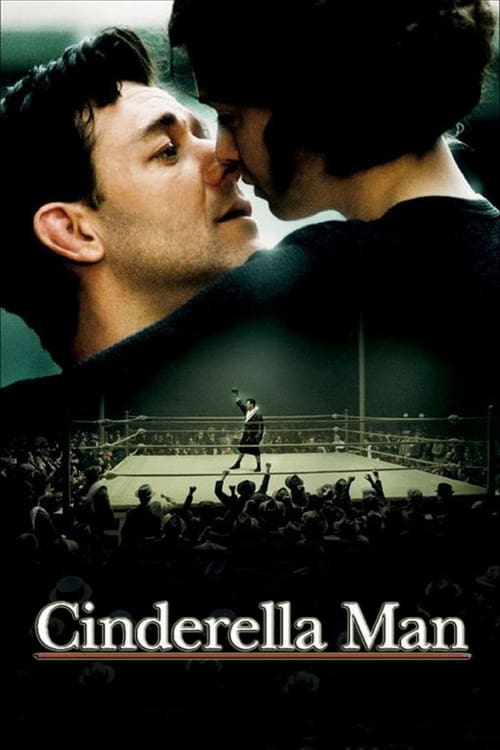
Cinderella Man
The true story of boxer Jim Braddock who, following his retirement in the 1930s, makes a surprise comeback in order to lift his family out of poverty.
Working with a substantial budget of $88.0M, the film achieved a respectable showing with $108.5M in global revenue (+23% profit margin).
Nominated for 3 Oscars. 16 wins & 45 nominations


Plot Structure
Story beats plotted across runtime


Narrative Arc
Emotional journey through the story's key moments
Story Circle
Blueprint 15-beat structure
Arcplot Score Breakdown
Weighted: Precision (70%) + Arc (15%) + Theme (15%)
Cinderella Man (2005) exemplifies carefully calibrated story structure, characteristic of Ron Howard's storytelling approach. This structural analysis examines how the film's 15-point plot structure maps to proven narrative frameworks across 2 hours and 24 minutes. With an Arcplot score of 7.4, the film balances conventional beats with creative variation.
Characters
Cast & narrative archetypes

James J. Braddock
Mae Braddock
Joe Gould
Max Baer
Mike Wilson
Main Cast & Characters
James J. Braddock
Played by Russell Crowe
Depression-era boxer who makes an unlikely comeback to become heavyweight champion while supporting his struggling family.
Mae Braddock
Played by Renée Zellweger
James's devoted wife who supports the family through poverty while fearing for her husband's safety in the ring.
Joe Gould
Played by Paul Giamatti
Braddock's loyal manager and friend who never gives up on him, even when fortunes are at their lowest.
Max Baer
Played by Craig Bierko
The reigning heavyweight champion known for his power and having killed two men in the ring.
Mike Wilson
Played by Paddy Considine
Braddock's friend and former colleague who embodies the desperation of the Depression era.
Structural Analysis
The Status Quo at 2 minutes (1% through the runtime) establishes 1928: Jim Braddock in his prime as a rising boxing star, winning matches at Madison Square Garden. The opening montage shows him as a successful, confident fighter living the American Dream with his family.. Notably, this early placement immediately immerses viewers in the story world.
The inciting incident occurs at 16 minutes when The Stock Market Crash of 1929. Jim loses everything - his savings evaporate, his boxing career falters due to injuries and losing streak. The comfortable life crumbles as the Great Depression begins.. At 11% through the film, this Disruption aligns precisely with traditional story structure. This beat shifts the emotional landscape, launching the protagonist into the central conflict.
The First Threshold at 36 minutes marks the transition into Act II, occurring at 25% of the runtime. This reveals the protagonist's commitment to Jim swallows his pride and goes to the relief office to beg for money to get his children back and keep the family together. This moment of humility marks his lowest point and his choice to do whatever it takes to fight for his family - foreshadowing his return to boxing., moving from reaction to action.
At 73 minutes, the Midpoint arrives at 50% of the runtime—precisely centered, creating perfect narrative symmetry. Structural examination shows that this crucial beat Jim wins the eliminator fight and earns a shot at the heavyweight championship against Max Baer. False victory: he's achieved what seemed impossible, but now faces a brutal killer who has beaten men to death in the ring. The stakes become life and death., fundamentally raising what's at risk. The emotional intensity shifts, dividing the narrative into clear before-and-after phases.
The Collapse moment at 108 minutes (75% through) represents the emotional nadir. Here, Jim learns his friend Mike has died - killed in a protest at the docks. The "whiff of death" is literal. Mae begs Jim not to fight Baer, terrified he'll die in the ring. Jim faces the reality that he might not survive, leaving his family with nothing., illustrates the protagonist at their lowest point. This beat's placement in the final quarter sets up the climactic reversal.
The Second Threshold at 114 minutes initiates the final act resolution at 79% of the runtime. Jim tells Mae, "I have to believe I have some kind of say over our lives." He synthesizes his fighting skills with his deeper purpose - he's not fighting for glory but for the right to provide for his family with dignity. This clarity gives him power., demonstrating the transformation achieved throughout the journey.
Emotional Journey
Cinderella Man's emotional architecture traces a deliberate progression across 15 carefully calibrated beats.
Narrative Framework
This structural analysis employs systematic plot point analysis that identifies crucial turning points. By mapping Cinderella Man against these established plot points, we can identify how Ron Howard utilizes or subverts traditional narrative conventions. The plot point approach reveals not only adherence to structural principles but also creative choices that distinguish Cinderella Man within the romance genre.
Ron Howard's Structural Approach
Among the 24 Ron Howard films analyzed on Arcplot, the average structural score is 7.0, demonstrating varied approaches to story architecture. Cinderella Man represents one of the director's most structurally precise works. For comparative analysis, explore the complete Ron Howard filmography.
Comparative Analysis
Additional romance films include South Pacific, Dirty Dancing: Havana Nights and The Evening Star. For more Ron Howard analyses, see Apollo 13, Solo: A Star Wars Story and Parenthood.
Plot Points by Act
Act I
SetupStatus Quo
1928: Jim Braddock in his prime as a rising boxing star, winning matches at Madison Square Garden. The opening montage shows him as a successful, confident fighter living the American Dream with his family.
Theme
Mae tells Jim, "You can't let this family down." The theme of fighting for family and dignity in the face of impossible odds is established early in their relationship scenes.
Worldbuilding
Establish Jim's life in late 1920s: his boxing career, his relationship with Mae and their children, his manager Joe Gould, the vibrant pre-Depression New York. Shows his fighting style, family values, and the prosperity they enjoy.
Disruption
The Stock Market Crash of 1929. Jim loses everything - his savings evaporate, his boxing career falters due to injuries and losing streak. The comfortable life crumbles as the Great Depression begins.
Resistance
Jim struggles through the Depression: working dangerous dock jobs with a broken hand, unable to pay bills, heat shut off, children sick. His boxing license is revoked. He debates whether he can continue, pride vs. survival. Mae urges him to think of the family.
Act II
ConfrontationFirst Threshold
Jim swallows his pride and goes to the relief office to beg for money to get his children back and keep the family together. This moment of humility marks his lowest point and his choice to do whatever it takes to fight for his family - foreshadowing his return to boxing.
Mirror World
Joe Gould gets Jim a one-time fight opportunity as a last-minute replacement. Mae's relationship with Jim deepens as she represents the thematic heart - what he's truly fighting for isn't glory but family and dignity.
Premise
Jim's improbable comeback begins. Despite being written off, he wins his comeback fight and then another. The "Cinderella Man" narrative captures Depression-era America's imagination. The promise of the premise: watching an underdog defy all odds and inspire a nation.
Midpoint
Jim wins the eliminator fight and earns a shot at the heavyweight championship against Max Baer. False victory: he's achieved what seemed impossible, but now faces a brutal killer who has beaten men to death in the ring. The stakes become life and death.
Opposition
Pressure mounts from all sides: media portrays Baer as a killer, Mae fears for Jim's life, financial pressures continue, Mike dies (Jim's friend from the docks). The weight of being a symbol for Depression-era hope becomes crushing. Training intensifies but so does the danger.
Collapse
Jim learns his friend Mike has died - killed in a protest at the docks. The "whiff of death" is literal. Mae begs Jim not to fight Baer, terrified he'll die in the ring. Jim faces the reality that he might not survive, leaving his family with nothing.
Crisis
The night before the fight. Jim confronts his mortality and what he's fighting for. Mae's fear, the children's innocence, the weight of everyone's hopes. Jim must find the resolve to face potential death while carrying the dreams of millions.
Act III
ResolutionSecond Threshold
Jim tells Mae, "I have to believe I have some kind of say over our lives." He synthesizes his fighting skills with his deeper purpose - he's not fighting for glory but for the right to provide for his family with dignity. This clarity gives him power.
Synthesis
The championship fight against Max Baer. Jim takes brutal punishment but refuses to go down, fighting with heart and purpose rather than just skill. Round by round, he proves he can't be broken. The finale delivers on the promise: the ultimate underdog victory.
Transformation
Jim wins the heavyweight championship. The closing image shows him reunited with Mae and his children, having proved that dignity, perseverance, and fighting for something bigger than yourself can triumph. The broken man from the relief office is now a champion and symbol of hope.