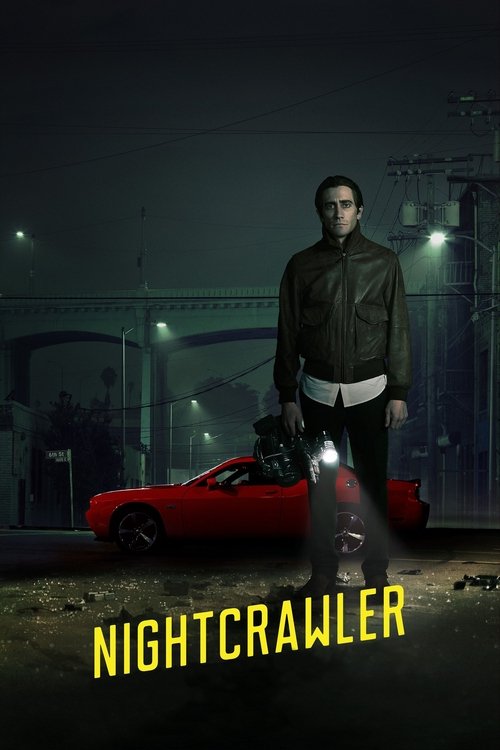
Nightcrawler
When Lou Bloom, desperate for work, muscles into the world of L.A. crime journalism, he blurs the line between observer and participant to become the star of his own story. Aiding him in his effort is Nina, a TV-news veteran.
Despite its modest budget of $8.5M, Nightcrawler became a solid performer, earning $47.4M worldwide—a 458% return. The film's unconventional structure engaged audiences, proving that strong storytelling can transcend budget limitations.
Nominated for 1 Oscar. 46 wins & 126 nominations


Plot Structure
Story beats plotted across runtime


Narrative Arc
Emotional journey through the story's key moments
Story Circle
Blueprint 15-beat structure
Arcplot Score Breakdown
Weighted: Precision (70%) + Arc (15%) + Theme (15%)
Nightcrawler (2014) exemplifies meticulously timed story structure, characteristic of Dan Gilroy's storytelling approach. This structural analysis examines how the film's 15-point plot structure maps to proven narrative frameworks across 1 hour and 58 minutes. With an Arcplot score of 6.9, the film balances conventional beats with creative variation.
Characters
Cast & narrative archetypes

Louis Bloom
Nina Romina
Rick Carey
Joe Loder
Main Cast & Characters
Louis Bloom
Played by Jake Gyllenhaal
An unhinged sociopath who discovers freelance crime journalism and becomes increasingly manipulative and dangerous in pursuit of success.
Nina Romina
Played by Rene Russo
A desperate news director willing to compromise ethics for ratings, who becomes entangled with Lou's disturbing methods.
Rick Carey
Played by Riz Ahmed
Lou's naive assistant who becomes increasingly uncomfortable with his employer's unethical and dangerous practices.
Joe Loder
Played by Bill Paxton
A veteran nightcrawler who serves as Lou's initial introduction to the world of freelance crime journalism.
Structural Analysis
The Status Quo at 1 minutes (1% through the runtime) establishes Lou Bloom, desperate and amoral, steals scrap metal and a watch from a security guard he assaults. He is a man without legitimate prospects, living on society's edge.. Significantly, this early placement immediately immerses viewers in the story world.
The inciting incident occurs at 14 minutes when Lou witnesses Joe Loder filming a carjacking victim and learns that graphic crime footage sells to morning news. He sees his opportunity: a career that rewards getting to accidents first and capturing the most disturbing content.. At 12% through the film, this Disruption aligns precisely with traditional story structure. This beat shifts the emotional landscape, launching the protagonist into the central conflict.
The First Threshold at 29 minutes marks the transition into Act II, occurring at 24% of the runtime. This illustrates the protagonist's commitment to Lou hires Rick, a desperate homeless man, as his assistant for $30/night. This marks Lou's active choice to build a business, transforming from solo scavenger to manipulative entrepreneur. He commits fully to nightcrawling as his path to success., moving from reaction to action.
At 59 minutes, the Midpoint arrives at 50% of the runtime—precisely centered, creating perfect narrative symmetry. Structural examination shows that this crucial beat Lou arrives first at a home invasion in a wealthy neighborhood, entering the crime scene before police and filming the dead bodies. This is his biggest score yet—exactly the "urban crime creeping into affluent neighborhoods" footage Nina wants. False victory: his success emboldens him to take greater risks and manipulate events themselves., fundamentally raising what's at risk. The emotional intensity shifts, dividing the narrative into clear before-and-after phases.
The Collapse moment at 87 minutes (74% through) represents the emotional nadir. Here, Rick confronts Lou, demanding more money and threatening to expose him. Lou refuses and implies Rick is disposable. The whiff of death: Rick's moral stand against Lou reveals the depths of Lou's sociopathy and foreshadows Rick's literal death. Lou has fully embraced monstrosity, losing any remaining humanity., demonstrates the protagonist at their lowest point. This beat's placement in the final quarter sets up the climactic reversal.
The Second Threshold at 95 minutes initiates the final act resolution at 80% of the runtime. The police shootout unfolds. Rick is critically wounded in the crossfire that Lou orchestrated. Lou films Rick dying rather than helping him, capturing his assistant's final moments as content. Lou has synthesized his business knowledge with complete moral abandonment—he will manufacture tragedy itself for profit., demonstrating the transformation achieved throughout the journey.
Emotional Journey
Nightcrawler's emotional architecture traces a deliberate progression across 15 carefully calibrated beats.
Narrative Framework
This structural analysis employs structural analysis methodology used to understand storytelling architecture. By mapping Nightcrawler against these established plot points, we can identify how Dan Gilroy utilizes or subverts traditional narrative conventions. The plot point approach reveals not only adherence to structural principles but also creative choices that distinguish Nightcrawler within the crime genre.
Dan Gilroy's Structural Approach
Among the 2 Dan Gilroy films analyzed on Arcplot, the average structural score is 6.9, demonstrating varied approaches to story architecture. Nightcrawler exemplifies the director's characteristic narrative technique. For comparative analysis, explore the complete Dan Gilroy filmography.
Comparative Analysis
Additional crime films include The Bad Guys, Rustom and The Whole Ten Yards. For more Dan Gilroy analyses, see Roman J. Israel, Esq..
Plot Points by Act
Act I
SetupStatus Quo
Lou Bloom, desperate and amoral, steals scrap metal and a watch from a security guard he assaults. He is a man without legitimate prospects, living on society's edge.
Theme
At the scrapyard, Lou asks for a job. The owner refuses, saying "I'm not hiring a thief." The theme is stated: Lou's amorality and dishonesty will define his path, and the question becomes whether success built on exploitation has any limits.
Worldbuilding
Lou's empty life is established: unemployed, alone, stealing to survive. He encounters freelance videographers ("nightcrawlers") filming an accident and is captivated by the raw crime footage sold to news stations. He learns the business model from Joe Loder.
Disruption
Lou witnesses Joe Loder filming a carjacking victim and learns that graphic crime footage sells to morning news. He sees his opportunity: a career that rewards getting to accidents first and capturing the most disturbing content.
Resistance
Lou steals a bike to buy a camcorder and police scanner. He awkwardly films his first crime scenes, learning the craft through trial and error. He meets Nina, the desperate news director at KWLA, who becomes his buyer and encourages more graphic footage with "think of our newscast as a screaming woman running down the street with her throat cut."
Act II
ConfrontationFirst Threshold
Lou hires Rick, a desperate homeless man, as his assistant for $30/night. This marks Lou's active choice to build a business, transforming from solo scavenger to manipulative entrepreneur. He commits fully to nightcrawling as his path to success.
Mirror World
Lou's relationship with Nina develops as she becomes dependent on his increasingly graphic footage. She represents the corrupt symbiosis at the story's core: her career desperation mirrors his ambition, and together they abandon ethics for ratings and profit.
Premise
Lou thrives as a nightcrawler, delivering ever-more-disturbing footage. He outmaneuvers competitor Joe Loder, manipulates crime scenes for better shots, and crosses ethical boundaries. His confidence grows as ratings soar. Nina becomes professionally dependent on him, and he leverages this into demanding a sexual relationship.
Midpoint
Lou arrives first at a home invasion in a wealthy neighborhood, entering the crime scene before police and filming the dead bodies. This is his biggest score yet—exactly the "urban crime creeping into affluent neighborhoods" footage Nina wants. False victory: his success emboldens him to take greater risks and manipulate events themselves.
Opposition
Lou realizes the home invasion perpetrators are still at large and withholds their vehicle information from police to track them himself. Pressure builds: detectives suspect Lou knows more, Nina faces legal exposure for airing the footage, and Rick grows increasingly uncomfortable with Lou's escalating manipulation and lack of boundaries.
Collapse
Rick confronts Lou, demanding more money and threatening to expose him. Lou refuses and implies Rick is disposable. The whiff of death: Rick's moral stand against Lou reveals the depths of Lou's sociopathy and foreshadows Rick's literal death. Lou has fully embraced monstrosity, losing any remaining humanity.
Crisis
Lou locates the killers at a restaurant and calls police, orchestrating a confrontation he can film. He positions Rick dangerously close to capture the shootout. The darkness intensifies as Lou coolly engineers events that will maximize footage value, regardless of human cost.
Act III
ResolutionSecond Threshold
The police shootout unfolds. Rick is critically wounded in the crossfire that Lou orchestrated. Lou films Rick dying rather than helping him, capturing his assistant's final moments as content. Lou has synthesized his business knowledge with complete moral abandonment—he will manufacture tragedy itself for profit.
Synthesis
Lou sells the shootout footage and manipulates the narrative with police, deflecting blame for Rick's death. Detectives recognize his sociopathy but can't prove wrongdoing. Nina, now completely compromised, continues using his footage. Lou expands his business, hiring multiple interns to replace Rick. The system rewards his depravity.
Transformation
Lou lectures his new employees with corporate-speak platitudes about success and dedication, now running a multi-crew operation. The closing image mirrors the opening: Lou remains the same predator, but transformed from scavenging alone to heading a business built on exploitation. He has succeeded completely on his own amoral terms.