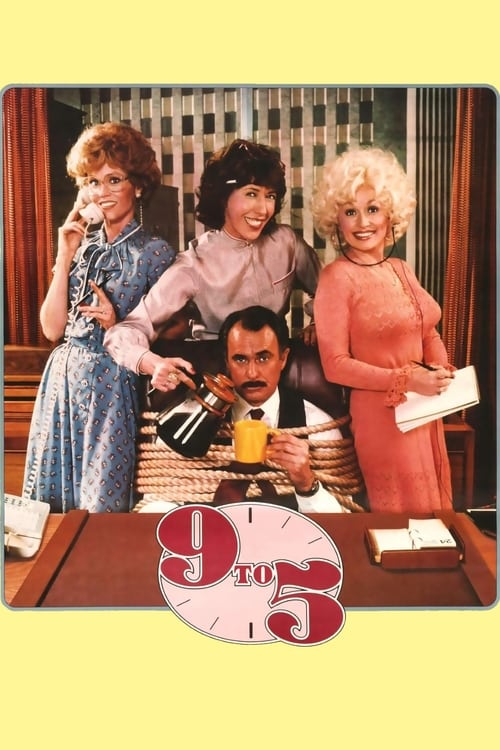
Nine to Five
Three female employees of a sexist, egotistical, lying, hypocritical bigot find a way to turn the tables on him.
Despite its small-scale budget of $10.0M, Nine to Five became a commercial juggernaut, earning $103.3M worldwide—a remarkable 933% return. The film's bold vision engaged audiences, demonstrating that strong storytelling can transcend budget limitations.
Nominated for 1 Oscar. 4 wins & 8 nominations


Plot Structure
Story beats plotted across runtime


Narrative Arc
Emotional journey through the story's key moments
Story Circle
Blueprint 15-beat structure
Arcplot Score Breakdown
Weighted: Precision (70%) + Arc (15%) + Theme (15%)
Nine to Five (1980) exemplifies precise narrative architecture, characteristic of Colin Higgins's storytelling approach. This structural analysis examines how the film's 15-point plot structure maps to proven narrative frameworks across 1 hour and 50 minutes. With an Arcplot score of 6.4, the film takes an unconventional approach to traditional narrative frameworks.
Characters
Cast & narrative archetypes

Judy Bernly
Violet Newstead
Doralee Rhodes
Franklin Hart Jr.
Roz Keith
Main Cast & Characters
Judy Bernly
Played by Jane Fonda
A timid, recently separated woman starting her first job who transforms from pushover to empowered co-conspirator against workplace tyranny.
Violet Newstead
Played by Lily Tomlin
A highly competent office supervisor repeatedly passed over for promotion in favor of less qualified men, who masterminds the kidnapping scheme.
Doralee Rhodes
Played by Dolly Parton
A warm-hearted secretary from Texas whose good nature is exploited by her boss, who falsely claims they're having an affair.
Franklin Hart Jr.
Played by Dabney Coleman
A sexist, egotistical, lying, hypocritical bigot who runs Consolidated Companies with an iron fist and takes credit for others' work.
Roz Keith
Played by Elizabeth Wilson
Hart's devoted executive assistant who spies on coworkers and reports their activities to him, serving as his eyes and ears in the office.
Structural Analysis
The Status Quo at 1 minutes (1% through the runtime) establishes Judy Bernly nervously arrives for her first day at Consolidated Companies, a newly separated woman entering the workforce. The opening montage set to Dolly Parton's title song establishes the mundane grind of office life and introduces the oppressive corporate environment she's about to enter.. Of particular interest, this early placement immediately immerses viewers in the story world.
The inciting incident occurs at 13 minutes when Violet is passed over for promotion in favor of a less-qualified man, despite being the one who developed the new filing system. Hart takes credit for her work and gives the position to someone she trained. This crystallizes the injustice all three women face and sets the stage for their eventual rebellion.. At 12% through the film, this Disruption aligns precisely with traditional story structure. This beat shifts the emotional landscape, launching the protagonist into the central conflict.
The First Threshold at 28 minutes marks the transition into Act II, occurring at 25% of the runtime. This shows the protagonist's commitment to After Doralee's confrontation with Hart, the three women end up together at a bar, bonding over drinks. They decide to go to Doralee's house and smoke marijuana together, forming an alliance. This marks their choice to unite against their common enemy rather than suffer separately., moving from reaction to action.
At 55 minutes, the Midpoint arrives at 50% of the runtime—precisely centered, creating perfect narrative symmetry. The analysis reveals that this crucial beat With Hart tied up in his own home in an elaborate garage door opener contraption, the three women take over running the office. This is a false victory - they have control, but it's precarious and built on deception. The fun begins as they implement changes they've always dreamed of., fundamentally raising what's at risk. The emotional intensity shifts, dividing the narrative into clear before-and-after phases.
The Collapse moment at 83 minutes (75% through) represents the emotional nadir. Here, Hart escapes his bondage when the women make a mistake. He bursts into the office triumphant, ready to have them all arrested for kidnapping. Their entire plan appears to have failed, and they face prison. Everything they've built seems about to be destroyed by the man they tried to overthrow., indicates the protagonist at their lowest point. This beat's placement in the final quarter sets up the climactic reversal.
The Second Threshold at 88 minutes initiates the final act resolution at 80% of the runtime. The Chairman arrives before Hart can act. He's so impressed by the office improvements and productivity gains that he wants to learn more. Violet realizes they have leverage - Hart can't expose them without revealing he was tied up for weeks while the company thrived, proving his incompetence and their capability., demonstrating the transformation achieved throughout the journey.
Emotional Journey
Nine to Five's emotional architecture traces a deliberate progression across 15 carefully calibrated beats.
Narrative Framework
This structural analysis employs systematic plot point analysis that identifies crucial turning points. By mapping Nine to Five against these established plot points, we can identify how Colin Higgins utilizes or subverts traditional narrative conventions. The plot point approach reveals not only adherence to structural principles but also creative choices that distinguish Nine to Five within the comedy genre.
Colin Higgins's Structural Approach
Among the 3 Colin Higgins films analyzed on Arcplot, the average structural score is 6.7, demonstrating varied approaches to story architecture. Nine to Five takes a more unconventional approach compared to the director's typical style. For comparative analysis, explore the complete Colin Higgins filmography.
Comparative Analysis
Additional comedy films include The Bad Guys, Ella Enchanted and The Evening Star. For more Colin Higgins analyses, see Foul Play, The Best Little Whorehouse in Texas.
Plot Points by Act
Act I
SetupStatus Quo
Judy Bernly nervously arrives for her first day at Consolidated Companies, a newly separated woman entering the workforce. The opening montage set to Dolly Parton's title song establishes the mundane grind of office life and introduces the oppressive corporate environment she's about to enter.
Theme
Violet tells Judy that around the office "you're going to have to learn to speak up for yourself" and warns her about the realities of working under Franklin Hart Jr. This establishes the theme of women finding their voices and taking control in a male-dominated workplace.
Worldbuilding
We meet the three protagonists and their distinct positions: Judy is the naive newcomer, Violet is the overlooked veteran repeatedly passed over for promotion, and Doralee is Hart's secretary falsely rumored to be sleeping with him. Hart's sexism, harassment, and incompetence are established as he steals Violet's ideas and makes advances on Doralee.
Disruption
Violet is passed over for promotion in favor of a less-qualified man, despite being the one who developed the new filing system. Hart takes credit for her work and gives the position to someone she trained. This crystallizes the injustice all three women face and sets the stage for their eventual rebellion.
Resistance
The three women separately endure escalating humiliations. Hart sexually harasses Doralee, threatens Judy when she witnesses it, and continues to marginalize Violet. They haven't yet united but each is reaching her breaking point. Doralee confronts Hart after learning he spread rumors about them having an affair.
Act II
ConfrontationFirst Threshold
After Doralee's confrontation with Hart, the three women end up together at a bar, bonding over drinks. They decide to go to Doralee's house and smoke marijuana together, forming an alliance. This marks their choice to unite against their common enemy rather than suffer separately.
Mirror World
The fantasy sequences begin as each woman imagines killing Hart in a style reflecting her personality: Judy as a big-game hunter, Doralee as a cowgirl, and Violet as Snow White with poison. These fantasies represent their suppressed rage and desires for agency, bonding them through shared catharsis.
Premise
The "promise of the premise" delivers the comedic chaos audiences came for. Violet accidentally puts rat poison in Hart's coffee (thinking it's sweetener), they steal a corpse from the hospital believing it's Hart, and eventually kidnap the very-much-alive Hart when he discovers their mishap and threatens to send them to prison.
Midpoint
With Hart tied up in his own home in an elaborate garage door opener contraption, the three women take over running the office. This is a false victory - they have control, but it's precarious and built on deception. The fun begins as they implement changes they've always dreamed of.
Opposition
The women implement progressive workplace reforms: flexible hours, job-sharing, equal pay, on-site daycare, and office redesign. Productivity soars and employees thrive. But maintaining the deception is increasingly difficult. Hart's wife returns from vacation, nearly discovering him. The Chairman of the Board announces an inspection visit to see these miraculous improvements.
Collapse
Hart escapes his bondage when the women make a mistake. He bursts into the office triumphant, ready to have them all arrested for kidnapping. Their entire plan appears to have failed, and they face prison. Everything they've built seems about to be destroyed by the man they tried to overthrow.
Crisis
Hart gloats and prepares to call the police and the Chairman. The women seem defeated, facing the prospect of prison and public humiliation. All their work to improve the office will be undone. They must confront the reality that their unconventional methods may have doomed them.
Act III
ResolutionSecond Threshold
The Chairman arrives before Hart can act. He's so impressed by the office improvements and productivity gains that he wants to learn more. Violet realizes they have leverage - Hart can't expose them without revealing he was tied up for weeks while the company thrived, proving his incompetence and their capability.
Synthesis
The Chairman is so impressed with the reforms that he promotes them all. Hart tries to take credit, but his embezzlement is discovered during the review. Rather than face prosecution, Hart accepts an "assignment" to work in Brazil for a Consolidated subsidiary there - effectively exiled. The women have won through their competence, not despite their unorthodox methods.
Transformation
The final scene shows the transformed office - bright, welcoming, with a daycare center. Violet is in a senior management role, Doralee is heading to a better opportunity, and Judy is confident and assertive. Text cards reveal the real-world impact: Hart was kidnapped by a tribe in the Amazon and was never heard from again. The women changed the workplace forever.