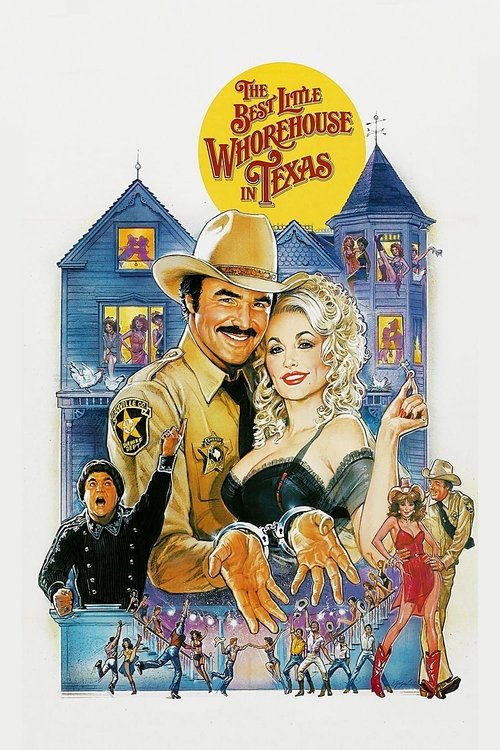
The Best Little Whorehouse in Texas
When a Conservative TV crusader threatens to shut down beloved brothel, the Chicken Ranch, proprietress Miss Mona Stangley and her girls won't go down without a fight.
Despite a respectable budget of $27.5M, The Best Little Whorehouse in Texas became a commercial success, earning $69.7M worldwide—a 153% return.
Nominated for 1 Oscar. 3 nominations


Plot Structure
Story beats plotted across runtime


Narrative Arc
Emotional journey through the story's key moments
Story Circle
Blueprint 15-beat structure
Arcplot Score Breakdown
Weighted: Precision (70%) + Arc (15%) + Theme (15%)
The Best Little Whorehouse in Texas (1982) exhibits strategically placed narrative design, characteristic of Colin Higgins's storytelling approach. This structural analysis examines how the film's 15-point plot structure maps to proven narrative frameworks across 1 hour and 55 minutes. With an Arcplot score of 7.5, the film showcases strong structural fundamentals.
Characters
Cast & narrative archetypes

Mona Stangley
Sheriff Ed Earl Dodd
Melvin P. Thorpe
Governor
Dulcie Mae
Main Cast & Characters
Mona Stangley
Played by Dolly Parton
The tough but kind-hearted madam of the Chicken Ranch brothel who maintains order and dignity in her establishment.
Sheriff Ed Earl Dodd
Played by Burt Reynolds
The pragmatic small-town sheriff who protects the Chicken Ranch and maintains a romantic relationship with Mona.
Melvin P. Thorpe
Played by Dom DeLuise
A self-righteous TV reporter and moral crusader determined to expose and shut down the Chicken Ranch.
Governor
Played by Charles Durning
The spineless Texas governor who caves to public pressure and political expediency.
Dulcie Mae
Played by Lois Nettleton
One of the working girls at the Chicken Ranch, a loyal friend to Mona.
Structural Analysis
The Status Quo at 1 minutes (1% through the runtime) establishes Opening montage showcasing the Chicken Ranch as a beloved Texas institution, a thriving bordello run with dignity by Miss Mona, harmoniously integrated into small-town life in Gilbert, Texas.. Of particular interest, this early placement immediately immerses viewers in the story world.
The inciting incident occurs at 14 minutes when Melvin P. Thorpe, a crusading TV reporter, discovers the Chicken Ranch and decides to expose it on his watchdog news program, beginning his campaign against the "moral corruption" in Texas.. At 12% through the film, this Disruption aligns precisely with traditional story structure. This beat shifts the emotional landscape, launching the protagonist into the central conflict.
The First Threshold at 28 minutes marks the transition into Act II, occurring at 25% of the runtime. This indicates the protagonist's commitment to Thorpe's television exposé airs statewide, putting massive public pressure on politicians. Ed Earl and Mona can no longer ignore the threat; they must actively fight for the Chicken Ranch's survival., moving from reaction to action.
At 58 minutes, the Midpoint arrives at 50% of the runtime—precisely centered, creating perfect narrative symmetry. The analysis reveals that this crucial beat The Governor, despite private assurances to Ed Earl, publicly caves to Thorpe's pressure and announces the Chicken Ranch must be shut down. False defeat: what seemed manageable becomes a political inevitability., fundamentally raising what's at risk. The emotional intensity shifts, dividing the narrative into clear before-and-after phases.
The Collapse moment at 86 minutes (75% through) represents the emotional nadir. Here, Mona closes the Chicken Ranch permanently, dismissing her girls. The "death" of an institution, a way of life, and Mona's identity as the caretaker of this unorthodox but functioning establishment., demonstrates the protagonist at their lowest point. This beat's placement in the final quarter sets up the climactic reversal.
The Second Threshold at 92 minutes initiates the final act resolution at 80% of the runtime. Ed Earl confronts Thorpe on live television, exposing his hypocrisy and grandstanding. Though the Chicken Ranch is lost, Ed Earl publicly defends its dignity and his values., demonstrating the transformation achieved throughout the journey.
Emotional Journey
The Best Little Whorehouse in Texas's emotional architecture traces a deliberate progression across 15 carefully calibrated beats.
Narrative Framework
This structural analysis employs a 15-point narrative structure framework that maps key story moments. By mapping The Best Little Whorehouse in Texas against these established plot points, we can identify how Colin Higgins utilizes or subverts traditional narrative conventions. The plot point approach reveals not only adherence to structural principles but also creative choices that distinguish The Best Little Whorehouse in Texas within the comedy genre.
Colin Higgins's Structural Approach
Among the 3 Colin Higgins films analyzed on Arcplot, the average structural score is 6.7, demonstrating varied approaches to story architecture. The Best Little Whorehouse in Texas represents one of the director's most structurally precise works. For comparative analysis, explore the complete Colin Higgins filmography.
Comparative Analysis
Additional comedy films include The Bad Guys, Ella Enchanted and The Evening Star. For more Colin Higgins analyses, see Nine to Five, Foul Play.
Plot Points by Act
Act I
SetupStatus Quo
Opening montage showcasing the Chicken Ranch as a beloved Texas institution, a thriving bordello run with dignity by Miss Mona, harmoniously integrated into small-town life in Gilbert, Texas.
Theme
Sheriff Ed Earl Dodd tells Mona: "We got a good thing here. Don't let nobody tell you different." Theme of challenging hypocrisy and defending what works despite social judgment.
Worldbuilding
Establishment of the Chicken Ranch's operations, Miss Mona's relationship with Sheriff Ed Earl, the town's acceptance of the establishment, and the traditional annual visit by Texas A&M football players.
Disruption
Melvin P. Thorpe, a crusading TV reporter, discovers the Chicken Ranch and decides to expose it on his watchdog news program, beginning his campaign against the "moral corruption" in Texas.
Resistance
Mona and Ed Earl debate how to handle Thorpe's attacks. Ed Earl believes they can weather the storm by keeping their heads down, while Mona worries about the scrutiny. They resist changing their way of life.
Act II
ConfrontationFirst Threshold
Thorpe's television exposé airs statewide, putting massive public pressure on politicians. Ed Earl and Mona can no longer ignore the threat; they must actively fight for the Chicken Ranch's survival.
Mirror World
Deepening of Ed Earl and Mona's romantic relationship. Their love story becomes the emotional core, representing genuine human connection versus Thorpe's judgmental moralism.
Premise
The fun musical numbers and comedy of watching Ed Earl navigate political pressure, Mona managing her girls, and the community rallying around the Chicken Ranch. Includes "Texas Has a Whorehouse in It" production number.
Midpoint
The Governor, despite private assurances to Ed Earl, publicly caves to Thorpe's pressure and announces the Chicken Ranch must be shut down. False defeat: what seemed manageable becomes a political inevitability.
Opposition
Thorpe's crusade intensifies with rallies and media pressure. Ed Earl's efforts to protect Mona fail as politicians distance themselves. Mona faces the reality that her way of life is ending despite doing nothing wrong.
Collapse
Mona closes the Chicken Ranch permanently, dismissing her girls. The "death" of an institution, a way of life, and Mona's identity as the caretaker of this unorthodox but functioning establishment.
Crisis
Mona processes her grief and anger over the injustice. Ed Earl confronts his inability to protect what they built. Both face an uncertain future without the roles that defined them.
Act III
ResolutionSecond Threshold
Ed Earl confronts Thorpe on live television, exposing his hypocrisy and grandstanding. Though the Chicken Ranch is lost, Ed Earl publicly defends its dignity and his values.
Synthesis
Resolution of character arcs: Ed Earl and Mona reconcile and commit to their relationship. The girls move on to new lives. The community acknowledges what was lost, but life continues.
Transformation
Ed Earl and Mona drive off together, having lost the Chicken Ranch but found each other. Transformation from institutionally-defined roles to authentic personal connection.