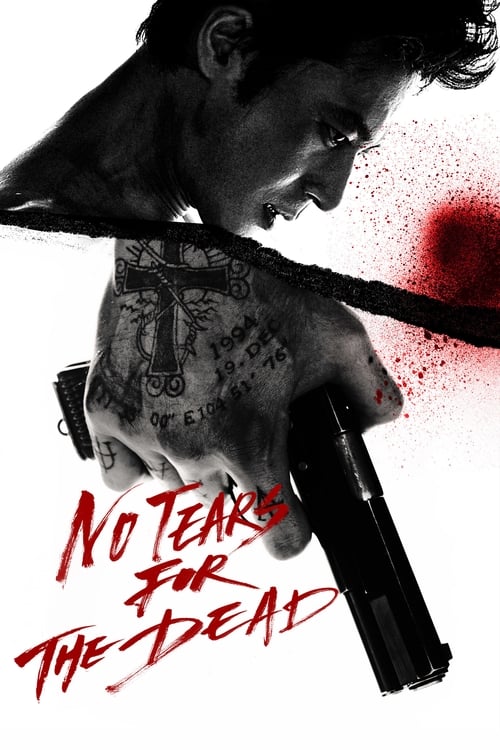
No Tears for the Dead
A hitman accidentally kills a little girl. Filled with regret, he wants to quit. But then to tie up loose ends, he is forced to go on another job, to kill the girl's mother.
The film earned $4.5M at the global box office.


Plot Structure
Story beats plotted across runtime


Narrative Arc
Emotional journey through the story's key moments
Story Circle
Blueprint 15-beat structure
Arcplot Score Breakdown
Weighted: Precision (70%) + Arc (15%) + Theme (15%)
No Tears for the Dead (2014) reveals carefully calibrated narrative design, characteristic of Lee Jeong-beom's storytelling approach. This structural analysis examines how the film's 15-point plot structure maps to proven narrative frameworks across 1 hour and 57 minutes. With an Arcplot score of 6.6, the film balances conventional beats with creative variation.
Characters
Cast & narrative archetypes

Gon
Mo-gyeong
Chaoz
John Lee
Detective Kim
Janet
Main Cast & Characters
Gon
Played by Jang Dong-gun
A Korean-American hitman haunted by guilt after accidentally killing a child during an assignment. He defies his employers to protect the child's mother from assassination.
Mo-gyeong
Played by Kim Min-hee
A grieving mother who lost her daughter to a stray bullet. She works at an investment firm and unknowingly possesses evidence of corporate corruption that makes her a target.
Chaoz
Played by Brian Tee
A ruthless and psychopathic assassin sent to kill Mo-gyeong. He is Gon's former colleague and serves as his dark counterpart, taking pleasure in violence.
John Lee
Played by Kim Hee-won
The cold and calculating crime boss who employs Gon and Chaoz. He orchestrates the assassination attempts and represents the corrupt corporate interests.
Detective Kim
Played by Kim Joon-sung
A determined Korean detective investigating the criminal underworld. He pursues Gon while gradually uncovering the conspiracy surrounding Mo-gyeong.
Janet
Played by Amanda Plummer
Gon's estranged mother who abandoned him as a child. Her reappearance triggers memories of his traumatic past and deepens his emotional turmoil.
Structural Analysis
The Status Quo at 1 minutes (1% through the runtime) establishes Gon, a Korean-American hitman, executes a mission in LA with cold precision, showing his emotionally detached existence as a professional killer.. The analysis reveals that this early placement immediately immerses viewers in the story world.
The inciting incident occurs at 14 minutes when Gon's crime boss orders him to return to Korea to eliminate Mo-gyeong and other witnesses to cover up the organization's money laundering operation.. At 12% through the film, this Disruption aligns precisely with traditional story structure. This beat shifts the emotional landscape, launching the protagonist into the central conflict.
The First Threshold at 30 minutes marks the transition into Act II, occurring at 25% of the runtime. This illustrates the protagonist's commitment to Gon decides to protect Mo-gyeong instead of killing her, choosing redemption over duty when he saves her from other assassins sent by the organization., moving from reaction to action.
At 59 minutes, the Midpoint arrives at 51% of the runtime—precisely centered, creating perfect narrative symmetry. Significantly, this crucial beat Mo-gyeong discovers evidence that Gon is connected to her daughter's death, raising the stakes and transforming their relationship from protector-protected to a deeper moral complexity., fundamentally raising what's at risk. The emotional intensity shifts, dividing the narrative into clear before-and-after phases.
The Collapse moment at 88 minutes (75% through) represents the emotional nadir. Here, Mo-gyeong learns the full truth that Gon killed her daughter. She confronts him with a gun, and Gon accepts his fate, offering no resistance to his deserved death., demonstrates the protagonist at their lowest point. This beat's placement in the final quarter sets up the climactic reversal.
The Second Threshold at 94 minutes initiates the final act resolution at 80% of the runtime. Mo-gyeong chooses not to kill Gon, recognizing his genuine remorse. Gon resolves to end the threat permanently by destroying the organization, even at the cost of his own life., demonstrating the transformation achieved throughout the journey.
Emotional Journey
No Tears for the Dead's emotional architecture traces a deliberate progression across 15 carefully calibrated beats.
Narrative Framework
This structural analysis employs proven narrative structure principles that track dramatic progression. By mapping No Tears for the Dead against these established plot points, we can identify how Lee Jeong-beom utilizes or subverts traditional narrative conventions. The plot point approach reveals not only adherence to structural principles but also creative choices that distinguish No Tears for the Dead within the action genre.
Lee Jeong-beom's Structural Approach
Among the 2 Lee Jeong-beom films analyzed on Arcplot, the average structural score is 6.9, demonstrating varied approaches to story architecture. No Tears for the Dead takes a more unconventional approach compared to the director's typical style. For comparative analysis, explore the complete Lee Jeong-beom filmography.
Comparative Analysis
Additional action films include The Bad Guys, Puss in Boots and Venom: The Last Dance. For more Lee Jeong-beom analyses, see The Man from Nowhere.
Plot Points by Act
Act I
SetupStatus Quo
Gon, a Korean-American hitman, executes a mission in LA with cold precision, showing his emotionally detached existence as a professional killer.
Theme
During the botched hit, Gon accidentally kills a young girl, introducing the theme of redemption and the impossibility of washing away innocent blood.
Worldbuilding
Establishes Gon's world as a guilt-ridden assassin drowning in alcohol and self-loathing, his handler's criminal organization, and introduces Mo-gyeong, the mother of the girl he killed, as a grieving target.
Disruption
Gon's crime boss orders him to return to Korea to eliminate Mo-gyeong and other witnesses to cover up the organization's money laundering operation.
Resistance
Gon resists the mission internally while preparing to travel to Seoul. He observes Mo-gyeong from afar, struggling with guilt as he watches the woman whose daughter he killed.
Act II
ConfrontationFirst Threshold
Gon decides to protect Mo-gyeong instead of killing her, choosing redemption over duty when he saves her from other assassins sent by the organization.
Mirror World
Gon and Mo-gyeong's relationship begins to form as he protects her without revealing his identity, creating the thematic bond between killer and victim's mother.
Premise
Gon protects Mo-gyeong from waves of assassins in intense action sequences while maintaining his secret, exploring the premise of a killer seeking redemption through protecting the one he wronged.
Midpoint
Mo-gyeong discovers evidence that Gon is connected to her daughter's death, raising the stakes and transforming their relationship from protector-protected to a deeper moral complexity.
Opposition
The organization intensifies their hunt while Gon's past fully catches up with him. Mo-gyeong's anger and grief threaten their fragile alliance as more killers close in.
Collapse
Mo-gyeong learns the full truth that Gon killed her daughter. She confronts him with a gun, and Gon accepts his fate, offering no resistance to his deserved death.
Crisis
Gon experiences his dark night, fully accepting his irredeemable nature while Mo-gyeong wrestles with whether to kill him or accept that he's trying to atone.
Act III
ResolutionSecond Threshold
Mo-gyeong chooses not to kill Gon, recognizing his genuine remorse. Gon resolves to end the threat permanently by destroying the organization, even at the cost of his own life.
Synthesis
Gon wages a final brutal assault on the organization's leadership, combining his lethal skills with his newfound purpose, protecting Mo-gyeong while systematically eliminating the crime syndicate.
Transformation
Mortally wounded, Gon dies having achieved redemption through sacrifice but not forgiveness, transformed from an emotionless killer into someone who reclaimed his humanity through acceptance of consequences.