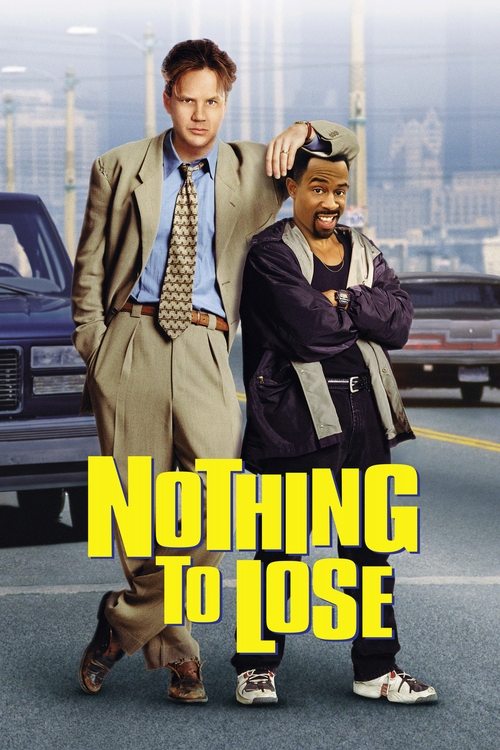
Nothing to Lose
Advertising executive Nick Beame learns that his wife is sleeping with his employer. In a state of despair, he encounters a bumbling thief whose attempted carjacking goes awry when Nick takes him on an involuntary joyride. Soon the betrayed businessman and the incompetent crook strike up a partnership and develop a robbery-revenge scheme. But it turns out that some other criminals in the area don't appreciate the competition.
Working with a respectable budget of $25.0M, the film achieved a steady performer with $44.5M in global revenue (+78% profit margin).


Plot Structure
Story beats plotted across runtime


Narrative Arc
Emotional journey through the story's key moments
Story Circle
Blueprint 15-beat structure
Arcplot Score Breakdown
Weighted: Precision (70%) + Arc (15%) + Theme (15%)
Nothing to Lose (1997) demonstrates deliberately positioned story structure, characteristic of Steve Oedekerk's storytelling approach. This structural analysis examines how the film's 15-point plot structure maps to proven narrative frameworks across 1 hour and 37 minutes. With an Arcplot score of 6.7, the film balances conventional beats with creative variation.
Characters
Cast & narrative archetypes

Nick Beam
Terrence Paul 'T. Paul' Davidson
Ann Beam
Philip Barrow
Rig
Davis 'Dang' Lanlow
Danielle
Main Cast & Characters
Nick Beam
Played by Tim Robbins
A mild-mannered advertising executive who believes his wife is having an affair with his boss, leading him on a wild misadventure after being carjacked.
Terrence Paul 'T. Paul' Davidson
Played by Martin Lawrence
A small-time carjacker who attempts to rob Nick but ends up becoming his unlikely partner in crime and personal growth.
Ann Beam
Played by Kelly Preston
Nick's wife who appears to be having an affair with his boss, though things are not as they seem.
Philip Barrow
Played by Michael McKean
Nick's sleazy boss who is engaged in an affair and becomes a target of Nick's revenge scheme.
Rig
Played by John C. McGinley
A dangerous criminal who T. Paul owes money to and who pursues the duo throughout the film.
Davis 'Dang' Lanlow
Played by Giancarlo Esposito
Rig's dimwitted but menacing partner who helps track down T. Paul and Nick.
Danielle
Played by Rebecca Gayheart
T. Paul's girlfriend who worries about his criminal activities and wants him to go straight.
Structural Analysis
The Status Quo at 1 minutes (1% through the runtime) establishes Nick Beam appears to have a perfect life - successful advertising executive with a beautiful home and wife, driving to work in his comfortable routine.. Significantly, this early placement immediately immerses viewers in the story world.
The inciting incident occurs at 12 minutes when Nick arrives home early and discovers his wife Ann in bed with his boss Philip, shattering his perfect life in an instant.. At 13% through the film, this Disruption is delayed, allowing extended setup of the story world. This beat shifts the emotional landscape, launching the protagonist into the central conflict.
The First Threshold at 24 minutes marks the transition into Act II, occurring at 25% of the runtime. This indicates the protagonist's commitment to T. Paul attempts to carjack Nick, but Nick - having nothing left to lose - turns the tables and kidnaps T. Paul instead, actively choosing chaos over his old controlled life., moving from reaction to action.
At 49 minutes, the Midpoint arrives at 51% of the runtime—precisely centered, creating perfect narrative symmetry. Significantly, this crucial beat Nick and T. Paul's robbery spree escalates successfully. They feel invincible and their friendship deepens - a false victory as they're unaware the consequences are mounting., fundamentally raising what's at risk. The emotional intensity shifts, dividing the narrative into clear before-and-after phases.
The Collapse moment at 73 minutes (75% through) represents the emotional nadir. Here, Nick and T. Paul are captured by the criminals they robbed. Their friendship and lives are threatened. Everything falls apart and they face potential death., demonstrates the protagonist at their lowest point. This beat's placement in the final quarter sets up the climactic reversal.
The Second Threshold at 78 minutes initiates the final act resolution at 81% of the runtime. Nick synthesizes his old resourcefulness with his new freedom and authenticity. He and T. Paul devise an escape plan, combining their skills to break free., demonstrating the transformation achieved throughout the journey.
Emotional Journey
Nothing to Lose's emotional architecture traces a deliberate progression across 15 carefully calibrated beats.
Narrative Framework
This structural analysis employs a 15-point narrative structure framework that maps key story moments. By mapping Nothing to Lose against these established plot points, we can identify how Steve Oedekerk utilizes or subverts traditional narrative conventions. The plot point approach reveals not only adherence to structural principles but also creative choices that distinguish Nothing to Lose within the comedy genre.
Steve Oedekerk's Structural Approach
Among the 4 Steve Oedekerk films analyzed on Arcplot, the average structural score is 7.1, reflecting strong command of classical structure. Nothing to Lose takes a more unconventional approach compared to the director's typical style. For comparative analysis, explore the complete Steve Oedekerk filmography.
Comparative Analysis
Additional comedy films include The Bad Guys, Ella Enchanted and The Evening Star. For more Steve Oedekerk analyses, see Ace Ventura: When Nature Calls, Kung Pow: Enter the Fist and Barnyard.
Plot Points by Act
Act I
SetupStatus Quo
Nick Beam appears to have a perfect life - successful advertising executive with a beautiful home and wife, driving to work in his comfortable routine.
Theme
A character mentions that when you have nothing, you have nothing to lose - foreshadowing Nick's journey of liberation through loss.
Worldbuilding
Nick's controlled, corporate world is established - his advertising career, his marriage to Ann, his investments in partnership with boss Philip. Everything appears successful but emotionally hollow.
Disruption
Nick arrives home early and discovers his wife Ann in bed with his boss Philip, shattering his perfect life in an instant.
Resistance
Nick drives aimlessly in shock and rage, processing the betrayal. He debates what to do - confront them, leave, break down - careening through the desert in emotional chaos.
Act II
ConfrontationFirst Threshold
T. Paul attempts to carjack Nick, but Nick - having nothing left to lose - turns the tables and kidnaps T. Paul instead, actively choosing chaos over his old controlled life.
Mirror World
Nick and T. Paul begin their unlikely partnership. T. Paul represents everything Nick isn't - spontaneous, street-smart, free - and will teach Nick what really matters.
Premise
The "fun and games" of the buddy comedy - Nick and T. Paul commit robberies together, bonding despite their differences. Nick experiences liberation from his corporate prison.
Midpoint
Nick and T. Paul's robbery spree escalates successfully. They feel invincible and their friendship deepens - a false victory as they're unaware the consequences are mounting.
Opposition
The bad guys close in - both the criminals they've crossed and the police. Nick's wife wants him back but he's changed. The consequences of their crime spree catch up with them.
Collapse
Nick and T. Paul are captured by the criminals they robbed. Their friendship and lives are threatened. Everything falls apart and they face potential death.
Crisis
In captivity, Nick and T. Paul face their darkest moment, confronting what really matters - their friendship, their families, their choices. Nick realizes he can't go back to who he was.
Act III
ResolutionSecond Threshold
Nick synthesizes his old resourcefulness with his new freedom and authenticity. He and T. Paul devise an escape plan, combining their skills to break free.
Synthesis
Nick and T. Paul execute their escape, confront the criminals, resolve issues with the law and their families. Nick faces his wife and boss with newfound strength.
Transformation
Nick is free - not just from captivity but from his old life. He's authentic, connected to real friendship with T. Paul, transformed from controlled to liberated.