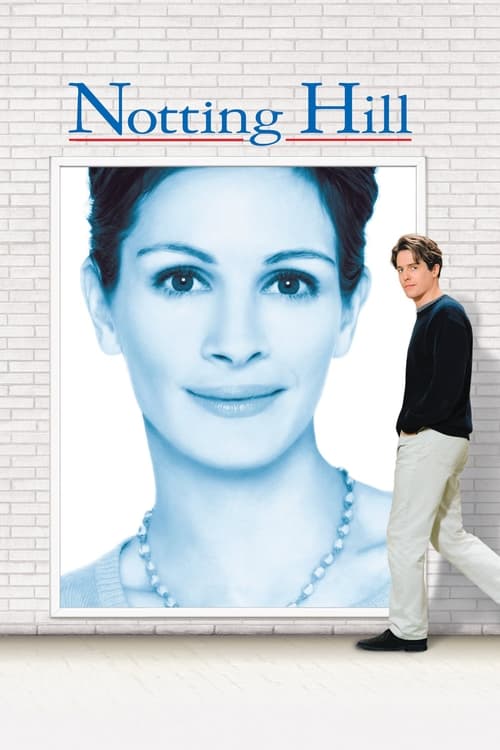
Notting Hill
A set of circumstances makes Anna Scott, a famous actress, fall in love with William Thacker, owner of a bookstore in Notting Hill. But the paparazzi's fascination with her complicates their bond.
Despite a respectable budget of $42.0M, Notting Hill became a massive hit, earning $363.9M worldwide—a remarkable 766% return.
1 BAFTA Award11 wins & 17 nominations


Plot Structure
Story beats plotted across runtime


Narrative Arc
Emotional journey through the story's key moments
Story Circle
Blueprint 15-beat structure
Characters
Cast & narrative archetypes

William Thacker
Anna Scott
Spike
Honey
Max
Bella
Bernie
Jeff King
Main Cast & Characters
William Thacker
Played by Hugh Grant
A humble, self-deprecating London bookshop owner whose quiet life is upended when he accidentally spills orange juice on the world's most famous actress.
Anna Scott
Played by Julia Roberts
Hollywood's biggest movie star who finds unexpected connection with an ordinary man, struggling between her public persona and desire for authentic love.
Spike
Played by Rhys Ifans
William's eccentric, unhygienic Welsh flatmate who provides comic relief and inadvertently complicates William's romance with his unfiltered behavior.
Honey
Played by Emma Chambers
William's scatterbrained but warm-hearted younger sister who wears her heart on her sleeve and falls instantly for Spike.
Max
Played by Tim McInnerny
William's dependable best friend and Bella's husband who hosts dinner parties and provides steady friendship throughout William's romantic turmoil.
Bella
Played by Gina McKee
Max's wife who uses a wheelchair, known for her sharp wit and emotional depth, representing grounded wisdom within the friend group.
Bernie
Played by Hugh Bonneville
A close friend of William's whose failed romantic life provides both comic moments and genuine pathos within the group dynamic.
Jeff King
Played by Alec Baldwin
Anna's arrogant American actor boyfriend who represents the shallow Hollywood world Anna is trying to escape.
Structural Analysis
The Status Quo at 2 minutes (2% through the runtime) establishes William Thacker narrates his ordinary life in Notting Hill, running a failing travel bookshop, living through the seasons alone. The opening montage establishes his quiet, unremarkable existence in contrast to the glamorous world he's about to encounter.. Notably, this early placement immediately immerses viewers in the story world.
The inciting incident occurs at 13 minutes when Anna Scott, the most famous movie star in the world, walks into William's bookshop. This chance encounter disrupts his ordinary world - she's kind, surprisingly down-to-earth, and buys a book. The universe of possibility opens.. At 11% through the film, this Disruption aligns precisely with traditional story structure. This beat shifts the emotional landscape, launching the protagonist into the central conflict.
The First Threshold at 31 minutes marks the transition into Act II, occurring at 25% of the runtime. This illustrates the protagonist's commitment to William chooses to climb over the fence into the private garden with Anna, literally and metaphorically choosing to enter her world despite the "residents only" rules. He kisses her on the bench, actively deciding to pursue this impossible relationship., moving from reaction to action.
At 61 minutes, the Midpoint arrives at 50% of the runtime—precisely centered, creating perfect narrative symmetry. Significantly, this crucial beat False victory: Anna shows up at William's house unannounced after her film wraps early. "I'm also just a girl, standing in front of a boy, asking him to love her." She chooses him over her movie star life. They begin a real relationship - but the stakes have just gotten much higher., fundamentally raising what's at risk. The emotional intensity shifts, dividing the narrative into clear before-and-after phases.
The Collapse moment at 90 minutes (73% through) represents the emotional nadir. Here, Anna appears at the bookshop with her movie star boyfriend for a press event. William, humiliated and heartbroken, says "It's fine" when it clearly isn't. The dream dies. The relationship is publicly, definitively over. His hope and dignity are both destroyed., illustrates the protagonist at their lowest point. This beat's placement in the final quarter sets up the climactic reversal.
The Second Threshold at 98 minutes initiates the final act resolution at 79% of the runtime. Spike reveals Anna is at the Ritz holding a press conference - she's staying in London indefinitely. New information. William realizes she chose his world. His friends literally push him out the door: "Go get her." He synthesizes courage from ordinary life with knowledge of her extraordinary one., demonstrating the transformation achieved throughout the journey.
Emotional Journey
Notting Hill's emotional architecture traces a deliberate progression across 15 carefully calibrated beats.
Narrative Framework
This structural analysis employs systematic plot point analysis that identifies crucial turning points. By mapping Notting Hill against these established plot points, we can identify how Roger Michell utilizes or subverts traditional narrative conventions. The plot point approach reveals not only adherence to structural principles but also creative choices that distinguish Notting Hill within the comedy genre.
Roger Michell's Structural Approach
Among the 6 Roger Michell films analyzed on Arcplot, the average structural score is 7.0, reflecting strong command of classical structure. Notting Hill exemplifies the director's characteristic narrative technique. For comparative analysis, explore the complete Roger Michell filmography.
Comparative Analysis
Additional comedy films include The Bad Guys, Ella Enchanted and The Evening Star. For more Roger Michell analyses, see Persuasion, My Cousin Rachel and Morning Glory.
Plot Points by Act
Act I
SetupStatus Quo
William Thacker narrates his ordinary life in Notting Hill, running a failing travel bookshop, living through the seasons alone. The opening montage establishes his quiet, unremarkable existence in contrast to the glamorous world he's about to encounter.
Theme
Spike casually says "Fame and fortune, here I come" as a throwaway line, but it encapsulates the central theme: the collision between ordinary life and extraordinary fame, and whether genuine connection can bridge that gap.
Worldbuilding
Introduction to William's world: his quirky bookshop, his eccentric roommate Spike, his close-knit group of friends (Max, Bella, Bernie), and his recently divorced sister Honey. We see his financial struggles and the mundane rhythm of his London life.
Disruption
Anna Scott, the most famous movie star in the world, walks into William's bookshop. This chance encounter disrupts his ordinary world - she's kind, surprisingly down-to-earth, and buys a book. The universe of possibility opens.
Resistance
The famous orange juice collision leads William to invite Anna to his apartment to change. Their first kiss happens impulsively. William debates whether this could be real, resists believing someone like her could be interested in him. He navigates the awkwardness of her unexpected return and dinner invitation.
Act II
ConfrontationFirst Threshold
William chooses to climb over the fence into the private garden with Anna, literally and metaphorically choosing to enter her world despite the "residents only" rules. He kisses her on the bench, actively deciding to pursue this impossible relationship.
Mirror World
The dinner party with William's friends where Anna pretends to be a nobody. His friends - especially the unlucky-in-love Bella and wheelchair-bound Bernie - represent authentic human connection. They embody the theme: real people with real problems, the opposite of Anna's glamorous façade.
Premise
The promise of the premise: an ordinary guy dating a movie star. William poses as a journalist at the Ritz press junket, sneaks through her film set, experiences her world. Anna visits his bookshop. They navigate the thrilling absurdity of their secret relationship across two incompatible worlds.
Midpoint
False victory: Anna shows up at William's house unannounced after her film wraps early. "I'm also just a girl, standing in front of a boy, asking him to love her." She chooses him over her movie star life. They begin a real relationship - but the stakes have just gotten much higher.
Opposition
The relationship deepens through seasons, but opposition mounts. Paparazzi photos surface of Anna with her ex-boyfriend. William sees them at the bookshop. His insecurity and her fame create impossible friction. She has to leave for America. The fundamental incompatibility of their worlds closes in.
Collapse
Anna appears at the bookshop with her movie star boyfriend for a press event. William, humiliated and heartbroken, says "It's fine" when it clearly isn't. The dream dies. The relationship is publicly, definitively over. His hope and dignity are both destroyed.
Crisis
William spirals through the seasons in melancholy. His friends try to console him. Max delivers the harsh truth: he gave up on her too easily. William sits with his failure, processing that he rejected her when she needed him, choosing self-protection over love.
Act III
ResolutionSecond Threshold
Spike reveals Anna is at the Ritz holding a press conference - she's staying in London indefinitely. New information. William realizes she chose his world. His friends literally push him out the door: "Go get her." He synthesizes courage from ordinary life with knowledge of her extraordinary one.
Synthesis
The finale chase through Notting Hill streets. William crashes the press conference, publicly declares his feelings. Anna gives him one more chance. He chooses her completely. The final montage: they marry, she becomes pregnant, they live an ordinary/extraordinary life together in the private garden.
Transformation
The closing image mirrors the opening: William on the blue bench in the private garden, but now with pregnant Anna in his lap, reading peacefully. The "residents only" gate he once climbed is now his home. Ordinary life elevated by love, fame grounded by authenticity.