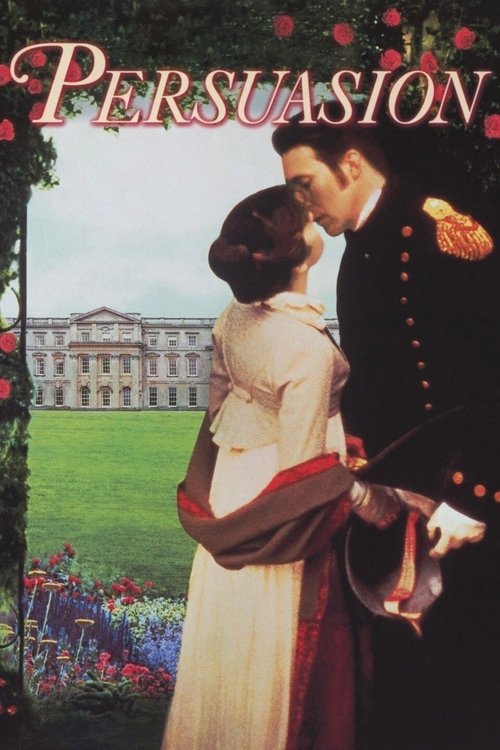
Persuasion
Living with her snobby family on the brink of bankruptcy, Anne Elliot is an unconforming woman with modern sensibilities. When Frederick Wentworth – the dashing one she once sent away – crashes back into her life, Anne must choose between putting the past behind her or listening to her heart when it comes to second chances.
Despite its small-scale budget of $1.5M, Persuasion became a financial success, earning $5.3M worldwide—a 251% return. The film's unique voice attracted moviegoers, proving that strong storytelling can transcend budget limitations.


Plot Structure
Story beats plotted across runtime


Narrative Arc
Emotional journey through the story's key moments
Story Circle
Blueprint 15-beat structure
Arcplot Score Breakdown
Weighted: Precision (70%) + Arc (15%) + Theme (15%)
Persuasion (1995) exhibits precise narrative design, characteristic of Roger Michell's storytelling approach. This structural analysis examines how the film's 15-point plot structure maps to proven narrative frameworks across 1 hour and 44 minutes. With an Arcplot score of 7.2, the film balances conventional beats with creative variation.
Structural Analysis
The Status Quo at 1 minutes (1% through the runtime) establishes Anne Elliot, faded and overlooked at 27, tends to household matters at Kellynch Hall while her vain father Sir Walter obsesses over the Baronetage. She is invisible to her own family, still haunted by her broken engagement to Captain Wentworth eight years prior.. Notably, this early placement immediately immerses viewers in the story world.
The inciting incident occurs at 12 minutes when Admiral and Mrs. Croft take the lease on Kellynch Hall. Anne learns that Mrs. Croft is Captain Wentworth's sister, meaning Frederick Wentworth—now wealthy and successful—will inevitably return to the neighborhood. Her carefully maintained composure cracks.. At 12% through the film, this Disruption aligns precisely with traditional story structure. This beat shifts the emotional landscape, launching the protagonist into the central conflict.
The First Threshold at 26 minutes marks the transition into Act II, occurring at 25% of the runtime. This indicates the protagonist's commitment to Anne chooses to remain in Wentworth's social sphere rather than retreating. At a dinner at Uppercross, she overhears Wentworth tell his friend he seeks a woman with "a strong mind and sweetness of manner"—pointedly excluding Anne. She commits to enduring his presence and proving her constancy., moving from reaction to action.
At 52 minutes, the Midpoint arrives at 50% of the runtime—precisely centered, creating perfect narrative symmetry. Notably, this crucial beat At Lyme, Louisa Musgrove insists on jumping from the Cobb seawall despite warnings. She falls and suffers a serious head injury. The crisis reveals character: Wentworth is paralyzed with guilt while Anne takes calm command. This false defeat exposes the hollowness of Louisa's "firmness" and begins Wentworth's reassessment., fundamentally raising what's at risk. The emotional intensity shifts, dividing the narrative into clear before-and-after phases.
The Collapse moment at 78 minutes (75% through) represents the emotional nadir. Here, Anne learns from Mrs. Smith that Mr. Elliot is a fortune-hunting schemer who ruined her late husband and seeks only to prevent Sir Walter from remarrying. Simultaneously, she believes Wentworth may now be attached to Louisa. All paths to happiness seem closed—she is surrounded by manipulation and believes she has lost Wentworth forever., illustrates the protagonist at their lowest point. This beat's placement in the final quarter sets up the climactic reversal.
The Second Threshold at 83 minutes initiates the final act resolution at 80% of the runtime. At the Musgrove gathering, Anne learns that Louisa is engaged to Captain Benwick—Wentworth is free. In a conversation with Captain Harville about men and women's constancy in love, Anne passionately declares that women love longest "when existence or when hope is gone." Wentworth, writing nearby, overhears everything., demonstrating the transformation achieved throughout the journey.
Emotional Journey
Persuasion's emotional architecture traces a deliberate progression across 15 carefully calibrated beats.
Narrative Framework
This structural analysis employs systematic plot point analysis that identifies crucial turning points. By mapping Persuasion against these established plot points, we can identify how Roger Michell utilizes or subverts traditional narrative conventions. The plot point approach reveals not only adherence to structural principles but also creative choices that distinguish Persuasion within the drama genre.
Roger Michell's Structural Approach
Among the 6 Roger Michell films analyzed on Arcplot, the average structural score is 7.0, reflecting strong command of classical structure. Persuasion represents one of the director's most structurally precise works. For comparative analysis, explore the complete Roger Michell filmography.
Comparative Analysis
Additional drama films include After Thomas, South Pacific and Dirty Dancing: Havana Nights. For more Roger Michell analyses, see My Cousin Rachel, Morning Glory and Changing Lanes.
Plot Points by Act
Act I
SetupStatus Quo
Anne Elliot, faded and overlooked at 27, tends to household matters at Kellynch Hall while her vain father Sir Walter obsesses over the Baronetage. She is invisible to her own family, still haunted by her broken engagement to Captain Wentworth eight years prior.
Theme
Lady Russell advises Anne on prudent choices, echoing the same counsel that led Anne to reject Wentworth years ago. The theme of persuasion versus personal conviction is established—whether one should follow the advice of others or trust one's own heart.
Worldbuilding
The Elliot family's financial troubles and vanity are established. Sir Walter must rent Kellynch Hall to economize. Anne's position as the sensible but ignored middle daughter is shown. Her sisters Elizabeth and Mary, along with Lady Russell's influence, complete the portrait of Anne's constrained world.
Disruption
Admiral and Mrs. Croft take the lease on Kellynch Hall. Anne learns that Mrs. Croft is Captain Wentworth's sister, meaning Frederick Wentworth—now wealthy and successful—will inevitably return to the neighborhood. Her carefully maintained composure cracks.
Resistance
Anne is sent to stay with her hypochondriac sister Mary at Uppercross. She dreads the impending reunion with Wentworth while trying to maintain dignity. Captain Wentworth arrives and treats Anne with cold politeness, making clear he has not forgiven her. Anne must navigate social situations while concealing her anguish.
Act II
ConfrontationFirst Threshold
Anne chooses to remain in Wentworth's social sphere rather than retreating. At a dinner at Uppercross, she overhears Wentworth tell his friend he seeks a woman with "a strong mind and sweetness of manner"—pointedly excluding Anne. She commits to enduring his presence and proving her constancy.
Mirror World
The Musgrove sisters Louisa and Henrietta pursue Wentworth openly, representing impulsive action versus Anne's cautious reserve. Captain Benwick, mourning his dead fiancée, provides a parallel to Anne—both have loved deeply and lost. These relationships mirror and illuminate the central question of constancy versus moving on.
Premise
Anne observes Wentworth's flirtation with Louisa Musgrove while quietly demonstrating her own unchanged worth. Small moments reveal Wentworth still notices Anne—helping her into a carriage, removing a troublesome child from her back. The Lyme Regis excursion brings the party together, showcasing the romantic seaside setting and naval camaraderie.
Midpoint
At Lyme, Louisa Musgrove insists on jumping from the Cobb seawall despite warnings. She falls and suffers a serious head injury. The crisis reveals character: Wentworth is paralyzed with guilt while Anne takes calm command. This false defeat exposes the hollowness of Louisa's "firmness" and begins Wentworth's reassessment.
Opposition
Anne returns to Bath with her father and Elizabeth. Mr. Elliot, the estranged heir, reappears and begins courting Anne with suspicious enthusiasm. Wentworth arrives in Bath, clearly jealous of Mr. Elliot's attentions. Anne must navigate Mr. Elliot's machinations while Wentworth misreads her compliance as encouragement to her cousin.
Collapse
Anne learns from Mrs. Smith that Mr. Elliot is a fortune-hunting schemer who ruined her late husband and seeks only to prevent Sir Walter from remarrying. Simultaneously, she believes Wentworth may now be attached to Louisa. All paths to happiness seem closed—she is surrounded by manipulation and believes she has lost Wentworth forever.
Crisis
Anne absorbs the revelation of Mr. Elliot's true nature and must reconcile herself to a future without love. She attends the concert in Bath, moving through society with quiet dignity while believing her last chance at happiness has passed. Her constancy remains unbroken despite having no hope of reward.
Act III
ResolutionSecond Threshold
At the Musgrove gathering, Anne learns that Louisa is engaged to Captain Benwick—Wentworth is free. In a conversation with Captain Harville about men and women's constancy in love, Anne passionately declares that women love longest "when existence or when hope is gone." Wentworth, writing nearby, overhears everything.
Synthesis
Wentworth slips Anne his letter confessing his unbroken love: "You pierce my soul. I am half agony, half hope." Anne rushes into the streets of Bath to find him. They reunite on the street, finally speaking openly. Wentworth acknowledges he was wrong to resent her, and Anne admits she was right to be persuaded at nineteen but would not be now.
Transformation
Anne and Wentworth walk together through Bath, reunited and engaged. Anne, once faded and invisible, now glows with happiness. Where the film opened with her isolation and silent suffering, it closes with her hand in Wentworth's, her constancy rewarded. She has been persuaded by no one but her own faithful heart.