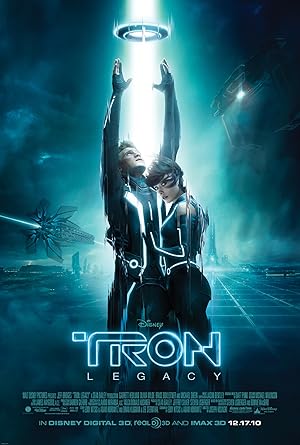
TRON: Legacy
Sam Flynn, the tech-savvy 27-year-old son of Kevin Flynn, looks into his father's disappearance and finds himself pulled into the same world of fierce programs and gladiatorial games where his father has been living for 20 years. Along with Kevin's loyal confidant Quorra, father and son embark on a life-and-death journey across a visually-stunning cyber universe that has become far more advanced and exceedingly dangerous. Meanwhile, the malevolent program CLU, who dominates the digital world, plans to invade the real world and will stop at nothing to prevent their escape.
Despite a enormous budget of $170.0M, TRON: Legacy became a solid performer, earning $409.9M worldwide—a 141% return. This commercial performance validated the ambitious narrative scope, proving that audiences embrace unconventional structure even at blockbuster scale.
Nominated for 1 Oscar. 10 wins & 52 nominations


Plot Structure
Story beats plotted across runtime


Narrative Arc
Emotional journey through the story's key moments
Story Circle
Blueprint 15-beat structure
Arcplot Score Breakdown
Weighted: Precision (70%) + Arc (15%) + Theme (15%)
TRON: Legacy (2010) exhibits deliberately positioned story structure, characteristic of Joseph Kosinski's storytelling approach. This structural analysis examines how the film's 15-point plot structure maps to proven narrative frameworks across 2 hours and 6 minutes. With an Arcplot score of 6.5, the film balances conventional beats with creative variation.
Characters
Cast & narrative archetypes

Sam Flynn
Kevin Flynn
Quorra
Clu
Alan Bradley
Tron
Castor / Zuse
Main Cast & Characters
Sam Flynn
Played by Garrett Hedlund
The son of Kevin Flynn who enters the Grid to find his missing father and becomes caught in a digital war.
Kevin Flynn
Played by Jeff Bridges
The creator of the Grid who has been trapped in the digital world for 20 years, seeking perfection.
Quorra
Played by Olivia Wilde
An idealistic ISO and Kevin's loyal protégé who dreams of the real world and helps Sam.
Clu
Played by Jeff Bridges
Kevin Flynn's digital doppelganger who became obsessed with creating the perfect system through tyranny.
Alan Bradley
Played by Bruce Boxleitner
Kevin Flynn's business partner and friend who encourages Sam to investigate his father's disappearance.
Tron
Played by Bruce Boxleitner
The security program created by Alan Bradley, corrupted into Rinzler and forced to serve Clu.
Castor / Zuse
Played by Michael Sheen
A flamboyant program who runs the End of Line club and plays both sides for his own survival.
Structural Analysis
The Status Quo at 1 minutes (1% through the runtime) establishes Young Sam Flynn listens to his father Kevin tell stories about the Grid, establishing their close bond before Kevin's disappearance. Sam's world is about to be shattered.. The analysis reveals that this early placement immediately immerses viewers in the story world.
The inciting incident occurs at 14 minutes when Sam investigates Flynn's Arcade and discovers the hidden basement lab. Finding his father's computer system active after 20 years disrupts everything Sam believed about his disappearance.. At 11% through the film, this Disruption aligns precisely with traditional story structure. This beat shifts the emotional landscape, launching the protagonist into the central conflict.
The First Threshold at 31 minutes marks the transition into Act II, occurring at 25% of the runtime. This reveals the protagonist's commitment to Sam survives the light cycle battle and is brought before CLU, who he realizes is his father's creation gone rogue. Sam actively chooses to fight and escape rather than submit, fully entering the Grid's conflict., moving from reaction to action.
At 63 minutes, the Midpoint arrives at 50% of the runtime—precisely centered, creating perfect narrative symmetry. Structural examination shows that this crucial beat At the End of Line Club, Zuse betrays them to CLU. Quorra is captured and Kevin's identity disc is taken. The stakes raise dramatically—CLU now has the means to escape into the real world., fundamentally raising what's at risk. The emotional intensity shifts, dividing the narrative into clear before-and-after phases.
The Collapse moment at 94 minutes (75% through) represents the emotional nadir. Here, CLU confronts Kevin on the flight deck with Quorra and Sam as hostages. Kevin faces his own flawed creation and the genocide he inadvertently caused. All seems lost as CLU controls the portal., shows the protagonist at their lowest point. This beat's placement in the final quarter sets up the climactic reversal.
The Second Threshold at 100 minutes initiates the final act resolution at 80% of the runtime. Sam realizes he must give Quorra his father's identity and get her to safety in the real world. Kevin understands he must reintegrate with CLU to stop him. Both accept their roles in the synthesis., demonstrating the transformation achieved throughout the journey.
Emotional Journey
TRON: Legacy's emotional architecture traces a deliberate progression across 15 carefully calibrated beats.
Narrative Framework
This structural analysis employs proven narrative structure principles that track dramatic progression. By mapping TRON: Legacy against these established plot points, we can identify how Joseph Kosinski utilizes or subverts traditional narrative conventions. The plot point approach reveals not only adherence to structural principles but also creative choices that distinguish TRON: Legacy within the action genre.
Joseph Kosinski's Structural Approach
Among the 4 Joseph Kosinski films analyzed on Arcplot, the average structural score is 6.0, demonstrating varied approaches to story architecture. TRON: Legacy represents one of the director's most structurally precise works. For comparative analysis, explore the complete Joseph Kosinski filmography.
Comparative Analysis
Additional action films include The Bad Guys, Puss in Boots and Venom: The Last Dance. For more Joseph Kosinski analyses, see Only the Brave, Top Gun: Maverick and Oblivion.
Plot Points by Act
Act I
SetupStatus Quo
Young Sam Flynn listens to his father Kevin tell stories about the Grid, establishing their close bond before Kevin's disappearance. Sam's world is about to be shattered.
Theme
Alan Bradley tells adult Sam: "Your father was about perfection. The Grid was his attempt to create a perfect system." Theme of perfection vs. humanity, control vs. freedom established.
Worldbuilding
Adult Sam lives recklessly, pulling pranks on ENCOM. He's a brilliant but directionless orphan avoiding his father's legacy. Alan reveals Kevin sent a page from the old arcade.
Disruption
Sam investigates Flynn's Arcade and discovers the hidden basement lab. Finding his father's computer system active after 20 years disrupts everything Sam believed about his disappearance.
Resistance
Sam explores the lab, powers up the system, and is digitized into the Grid. He's captured, processed, and forced into gladiatorial disc games. He doesn't yet understand this world or his purpose here.
Act II
ConfrontationFirst Threshold
Sam survives the light cycle battle and is brought before CLU, who he realizes is his father's creation gone rogue. Sam actively chooses to fight and escape rather than submit, fully entering the Grid's conflict.
Mirror World
Quorra rescues Sam and takes him to Kevin Flynn in the Outlands. This relationship will teach Sam about purpose, legacy, and what it means to fight for others rather than just himself.
Premise
Sam reunites with his father and learns about the Grid, ISOs, CLU's betrayal, and the genocide of a digital race. Father and son reconnect. Quorra shows Sam the beauty of this world. They plan to reach the portal.
Midpoint
At the End of Line Club, Zuse betrays them to CLU. Quorra is captured and Kevin's identity disc is taken. The stakes raise dramatically—CLU now has the means to escape into the real world.
Opposition
Sam and Kevin must infiltrate CLU's ship to rescue Quorra and retrieve the disc. Tensions rise between father and son about action vs. inaction. CLU's forces close in. The window to escape narrows.
Collapse
CLU confronts Kevin on the flight deck with Quorra and Sam as hostages. Kevin faces his own flawed creation and the genocide he inadvertently caused. All seems lost as CLU controls the portal.
Crisis
Kevin contemplates his failures and the cost of his pursuit of perfection. Sam and Quorra are separated. The dark realization that Kevin may need to sacrifice himself to stop CLU settles in.
Act III
ResolutionSecond Threshold
Sam realizes he must give Quorra his father's identity and get her to safety in the real world. Kevin understands he must reintegrate with CLU to stop him. Both accept their roles in the synthesis.
Synthesis
The final battle at the portal. Sam and Quorra fight to escape while Kevin confronts CLU. Kevin sacrifices himself, reintegrating with CLU and destroying them both. Sam and Quorra escape to the real world.
Transformation
Sam and Quorra ride his motorcycle together into the sunrise. Sam has found purpose, embraced his father's legacy, and saved a life worth fighting for. The aimless rebel is now a protector with direction.