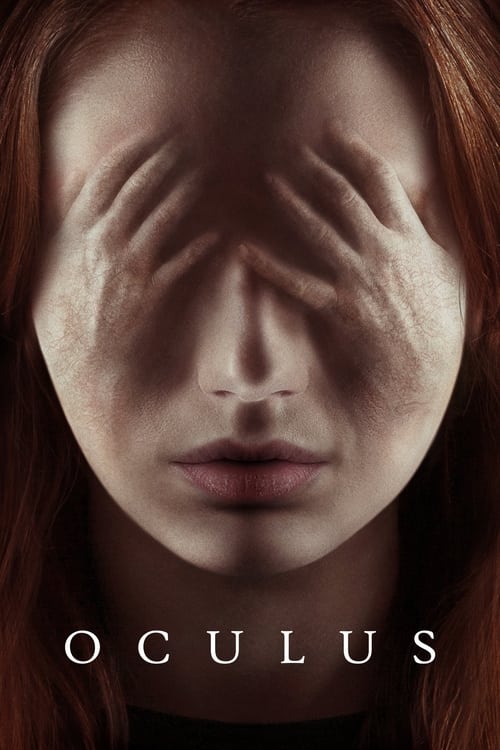
Oculus
A woman tries to exonerate her brother's murder conviction by proving that the crime was committed by a supernatural phenomenon.
Despite its small-scale budget of $5.0M, Oculus became a massive hit, earning $44.5M worldwide—a remarkable 789% return. The film's unique voice engaged audiences, showing that strong storytelling can transcend budget limitations.
3 wins & 17 nominations


Plot Structure
Story beats plotted across runtime


Narrative Arc
Emotional journey through the story's key moments
Story Circle
Blueprint 15-beat structure
Arcplot Score Breakdown
Weighted: Precision (70%) + Arc (15%) + Theme (15%)
Oculus (2014) showcases carefully calibrated story structure, characteristic of Mike Flanagan's storytelling approach. This structural analysis examines how the film's 15-point plot structure maps to proven narrative frameworks across 1 hour and 44 minutes. With an Arcplot score of 7.5, the film showcases strong structural fundamentals.
Characters
Cast & narrative archetypes

Kaylie Russell
Tim Russell
Marie Russell
Alan Russell
Young Kaylie Russell
Young Tim Russell
Michael Dumont
Main Cast & Characters
Kaylie Russell
Played by Karen Gillan
Determined young woman obsessed with proving a supernatural mirror killed her parents, meticulously planning to document and destroy it.
Tim Russell
Played by Brenton Thwaites
Recently released psychiatric patient struggling to reconcile rational explanations with traumatic childhood memories of supernatural horror.
Marie Russell
Played by Katee Sackhoff
Loving mother whose mental state deteriorates rapidly under the mirror's malevolent influence, becoming dangerous to her children.
Alan Russell
Played by Rory Cochrane
Father who purchases an antique mirror for his home office, gradually succumbing to its supernatural corruption and violence.
Young Kaylie Russell
Played by Annalise Basso
Protective older sister who witnesses her family's destruction and vows to one day prove and destroy the evil mirror.
Young Tim Russell
Played by Garrett Ryan
Traumatized young boy forced to kill his possessed father, carrying the psychological burden into adulthood.
Michael Dumont
Played by James Lafferty
Kaylie's supportive fiance who becomes concerned about her obsessive pursuit of the mirror.
Structural Analysis
The Status Quo at 1 minutes (1% through the runtime) establishes Tim Russell is released from psychiatric care after 11 years, declared sane and ready to reintegrate into society. His past trauma appears resolved through therapy and rational explanation.. Notably, this early placement immediately immerses viewers in the story world.
The inciting incident occurs at 12 minutes when Kaylie retrieves the Lasser Glass from auction and brings it to the family home. The mirror re-enters their lives, forcing Tim to confront what he's tried to forget. The presence of the mirror makes Tim's "normal life" impossible.. At 12% through the film, this Disruption aligns precisely with traditional story structure. This beat shifts the emotional landscape, launching the protagonist into the central conflict.
The First Threshold at 26 minutes marks the transition into Act II, occurring at 25% of the runtime. This illustrates the protagonist's commitment to Tim agrees to stay and participate in Kaylie's experiment to prove the mirror's supernatural evil. He actively chooses to engage with the mirror rather than walk away, crossing from his recovered life into the mirror's domain., moving from reaction to action.
At 52 minutes, the Midpoint arrives at 50% of the runtime—precisely centered, creating perfect narrative symmetry. The analysis reveals that this crucial beat The kill switch fails - Kaylie's fail-safe doesn't trigger as planned. The mirror has already compromised their safety measures. What seemed like a controlled experiment is revealed as the mirror's trap. Stakes raise enormously - they're not observers, they're victims., fundamentally raising what's at risk. The emotional intensity shifts, dividing the narrative into clear before-and-after phases.
The Collapse moment at 78 minutes (75% through) represents the emotional nadir. Here, Kaylie realizes she cannot trust anything she sees, hears, or remembers. Her entire documentation plan has failed. The mirror has isolated them completely. Past shows young Tim shooting their father - the trauma that destroyed Tim. All hope of defeating the mirror dies., demonstrates the protagonist at their lowest point. This beat's placement in the final quarter sets up the climactic reversal.
The Second Threshold at 85 minutes initiates the final act resolution at 82% of the runtime. Tim sees "Kaylie" approaching the mirror anchor point. He realizes the pattern - the mirror makes victims kill each other. He understands the truth, but this knowledge comes too late to save them. The synthesis is tragic recognition without power to act., demonstrating the transformation achieved throughout the journey.
Emotional Journey
Oculus's emotional architecture traces a deliberate progression across 15 carefully calibrated beats.
Narrative Framework
This structural analysis employs proven narrative structure principles that track dramatic progression. By mapping Oculus against these established plot points, we can identify how Mike Flanagan utilizes or subverts traditional narrative conventions. The plot point approach reveals not only adherence to structural principles but also creative choices that distinguish Oculus within the horror genre.
Mike Flanagan's Structural Approach
Among the 4 Mike Flanagan films analyzed on Arcplot, the average structural score is 7.1, reflecting strong command of classical structure. Oculus represents one of the director's most structurally precise works. For comparative analysis, explore the complete Mike Flanagan filmography.
Comparative Analysis
Additional horror films include Thinner, A Nightmare on Elm Street and Mary Reilly. For more Mike Flanagan analyses, see Doctor Sleep, Ouija: Origin of Evil and Before I Wake.
Plot Points by Act
Act I
SetupStatus Quo
Tim Russell is released from psychiatric care after 11 years, declared sane and ready to reintegrate into society. His past trauma appears resolved through therapy and rational explanation.
Theme
Kaylie tells Tim: "You see what it wants you to see." The central theme is established - reality cannot be trusted, perception is manipulated, and rational explanation may be delusion.
Worldbuilding
Kaylie has spent years tracking the Lasser Glass and preparing to document its evil. Tim wants to move on with his life. Flashbacks establish their childhood trauma - parents destroyed by the mirror. Dual timeline structure introduced.
Disruption
Kaylie retrieves the Lasser Glass from auction and brings it to the family home. The mirror re-enters their lives, forcing Tim to confront what he's tried to forget. The presence of the mirror makes Tim's "normal life" impossible.
Resistance
Tim resists Kaylie's plan, insisting on his therapeutic reality that their father was mentally ill. Kaylie shows him her elaborate documentation system - cameras, timers, fail-safes. She presents historical evidence of the mirror's victims. Tim debates staying versus leaving.
Act II
ConfrontationFirst Threshold
Tim agrees to stay and participate in Kaylie's experiment to prove the mirror's supernatural evil. He actively chooses to engage with the mirror rather than walk away, crossing from his recovered life into the mirror's domain.
Mirror World
The past timeline deepens - young Kaylie and Tim's relationship as protective siblings is fully established. Their bond represents the emotional core that the mirror will exploit. Their parents' relationship deteriorates under the mirror's influence.
Premise
The mirror's powers manifest. Timelines blur increasingly. Kaylie documents anomalies - temperature drops, spatial distortions, time gaps. The mirror manipulates perception and plants. Past shows parents' complete corruption. The "fun" is the creative horror of reality distortion.
Midpoint
The kill switch fails - Kaylie's fail-safe doesn't trigger as planned. The mirror has already compromised their safety measures. What seemed like a controlled experiment is revealed as the mirror's trap. Stakes raise enormously - they're not observers, they're victims.
Opposition
Reality completely fractures. Past and present merge seamlessly. The siblings can no longer distinguish timelines or trust their perceptions. Mirror shows them false escapes and manipulates their actions. Past timeline shows mother's death and father's complete possession.
Collapse
Kaylie realizes she cannot trust anything she sees, hears, or remembers. Her entire documentation plan has failed. The mirror has isolated them completely. Past shows young Tim shooting their father - the trauma that destroyed Tim. All hope of defeating the mirror dies.
Crisis
Complete disorientation. Kaylie and Tim cannot distinguish reality from hallucination. They believe they're escaping or fighting, but the mirror controls everything. Despair as they recognize they're repeating their parents' fate. No way out visible.
Act III
ResolutionSecond Threshold
Tim sees "Kaylie" approaching the mirror anchor point. He realizes the pattern - the mirror makes victims kill each other. He understands the truth, but this knowledge comes too late to save them. The synthesis is tragic recognition without power to act.
Synthesis
Tim tries to stop what he thinks is Kaylie approaching danger, but the mirror makes him see his sister where the anchor chain actually is. He pulls the trigger. Kaylie is killed by the fail-safe mechanism. Tim has killed his sister, repeating the family tragedy. Police arrive.
Transformation
Tim is arrested for Kaylie's murder, mirroring his arrest as a child for killing his father. He sits in the same position, destroyed by the same mirror. The cycle is complete. The mirror remains intact, ready for its next victims. Total tragic transformation - from "cured" to damned.