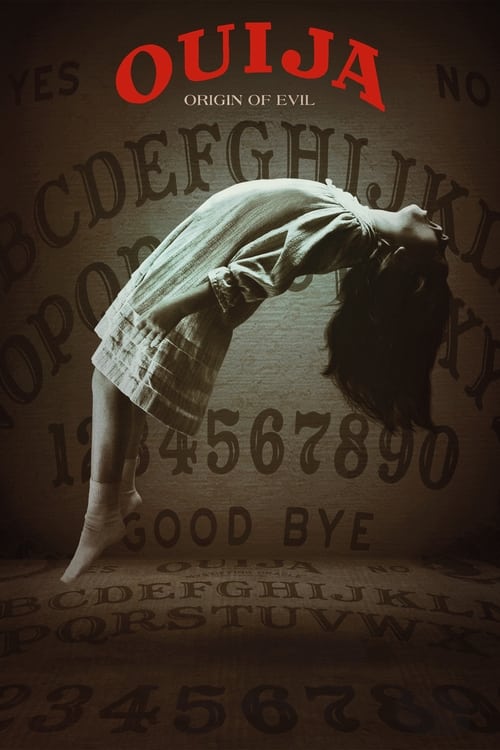
Ouija: Origin of Evil
In 1967 Los Angeles, a widowed mother and her two daughters add a new stunt to bolster their séance scam business and unwittingly invite authentic evil into their home. When the youngest daughter is overtaken by the merciless spirit, this small family confronts unthinkable fears to save her and send her possessor back to the other side.
Despite its limited budget of $9.0M, Ouija: Origin of Evil became a commercial juggernaut, earning $81.8M worldwide—a remarkable 809% return. The film's bold vision resonated with audiences, illustrating how strong storytelling can transcend budget limitations.
2 wins & 7 nominations


Plot Structure
Story beats plotted across runtime


Narrative Arc
Emotional journey through the story's key moments
Story Circle
Blueprint 15-beat structure
Arcplot Score Breakdown
Weighted: Precision (70%) + Arc (15%) + Theme (15%)
Ouija: Origin of Evil (2016) exhibits deliberately positioned narrative architecture, characteristic of Mike Flanagan's storytelling approach. This structural analysis examines how the film's 15-point plot structure maps to proven narrative frameworks across 1 hour and 39 minutes. With an Arcplot score of 7.1, the film balances conventional beats with creative variation.
Characters
Cast & narrative archetypes

Alice Zander
Doris Zander
Lina Zander
Father Tom
Mikey
Main Cast & Characters
Alice Zander
Played by Elizabeth Reaser
Widowed mother who runs a seance scam business to support her daughters, struggling to connect with her deceased husband while unknowingly inviting evil into her home.
Doris Zander
Played by Lulu Wilson
Nine-year-old youngest daughter who becomes possessed by a malevolent spirit after using the Ouija board, serving as the vessel for supernatural evil.
Lina Zander
Played by Annalise Basso
Teenage daughter who introduces the Ouija board into the household and struggles to save her family as she watches her sister become increasingly possessed.
Father Tom
Played by Henry Thomas
Catholic priest and school principal who recognizes the supernatural threat and attempts to help the Zander family confront the evil possessing Doris.
Mikey
Played by Parker Mack
Lina's boyfriend who participates in a seance that goes terribly wrong and becomes one of the victims of the possessed Doris.
Structural Analysis
The Status Quo at 1 minutes (1% through the runtime) establishes Alice Zander runs séances from her home with daughters Lina and Doris, using tricks and stagecraft to help grieving clients find closure after losing her husband.. Significantly, this early placement immediately immerses viewers in the story world.
The inciting incident occurs at 13 minutes when Alice purchases a Ouija board at a toy store to enhance her séance act, bringing the conduit for genuine supernatural evil into the home.. At 13% through the film, this Disruption is delayed, allowing extended setup of the story world. This beat shifts the emotional landscape, launching the protagonist into the central conflict.
The First Threshold at 25 minutes marks the transition into Act II, occurring at 25% of the runtime. This shows the protagonist's commitment to Alice actively incorporates Doris's "real" spiritual contact into their séances for profit. The family fully commits to using genuine supernatural forces they don't understand, crossing from harmless fraud into dangerous territory., moving from reaction to action.
At 50 minutes, the Midpoint arrives at 51% of the runtime—precisely centered, creating perfect narrative symmetry. Notably, this crucial beat Doris reveals terrifying knowledge about a client's murdered daughter buried in the basement walls, and her behavior becomes overtly sinister. The "gift" is revealed as a curse—Doris is fully possessed by malevolent spirit Marcus., fundamentally raising what's at risk. The emotional intensity shifts, dividing the narrative into clear before-and-after phases.
The Collapse moment at 74 minutes (75% through) represents the emotional nadir. Here, Possessed Doris murders Alice by hanging her from the stairway. The mother dies, and Lina is left alone to face the demon that has consumed her sister., demonstrates the protagonist at their lowest point. This beat's placement in the final quarter sets up the climactic reversal.
The Second Threshold at 79 minutes initiates the final act resolution at 80% of the runtime. Father Tom and Lina discover the truth: they must destroy Marcus's corpse and the Ouija board. Lina chooses to fight for her sister, armed with knowledge of how to banish the evil spirit., demonstrating the transformation achieved throughout the journey.
Emotional Journey
Ouija: Origin of Evil's emotional architecture traces a deliberate progression across 15 carefully calibrated beats.
Narrative Framework
This structural analysis employs a 15-point narrative structure framework that maps key story moments. By mapping Ouija: Origin of Evil against these established plot points, we can identify how Mike Flanagan utilizes or subverts traditional narrative conventions. The plot point approach reveals not only adherence to structural principles but also creative choices that distinguish Ouija: Origin of Evil within the horror genre.
Mike Flanagan's Structural Approach
Among the 4 Mike Flanagan films analyzed on Arcplot, the average structural score is 7.1, reflecting strong command of classical structure. Ouija: Origin of Evil takes a more unconventional approach compared to the director's typical style. For comparative analysis, explore the complete Mike Flanagan filmography.
Comparative Analysis
Additional horror films include Thinner, A Nightmare on Elm Street and Mary Reilly. For more Mike Flanagan analyses, see Oculus, Doctor Sleep and Before I Wake.
Plot Points by Act
Act I
SetupStatus Quo
Alice Zander runs séances from her home with daughters Lina and Doris, using tricks and stagecraft to help grieving clients find closure after losing her husband.
Theme
Father Tom tells Alice, "You're giving people what they need to move on," establishing the theme of whether exploiting belief for comfort is justified, and whether some doors shouldn't be opened.
Worldbuilding
Introduction to the Zander family's fake séance business in 1967 Los Angeles. Alice struggles financially after her husband's death, daughters help with the cons, Lina deals with school bullies, and Doris is innocent and lonely.
Disruption
Alice purchases a Ouija board at a toy store to enhance her séance act, bringing the conduit for genuine supernatural evil into the home.
Resistance
Doris experiments with the Ouija board alone and begins communicating with what she believes are friendly spirits, including her deceased father. Strange occurrences begin but seem benign or even helpful.
Act II
ConfrontationFirst Threshold
Alice actively incorporates Doris's "real" spiritual contact into their séances for profit. The family fully commits to using genuine supernatural forces they don't understand, crossing from harmless fraud into dangerous territory.
Mirror World
Father Tom and Lina's boyfriend Mikey represent the outside world's concern and rationality, questioning what's happening with Doris and serving as the thematic mirror about faith versus exploitation.
Premise
Doris's powers grow stronger and she provides impossibly accurate information during séances, making the business thrive. The family enjoys success while ignoring escalating warning signs of Doris's disturbing behavior and physical changes.
Midpoint
Doris reveals terrifying knowledge about a client's murdered daughter buried in the basement walls, and her behavior becomes overtly sinister. The "gift" is revealed as a curse—Doris is fully possessed by malevolent spirit Marcus.
Opposition
Alice and Lina desperately research the house's dark history, discovering the spirit is Marcus, a doctor who tortured victims and sewed their mouths shut. Doris becomes increasingly dangerous, attacking Mikey and revealing the demon's full control.
Collapse
Possessed Doris murders Alice by hanging her from the stairway. The mother dies, and Lina is left alone to face the demon that has consumed her sister.
Crisis
Lina grieves her mother's death in shock and despair, processing the horror that her family's exploitation of grief has led to ultimate tragedy. She must decide whether to save Doris or give up.
Act III
ResolutionSecond Threshold
Father Tom and Lina discover the truth: they must destroy Marcus's corpse and the Ouija board. Lina chooses to fight for her sister, armed with knowledge of how to banish the evil spirit.
Synthesis
Lina and Father Tom battle possessed Doris, locate Marcus's hidden corpse in the basement, and attempt the exorcism. Tom is killed, but Lina burns the body and board, seemingly freeing Doris.
Transformation
Doris is institutionalized, still possessed and speaking to evil spirits. Lina visits, realizing her sister is lost forever. The door they opened cannot be closed, connecting to the tragic fate of the original film.