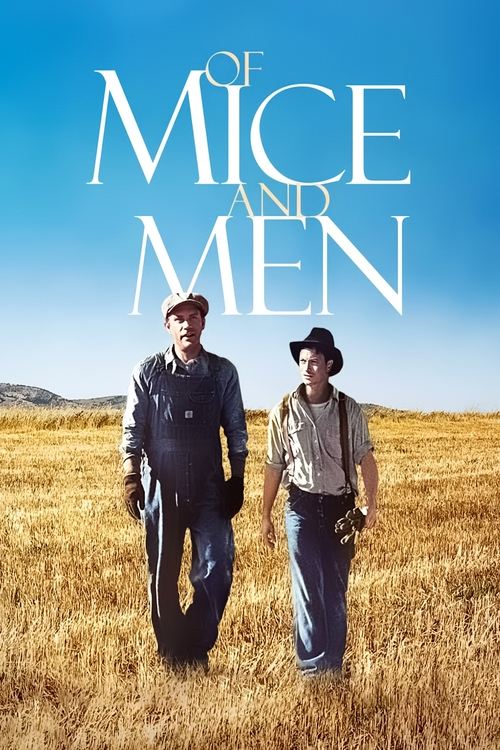
Of Mice and Men
Two drifters, one a gentle but slow giant, try to make money working the fields during the Depression so they can fulfill their dreams.
The film earned $5.5M at the global box office.


Plot Structure
Story beats plotted across runtime


Narrative Arc
Emotional journey through the story's key moments
Story Circle
Blueprint 15-beat structure
Arcplot Score Breakdown
Weighted: Precision (70%) + Arc (15%) + Theme (15%)
Of Mice and Men (1992) exhibits carefully calibrated dramatic framework, characteristic of Gary Sinise's storytelling approach. This structural analysis examines how the film's 15-point plot structure maps to proven narrative frameworks across 1 hour and 50 minutes. With an Arcplot score of 6.8, the film balances conventional beats with creative variation.
Characters
Cast & narrative archetypes

George Milton
Lennie Small
Curley
Curley's Wife
Slim
Candy
Crooks
Main Cast & Characters
George Milton
Played by Gary Sinise
A sharp-witted, protective migrant worker who cares for his mentally disabled companion Lennie while harboring dreams of owning their own land.
Lennie Small
Played by John Malkovich
A large, mentally disabled man with childlike innocence and immense physical strength who loves soft things and dreams of tending rabbits.
Curley
Played by Casey Siemaszko
The aggressive, insecure son of the ranch boss who picks fights to prove his dominance and is possessive of his wife.
Curley's Wife
Played by Sherilyn Fenn
A lonely, flirtatious young woman trapped in a loveless marriage who dreams of being a movie star and craves attention.
Slim
Played by John Terry
The respected, wise mule driver who serves as the moral compass of the ranch and shows understanding toward George and Lennie.
Candy
Played by Ray Walston
An aging, one-handed ranch hand who joins George and Lennie's dream of owning land after losing his beloved old dog.
Crooks
Played by Joe Morton
The isolated Black stable hand who lives apart from the other workers and initially resists friendship due to years of discrimination.
Structural Analysis
The Status Quo at 1 minutes (1% through the runtime) establishes George and Lennie flee through fields, escaping a mob from Weed. Shows their status as wandering ranch hands running from trouble caused by Lennie's mental disability.. The analysis reveals that this early placement immediately immerses viewers in the story world.
The inciting incident occurs at 14 minutes when George and Lennie arrive at the new ranch, entering a precarious situation where they must hide Lennie's incident in Weed and navigate the dangerous social dynamics of the bunkhouse.. At 12% through the film, this Disruption aligns precisely with traditional story structure. This beat shifts the emotional landscape, launching the protagonist into the central conflict.
The First Threshold at 28 minutes marks the transition into Act II, occurring at 25% of the runtime. This illustrates the protagonist's commitment to Candy offers his life savings ($350) to join George and Lennie's dream of owning a farm. The dream becomes tangible and real—they could actually do it. George actively chooses to trust Candy and commit to making the dream happen., moving from reaction to action.
At 55 minutes, the Midpoint arrives at 50% of the runtime—precisely centered, creating perfect narrative symmetry. Of particular interest, this crucial beat Lennie crushes Curley's hand when defending himself. False victory: Curley is intimidated into silence. False defeat: Lennie's dangerous strength is fully revealed, and the threat of consequences escalates. The stakes are now life and death., fundamentally raising what's at risk. The emotional intensity shifts, dividing the narrative into clear before-and-after phases.
The Collapse moment at 83 minutes (75% through) represents the emotional nadir. Here, Lennie accidentally kills Curley's wife in the barn while touching her hair. The whiff of death is literal. The dream dies instantly. Everything George has worked to protect is destroyed. There is no escape from this., reveals the protagonist at their lowest point. This beat's placement in the final quarter sets up the climactic reversal.
The Second Threshold at 88 minutes initiates the final act resolution at 80% of the runtime. George finds Lennie at their predetermined hideout by the river. He makes the agonizing decision to kill Lennie himself mercifully rather than let him be tortured by the mob. Synthesis of the theme: true companionship means protecting those you love, even through the ultimate sacrifice., demonstrating the transformation achieved throughout the journey.
Emotional Journey
Of Mice and Men's emotional architecture traces a deliberate progression across 15 carefully calibrated beats.
Narrative Framework
This structural analysis employs structural analysis methodology used to understand storytelling architecture. By mapping Of Mice and Men against these established plot points, we can identify how Gary Sinise utilizes or subverts traditional narrative conventions. The plot point approach reveals not only adherence to structural principles but also creative choices that distinguish Of Mice and Men within the drama genre.
Comparative Analysis
Additional drama films include After Thomas, South Pacific and Dirty Dancing: Havana Nights.
Plot Points by Act
Act I
SetupStatus Quo
George and Lennie flee through fields, escaping a mob from Weed. Shows their status as wandering ranch hands running from trouble caused by Lennie's mental disability.
Theme
By the campfire, George tells Lennie about their dream: "Guys like us got no family. They got nobody in the world that gives a hoot in hell about 'em. But not us." The theme of companionship versus loneliness is established.
Worldbuilding
Establishes George and Lennie's relationship dynamic, Lennie's mental limitations and strength, their shared dream of owning land, and the harsh reality of Depression-era migrant workers. George protects Lennie while Lennie's innocence creates constant danger.
Disruption
George and Lennie arrive at the new ranch, entering a precarious situation where they must hide Lennie's incident in Weed and navigate the dangerous social dynamics of the bunkhouse.
Resistance
George and Lennie meet the ranch inhabitants: the suspicious boss, threatening Curley, lonely Curley's wife, friendly Slim, and wise old Candy. George navigates whether they can survive here long enough to earn their stake. Candy becomes a potential ally.
Act II
ConfrontationFirst Threshold
Candy offers his life savings ($350) to join George and Lennie's dream of owning a farm. The dream becomes tangible and real—they could actually do it. George actively chooses to trust Candy and commit to making the dream happen.
Mirror World
Slim shows understanding and compassion toward George and Lennie's friendship, legitimizing their bond in a world that doesn't value such connections. Slim represents the wisdom and humanity that the theme celebrates.
Premise
The promise of the premise: the dream feels achievable. George, Lennie, and Candy plan their farm in detail. Lennie gets a puppy. The bond between George and Lennie deepens. However, threats emerge: Curley's aggression, his wife's loneliness and recklessness, and Lennie's inability to control his strength.
Midpoint
Lennie crushes Curley's hand when defending himself. False victory: Curley is intimidated into silence. False defeat: Lennie's dangerous strength is fully revealed, and the threat of consequences escalates. The stakes are now life and death.
Opposition
Tension builds as Lennie accidentally kills his puppy, showing his inability to control his strength even with things he loves. Curley's wife becomes more persistent and dangerous. The dream begins to feel fragile. Crooks challenges the dream's viability, exposing its improbability.
Collapse
Lennie accidentally kills Curley's wife in the barn while touching her hair. The whiff of death is literal. The dream dies instantly. Everything George has worked to protect is destroyed. There is no escape from this.
Crisis
George discovers the body and realizes what must happen. Candy finds them. The mob forms with Curley leading, intent on lynching Lennie. George takes Carlson's gun, knowing he must reach Lennie first. Dark night of the soul: George must choose between abandoning Lennie to a brutal death or doing the unthinkable himself.
Act III
ResolutionSecond Threshold
George finds Lennie at their predetermined hideout by the river. He makes the agonizing decision to kill Lennie himself mercifully rather than let him be tortured by the mob. Synthesis of the theme: true companionship means protecting those you love, even through the ultimate sacrifice.
Synthesis
George comforts Lennie with the story of their dream farm one final time. As Lennie envisions the rabbits, George shoots him in the back of the head. The mob arrives. Slim understands what George had to do and leads him away. The dream and the friendship end.
Transformation
George walks away with Slim, utterly alone now, having lost both his companion and his dream. Transformed from a man with hope and purpose into just another solitary migrant worker. The final image mirrors the opening but shows devastating loss rather than partnership.