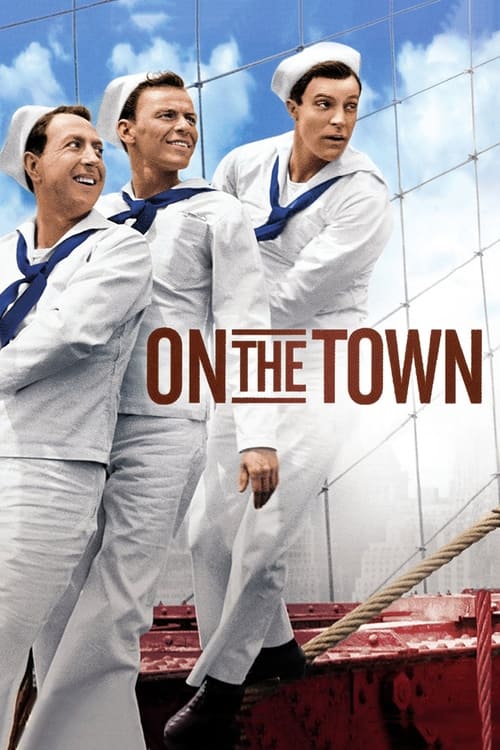
On the Town
Three sailors wreak havoc as they search for love during a whirlwind 24-hour leave in New York City.
Despite its limited budget of $2.1M, On the Town became a financial success, earning $4.4M worldwide—a 108% return.
1 Oscar. 4 wins & 2 nominations


Plot Structure
Story beats plotted across runtime


Narrative Arc
Emotional journey through the story's key moments
Story Circle
Blueprint 15-beat structure
Arcplot Score Breakdown
Weighted: Precision (70%) + Arc (15%) + Theme (15%)
On the Town (1949) exhibits strategically placed plot construction, characteristic of Stanley Donen's storytelling approach. This structural analysis examines how the film's 15-point plot structure maps to proven narrative frameworks across 1 hour and 38 minutes. With an Arcplot score of 7.4, the film balances conventional beats with creative variation.
Characters
Cast & narrative archetypes

Gabey
Chip
Ozzie
Ivy Smith
Brunhilde Esterhazy
Claire Huddesen
Madame Dilyovska
Lucy Schmeeler
Main Cast & Characters
Gabey
Played by Gene Kelly
An optimistic and romantic sailor who falls in love with a subway poster girl named Ivy Smith and spends his 24-hour leave searching for her across New York City.
Chip
Played by Frank Sinatra
A shy and rule-following sailor who plans to see New York by guidebook but gets swept up by aggressive cab driver Brunhilde Esterhazy.
Ozzie
Played by Jules Munshin
A fun-loving, girl-crazy sailor who is the most carefree of the three friends and quickly becomes entangled with anthropology student Claire Huddesen.
Ivy Smith
Played by Vera-Ellen
A shy dance student from a small town working her way through school, crowned Miss Turnstiles despite her humble origins and secret life as a cooch dancer.
Brunhilde Esterhazy
Played by Betty Garrett
An aggressive and man-hungry female cab driver who immediately pursues Chip and drags him around New York against his planned itinerary.
Claire Huddesen
Played by Ann Miller
A wealthy anthropology student at the Museum of Natural History who becomes fascinated with Ozzie as a specimen of primitive man.
Madame Dilyovska
Played by Florence Bates
Ivy's demanding and strict ballet instructor at Carnegie Hall who disapproves of her student's moonlighting job.
Lucy Schmeeler
Played by Alice Pearce
Claire's plain and perpetually sniffling roommate who gets set up on an awkward date with the group.
Structural Analysis
The Status Quo at 1 minutes (1% through the runtime) establishes Three sailors (Gabey, Chip, Ozzie) wake up on their ship in the Brooklyn Navy Yard, singing "New York, New York" as they begin their 24-hour shore leave. They are excited, energetic, and ready to see the city.. Of particular interest, this early placement immediately immerses viewers in the story world.
The inciting incident occurs at 12 minutes when Gabey declares he must find Miss Turnstiles before their leave ends. The simple sightseeing trip transforms into a romantic quest with a ticking clock, raising the stakes and giving the day urgent purpose.. At 12% through the film, this Disruption aligns precisely with traditional story structure. This beat shifts the emotional landscape, launching the protagonist into the central conflict.
The First Threshold at 24 minutes marks the transition into Act II, occurring at 25% of the runtime. This reveals the protagonist's commitment to All three sailors commit to their romantic pursuits and decide to continue the search together with their new female companions. They actively choose adventure and romance over playing it safe, fully entering the "mirror world" of possibility., moving from reaction to action.
At 48 minutes, the Midpoint arrives at 49% of the runtime—precisely centered, creating perfect narrative symmetry. Of particular interest, this crucial beat The group goes to Coney Island for a dream date. Everything seems perfect - the couples are falling in love, the day is magical. False victory: they believe they've conquered time and found true connection, but the clock is still ticking and secrets remain hidden., fundamentally raising what's at risk. The emotional intensity shifts, dividing the narrative into clear before-and-after phases.
The Collapse moment at 73 minutes (74% through) represents the emotional nadir. Here, Gabey and Ivy have a major fight about her deception. He walks away from her, seemingly ending the romance. The dream dies - what seemed like fate and magic is revealed to be built on illusion. With only hours left, the day appears ruined., reveals the protagonist at their lowest point. This beat's placement in the final quarter sets up the climactic reversal.
The Second Threshold at 78 minutes initiates the final act resolution at 80% of the runtime. Gabey realizes that the real Ivy - flaws and all - is better than the fantasy. He understands that genuine connection matters more than the illusion, and that their brief time together has real value. He chooses authenticity over idealization., demonstrating the transformation achieved throughout the journey.
Emotional Journey
On the Town's emotional architecture traces a deliberate progression across 15 carefully calibrated beats.
Narrative Framework
This structural analysis employs structural analysis methodology used to understand storytelling architecture. By mapping On the Town against these established plot points, we can identify how Stanley Donen utilizes or subverts traditional narrative conventions. The plot point approach reveals not only adherence to structural principles but also creative choices that distinguish On the Town within the music genre.
Stanley Donen's Structural Approach
Among the 5 Stanley Donen films analyzed on Arcplot, the average structural score is 7.4, reflecting strong command of classical structure. On the Town represents one of the director's most structurally precise works. For comparative analysis, explore the complete Stanley Donen filmography.
Comparative Analysis
Additional music films include South Pacific, Dirty Dancing: Havana Nights and Yesterday. For more Stanley Donen analyses, see Saturn 3, The Grass Is Greener and Charade.
Plot Points by Act
Act I
SetupStatus Quo
Three sailors (Gabey, Chip, Ozzie) wake up on their ship in the Brooklyn Navy Yard, singing "New York, New York" as they begin their 24-hour shore leave. They are excited, energetic, and ready to see the city.
Theme
Chip states the film's theme about making the most of limited time: "We've only got 24 hours" - establishing that this story is about seizing the moment and finding connection in fleeting time.
Worldbuilding
The sailors arrive in New York and plan their day. Gabey spots a poster of "Miss Turnstiles" (Ivy Smith) in the subway and becomes instantly infatuated. His friends agree to help him find her while seeing the sights. Establishes the ensemble dynamic and romantic quest structure.
Disruption
Gabey declares he must find Miss Turnstiles before their leave ends. The simple sightseeing trip transforms into a romantic quest with a ticking clock, raising the stakes and giving the day urgent purpose.
Resistance
The sailors begin searching for Ivy. Chip is pursued by aggressive cab driver Brunhilde, and Ozzie meets anthropologist Claire at the museum. The searches are chaotic and comedic, with each sailor getting sidetracked by romantic encounters. They debate whether to keep searching or give up.
Act II
ConfrontationFirst Threshold
All three sailors commit to their romantic pursuits and decide to continue the search together with their new female companions. They actively choose adventure and romance over playing it safe, fully entering the "mirror world" of possibility.
Mirror World
Gabey finally meets Ivy Smith at her dance academy. She represents everything he's dreamed of - beauty, sophistication, artistry. The B-story romantic relationship is established, embodying the theme that magical connection can happen in an instant.
Premise
The promise of the premise: three sailors and three women explore New York on a whirlwind romantic adventure. Musical numbers at various landmarks, dancing, comedy, and deepening connections. The fun the audience came for - romance, music, and the joy of the city.
Midpoint
The group goes to Coney Island for a dream date. Everything seems perfect - the couples are falling in love, the day is magical. False victory: they believe they've conquered time and found true connection, but the clock is still ticking and secrets remain hidden.
Opposition
Complications arise as Ivy's secret is revealed - she's not a sophisticated dancer but works at Coney Island. Gabey feels betrayed and lied to. The couples argue, time pressure intensifies, and the magical spell of the day begins to break. Reality intrudes on the fantasy.
Collapse
Gabey and Ivy have a major fight about her deception. He walks away from her, seemingly ending the romance. The dream dies - what seemed like fate and magic is revealed to be built on illusion. With only hours left, the day appears ruined.
Crisis
Gabey wanders alone, processing his disappointment and heartbreak. His friends try to find him and convince him to reconcile. The dark night of the soul as he grapples with whether idealized love or real connection matters more.
Act III
ResolutionSecond Threshold
Gabey realizes that the real Ivy - flaws and all - is better than the fantasy. He understands that genuine connection matters more than the illusion, and that their brief time together has real value. He chooses authenticity over idealization.
Synthesis
Gabey finds Ivy and they reconcile. All three couples reunite for a final celebration as their 24 hours run out. They race back to the ship, savoring every last moment together. Bittersweet finale as they say goodbye, knowing they've changed each other forever.
Transformation
Three new sailors disembark for their shore leave, beginning the same "New York, New York" song, mirroring the opening. But we see our sailors leaving, transformed by love and experience. The city continues its cycle, but these men have been changed by one perfect day.