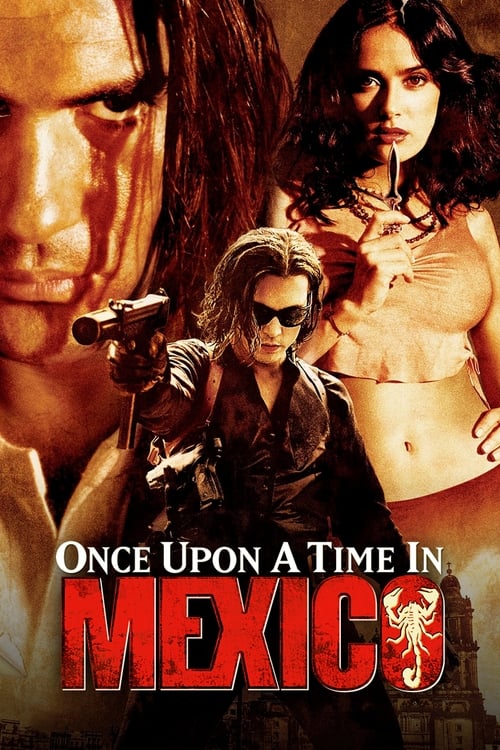
Once Upon a Time in Mexico
A corrupt CIA agent Sands hires hitman El Mariachi to assassinate a Mexican general hired by a drug kingpin attempting a coup d'état of the President of Mexico.
Despite a mid-range budget of $29.0M, Once Upon a Time in Mexico became a box office success, earning $98.8M worldwide—a 241% return.
3 wins & 6 nominations


Plot Structure
Story beats plotted across runtime


Narrative Arc
Emotional journey through the story's key moments
Story Circle
Blueprint 15-beat structure
Arcplot Score Breakdown
Weighted: Precision (70%) + Arc (15%) + Theme (15%)
Once Upon a Time in Mexico (2003) demonstrates precise plot construction, characteristic of Robert Rodriguez's storytelling approach. This structural analysis examines how the film's 15-point plot structure maps to proven narrative frameworks across 1 hour and 42 minutes. With an Arcplot score of 7.1, the film balances conventional beats with creative variation.
Structural Analysis
The Status Quo at 1 minutes (1% through the runtime) establishes CIA Agent Sands sits in a dingy Mexican cantina, establishing the seedy underworld where power brokers and killers operate in shadows. The image sets the tone of corruption and hidden agendas.. Structural examination shows that this early placement immediately immerses viewers in the story world.
The inciting incident occurs at 12 minutes when Sands locates El Mariachi in hiding and proposes a job: kill General Marquez during the Day of the Dead coup. El Mariachi's peaceful obscurity is shattered by the offer that touches his deepest wound - Marquez killed his wife Carolina and daughter.. At 12% through the film, this Disruption aligns precisely with traditional story structure. This beat shifts the emotional landscape, launching the protagonist into the central conflict.
The First Threshold at 26 minutes marks the transition into Act II, occurring at 25% of the runtime. This indicates the protagonist's commitment to El Mariachi accepts the mission and retrieves his guitar case full of weapons. He chooses to re-enter the world of violence, fully committing to the assassination of Marquez. His former mariachi partners Lorenzo and Fideo join him., moving from reaction to action.
At 51 minutes, the Midpoint arrives at 50% of the runtime—precisely centered, creating perfect narrative symmetry. Significantly, this crucial beat Sands' true nature is revealed as he kills his informant Belini after getting what he needs. Simultaneously, the coup timeline accelerates. This false defeat shows that everyone is being played - El Mariachi is just another pawn in Sands' complex scheme., fundamentally raising what's at risk. The emotional intensity shifts, dividing the narrative into clear before-and-after phases.
The Collapse moment at 77 minutes (75% through) represents the emotional nadir. Here, Ajedrez captures Sands and Barillo's doctor drills out his eyes, leaving him blinded and helpless. El Mariachi's partners are wounded in an ambush. The coup succeeds as Marquez takes the President hostage. All seems lost on every front., illustrates the protagonist at their lowest point. This beat's placement in the final quarter sets up the climactic reversal.
The Second Threshold at 82 minutes initiates the final act resolution at 80% of the runtime. Despite his blindness, Sands picks up his guns and heads toward Barillo - a young boy named Chicle becomes his guide. El Mariachi, remembering Carolina's warrior spirit, arms himself for the final assault. Each broken man finds unexpected resolve., demonstrating the transformation achieved throughout the journey.
Emotional Journey
Once Upon a Time in Mexico's emotional architecture traces a deliberate progression across 15 carefully calibrated beats.
Narrative Framework
This structural analysis employs proven narrative structure principles that track dramatic progression. By mapping Once Upon a Time in Mexico against these established plot points, we can identify how Robert Rodriguez utilizes or subverts traditional narrative conventions. The plot point approach reveals not only adherence to structural principles but also creative choices that distinguish Once Upon a Time in Mexico within the action genre.
Robert Rodriguez's Structural Approach
Among the 14 Robert Rodriguez films analyzed on Arcplot, the average structural score is 7.3, reflecting strong command of classical structure. Once Upon a Time in Mexico takes a more unconventional approach compared to the director's typical style. For comparative analysis, explore the complete Robert Rodriguez filmography.
Comparative Analysis
Additional action films include The Bad Guys, Puss in Boots and Venom: The Last Dance. For more Robert Rodriguez analyses, see Spy Kids: All the Time in the World, Spy Kids 3-D: Game Over and From Dusk Till Dawn.
Plot Points by Act
Act I
SetupStatus Quo
CIA Agent Sands sits in a dingy Mexican cantina, establishing the seedy underworld where power brokers and killers operate in shadows. The image sets the tone of corruption and hidden agendas.
Theme
Sands tells Belini about needing El Mariachi for a job, remarking on the nature of balance - "I want to restore the balance of power." The theme of maintaining equilibrium through violence and manipulation is introduced.
Worldbuilding
The world of corrupt Mexican politics, CIA operations, and cartel warfare is established. We meet Sands and his network of informants, learn of General Marquez's planned coup with cartel boss Barillo, and see the landscape of competing interests.
Disruption
Sands locates El Mariachi in hiding and proposes a job: kill General Marquez during the Day of the Dead coup. El Mariachi's peaceful obscurity is shattered by the offer that touches his deepest wound - Marquez killed his wife Carolina and daughter.
Resistance
Through flashbacks, we see El Mariachi's tragic past with Carolina and learn how Marquez murdered them. Sands elaborates his scheme, retired FBI agent Jorge Ramirez is recruited, and the various players take their positions. El Mariachi wrestles with whether to emerge from hiding.
Act II
ConfrontationFirst Threshold
El Mariachi accepts the mission and retrieves his guitar case full of weapons. He chooses to re-enter the world of violence, fully committing to the assassination of Marquez. His former mariachi partners Lorenzo and Fideo join him.
Mirror World
The extended flashback of El Mariachi's romance with Carolina reveals what he lost and what he fights for. Their love story - two gunslingers finding peace together - represents the life stolen from him and the humanity beneath the revenge.
Premise
The promise of the premise unfolds: elaborate action sequences, guitar-case weaponry, and stylized gunfights. El Mariachi and his crew navigate cartel territory. Sands manipulates multiple parties. AFN agent Ajedrez plays her own angle. The Day of the Dead approaches.
Midpoint
Sands' true nature is revealed as he kills his informant Belini after getting what he needs. Simultaneously, the coup timeline accelerates. This false defeat shows that everyone is being played - El Mariachi is just another pawn in Sands' complex scheme.
Opposition
Barillo's forces hunt the mariachis. Ajedrez is revealed as Barillo's daughter, a double agent. Sands' network crumbles as his informants are killed or turn against him. The President's motorcade is attacked. Every scheme begins unraveling simultaneously.
Collapse
Ajedrez captures Sands and Barillo's doctor drills out his eyes, leaving him blinded and helpless. El Mariachi's partners are wounded in an ambush. The coup succeeds as Marquez takes the President hostage. All seems lost on every front.
Crisis
Blinded Sands stumbles through the streets during Day of the Dead chaos. El Mariachi confronts his grief, remembering Carolina's death. The forces of corruption appear victorious. Each character faces their darkest moment before the final confrontation.
Act III
ResolutionSecond Threshold
Despite his blindness, Sands picks up his guns and heads toward Barillo - a young boy named Chicle becomes his guide. El Mariachi, remembering Carolina's warrior spirit, arms himself for the final assault. Each broken man finds unexpected resolve.
Synthesis
The Day of the Dead climax erupts. Blinded Sands shoots his way to Barillo, guided by sound alone. El Mariachi storms the palace, engaging Marquez in a brutal showdown. Ramirez saves the President. The coup collapses as the conspirators are killed.
Transformation
El Mariachi kills Marquez, avenging Carolina and their daughter. He walks away from the carnage, guitar case in hand, disappearing into legend once more. The blind Sands survives, walking into the sunset with Chicle. Justice is served through violence, but at tremendous cost.