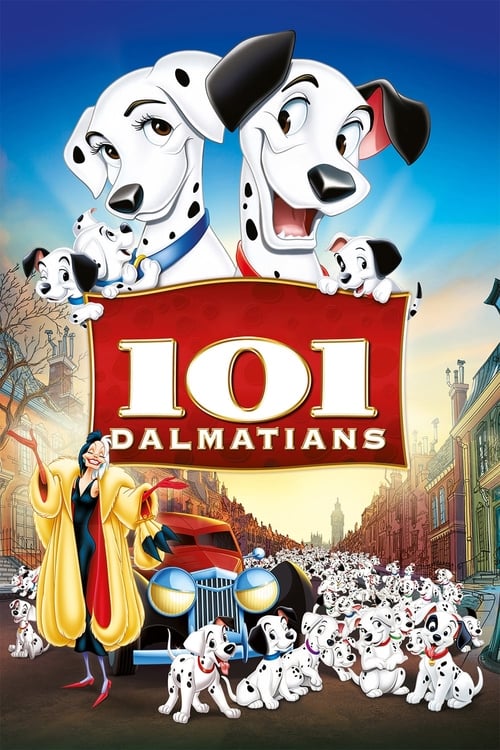
One Hundred and One Dalmatians
When a litter of dalmatian puppies are abducted by the minions of Cruella De Vil, the parents must find them before she uses them for a diabolical fashion statement.
Despite its small-scale budget of $3.6M, One Hundred and One Dalmatians became a commercial juggernaut, earning $303.0M worldwide—a remarkable 8317% return. The film's innovative storytelling resonated with audiences, illustrating how strong storytelling can transcend budget limitations.
1 BAFTA Award2 wins & 1 nomination


Plot Structure
Story beats plotted across runtime


Narrative Arc
Emotional journey through the story's key moments
Story Circle
Blueprint 15-beat structure
Arcplot Score Breakdown
Weighted: Precision (70%) + Arc (15%) + Theme (15%)
One Hundred and One Dalmatians (1961) reveals carefully calibrated narrative design, characteristic of Hamilton Luske's storytelling approach. This structural analysis examines how the film's 15-point plot structure maps to proven narrative frameworks across 1 hour and 19 minutes. With an Arcplot score of 6.7, the film balances conventional beats with creative variation.
Characters
Cast & narrative archetypes

Pongo
Perdita
Cruella de Vil
Roger Radcliffe
Anita Radcliffe
Nanny
Colonel
Sergeant Tibbs
Jasper Badun
Horace Badun
Main Cast & Characters
Pongo
Played by Rod Taylor
A clever and devoted Dalmatian who orchestrates his owner's romance and leads the rescue mission to save the puppies from Cruella de Vil.
Perdita
Played by Cate Bauer
Pongo's loving mate and devoted mother who bravely journeys through the snow to rescue her stolen puppies.
Cruella de Vil
Played by Betty Lou Gerson
A wealthy, fur-obsessed socialite who schemes to kidnap Dalmatian puppies to make them into a spotted fur coat.
Roger Radcliffe
Played by Ben Wright
A struggling songwriter and Pongo's owner who stands up to Cruella and writes a song mocking her villainy.
Anita Radcliffe
Played by Lisa Davis
Perdita's kind owner and Roger's wife, a former schoolmate of Cruella who becomes caught in her schemes.
Nanny
Played by Martha Wentworth
The Radcliffes' loyal and protective housekeeper who bravely fights off the dognappers.
Colonel
Played by J. Pat O'Malley
A dignified Old English Sheepdog who helps coordinate the Twilight Bark and aids in the rescue of the puppies.
Sergeant Tibbs
Played by David Frankham
A brave and resourceful tabby cat who infiltrates Hell Hall to locate the puppies and helps them escape.
Jasper Badun
Played by J. Pat O'Malley
One of Cruella's bumbling henchmen hired to kidnap and guard the Dalmatian puppies.
Horace Badun
Played by Frederick Worlock
The dimwitted partner of Jasper, equally incompetent in carrying out Cruella's evil plans.
Structural Analysis
The Status Quo at 1 minutes (1% through the runtime) establishes Pongo, a bachelor Dalmatian, lives in London with his equally bachelor "pet" Roger Radcliffe, a struggling songwriter. Pongo narrates their comfortable but lonely existence, establishing the world before love disrupts everything.. Of particular interest, this early placement immediately immerses viewers in the story world.
The inciting incident occurs at 10 minutes when Cruella De Vil, Anita's old schoolmate, arrives like a whirlwind of cigarette smoke and fur obsession. She demands to buy the expected puppies for a fur coat, revealing herself as a threat to the family's happiness. Roger insults her and throws her out, but the menace is established.. At 12% through the film, this Disruption aligns precisely with traditional story structure. This beat shifts the emotional landscape, launching the protagonist into the central conflict.
The First Threshold at 20 minutes marks the transition into Act II, occurring at 25% of the runtime. This demonstrates the protagonist's commitment to Cruella's henchmen Jasper and Horace break into the house and steal all fifteen puppies while the family is out on a walk. The theft forces Pongo and Perdita into action—they must leave their comfortable domestic world and enter the dangerous night to rescue their children., moving from reaction to action.
At 40 minutes, the Midpoint arrives at 50% of the runtime—precisely centered, creating perfect narrative symmetry. The analysis reveals that this crucial beat Pongo and Perdita find their fifteen puppies alive at Hell Hall—a false victory! But the discovery raises stakes: there are 84 additional Dalmatian puppies also imprisoned, all destined for Cruella's fur coat. The mission expands from rescuing their own to saving all 99 puppies. The fun is over; the real challenge begins., fundamentally raising what's at risk. The emotional intensity shifts, dividing the narrative into clear before-and-after phases.
The Collapse moment at 59 minutes (75% through) represents the emotional nadir. Here, Cruella spots the dalmatians on the road as they attempt to reach the truck to London. She pursues them in her car with homicidal rage, driving like a maniac. The puppies are trapped, exhausted, and exposed. Death feels imminent—either from Cruella's vehicle or from freezing. This is the darkest moment., indicates the protagonist at their lowest point. This beat's placement in the final quarter sets up the climactic reversal.
The Second Threshold at 63 minutes initiates the final act resolution at 80% of the runtime. The soot disguise works! The dalmatians begin boarding the truck to London right under Cruella's nose. The realization that cleverness and unity can defeat cruelty empowers them. Pongo synthesizes everything learned—community (Twilight Bark), courage, and love—into a final push for freedom., demonstrating the transformation achieved throughout the journey.
Emotional Journey
One Hundred and One Dalmatians's emotional architecture traces a deliberate progression across 15 carefully calibrated beats.
Narrative Framework
This structural analysis employs systematic plot point analysis that identifies crucial turning points. By mapping One Hundred and One Dalmatians against these established plot points, we can identify how Hamilton Luske utilizes or subverts traditional narrative conventions. The plot point approach reveals not only adherence to structural principles but also creative choices that distinguish One Hundred and One Dalmatians within the adventure genre.
Hamilton Luske's Structural Approach
Among the 3 Hamilton Luske films analyzed on Arcplot, the average structural score is 7.2, reflecting strong command of classical structure. One Hundred and One Dalmatians takes a more unconventional approach compared to the director's typical style. For comparative analysis, explore the complete Hamilton Luske filmography.
Comparative Analysis
Additional adventure films include The Black Stallion, The Bad Guys and Puss in Boots. For more Hamilton Luske analyses, see Lady and the Tramp, Pinocchio.
Plot Points by Act
Act I
SetupStatus Quo
Pongo, a bachelor Dalmatian, lives in London with his equally bachelor "pet" Roger Radcliffe, a struggling songwriter. Pongo narrates their comfortable but lonely existence, establishing the world before love disrupts everything.
Theme
Pongo observes that Roger is "a bachelor and a bit of a rover" who needs someone to take care of him. The theme: family and responsibility emerge when we open ourselves to love and connection beyond our comfortable solitude.
Worldbuilding
Pongo surveys London's dogs and owners, engineering a meeting with Anita and her Dalmatian Perdita at the park. Roger and Anita fall for each other (along with their dogs), marry, and settle into blissful domesticity. The world is established: a cozy London home, newlywed happiness, and the promise of puppies.
Disruption
Cruella De Vil, Anita's old schoolmate, arrives like a whirlwind of cigarette smoke and fur obsession. She demands to buy the expected puppies for a fur coat, revealing herself as a threat to the family's happiness. Roger insults her and throws her out, but the menace is established.
Resistance
Perdita gives birth to fifteen puppies (with one needing revival). The family celebrates, but Cruella returns almost immediately, demanding to buy them all. Roger refuses outright. The household debates the danger, but they choose to keep the puppies and raise them despite the implicit threat from Cruella.
Act II
ConfrontationFirst Threshold
Cruella's henchmen Jasper and Horace break into the house and steal all fifteen puppies while the family is out on a walk. The theft forces Pongo and Perdita into action—they must leave their comfortable domestic world and enter the dangerous night to rescue their children.
Mirror World
Pongo uses the "Twilight Bark," a network of dogs across London, to spread word of the missing puppies. This community of dogs—strangers helping strangers—represents the thematic mirror: extended family, cooperation, and loyalty beyond blood ties. The Great Dane, terriers, and others join the cause.
Premise
Pongo and Perdita journey through the snowy countryside following leads from the Twilight Bark. They encounter helpful animals, evade danger, and track the puppies to Hell Hall (Cruella's ancestral estate). The adventure delivers what the premise promises: brave dogs on a rescue mission through a wintry landscape.
Midpoint
Pongo and Perdita find their fifteen puppies alive at Hell Hall—a false victory! But the discovery raises stakes: there are 84 additional Dalmatian puppies also imprisoned, all destined for Cruella's fur coat. The mission expands from rescuing their own to saving all 99 puppies. The fun is over; the real challenge begins.
Opposition
Pongo and Perdita orchestrate a mass escape with all 99 puppies, but Cruella discovers the breakout. A relentless pursuit ensues through the snow. Jasper and Horace chase them, Cruella hunts in her car, and the dalmatians must outwit their pursuers while keeping the exhausted puppies moving toward London and safety.
Collapse
Cruella spots the dalmatians on the road as they attempt to reach the truck to London. She pursues them in her car with homicidal rage, driving like a maniac. The puppies are trapped, exhausted, and exposed. Death feels imminent—either from Cruella's vehicle or from freezing. This is the darkest moment.
Crisis
The dalmatians hide in a blacksmith's shop, then disguise themselves by rolling in soot to look like Labrador retrievers. It's a desperate gambit born of near-defeat. Pongo and Perdita keep hope alive for the puppies, but the emotional weight of the chase and near-capture lingers.
Act III
ResolutionSecond Threshold
The soot disguise works! The dalmatians begin boarding the truck to London right under Cruella's nose. The realization that cleverness and unity can defeat cruelty empowers them. Pongo synthesizes everything learned—community (Twilight Bark), courage, and love—into a final push for freedom.
Synthesis
As the last puppies board, melting snow reveals their spots. Cruella sees through the disguise and pursues the truck in a final vehicular chase. Her reckless driving causes Jasper and Horace to crash, then her own car careens into a ravine. Defeated, Cruella screams in rage. The dalmatians arrive safely home in London for Christmas.
Transformation
Roger and Anita joyfully welcome home not fifteen puppies but 99 dalmatians—their family has exploded from four to 101. Roger announces they'll buy a large house in the country ("a Dalmatian Plantation") using royalties from his hit song mocking Cruella. Solitary bachelors have become a sprawling, chaotic, loving family.